Overview
Athlete's foot (tinea pedis) is a fungal skin infection that usually begins between the toes. It commonly occurs in people whose feet have become very sweaty while confined within tight-fitting shoes.
Signs and symptoms of athlete's foot include an itchy, scaly rash. The condition is contagious and can be spread via contaminated floors, towels or clothing.
Athlete's foot is closely related to other fungal infections such as ringworm and jock itch. It can be treated with antifungal medications, but the infection often comes back.
Products & Services
Symptoms
Athlete's foot
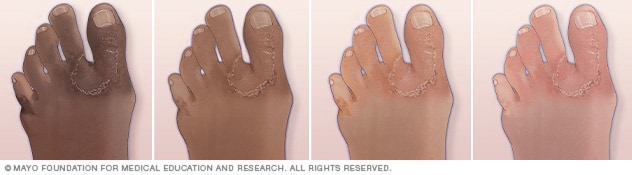
Athlete's foot
Illustration of athlete’s foot on different skin colors. The fungal infection causes scaly rash that may itch, sting or burn.
Athlete's foot can affect one or both feet. Common signs and symptoms are:
- Scaly, peeling or cracked skin between the toes
- Itchiness, especially right after taking off shoes and socks
- Inflamed skin that might appear reddish, purplish or grayish, depending on your skin color
- Burning or stinging
- Blisters
- Dry, scaly skin on the bottom of the foot that extends up the side
When to see a doctor
Athlete's foot on side of foot
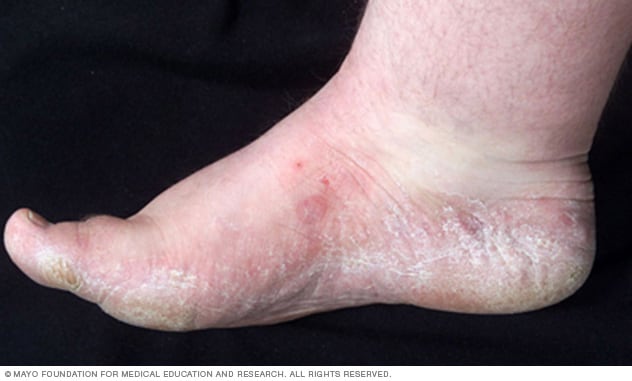
Athlete's foot on side of foot
Athlete's foot can cause dry, scaly skin on the bottom and sides of the foot.
If you have a rash on your foot that doesn't improve within two weeks of beginning self-treatment with an over-the-counter antifungal product, see your doctor.
If you have diabetes, see your doctor if you suspect that you have athlete's foot. Also see your doctor if you have signs of an infection — swelling of the affected area, pus, fever.
Causes
Athlete's foot is caused by the same type of fungi (dermatophytes) that cause ringworm and jock itch. Damp socks and shoes and warm, humid conditions favor the organisms' growth.
Athlete's foot is contagious and can spread through contact with an infected person or from contact with contaminated surfaces, such as towels, floors and shoes. You can also spread it from the foot to other parts of the body, especially if you scratch or pick the infected parts of your foot.
Risk factors
You are at higher risk of athlete's foot if you:
- Frequently wear enclosed footwear
- Sweat heavily
- Share mats, rugs, bed linens, clothes or shoes with someone who has a fungal infection
- Walk barefoot in public areas where the infection can spread, such as locker rooms, saunas, swimming pools, communal baths and showers
Complications
The athlete's foot infection can spread to other warm, moist parts of the body. Jock itch is often caused by the same fungus that results in athlete's foot. It's common for the infection to spread from the feet to the groin because the fungus can travel on hands or towels.
Athlete's foot can sometimes lead to bacterial infections.
Prevention
These tips can help you avoid athlete's foot or avoid spreading it to others:
- Let your feet air out. When you can, wear sandals to let your feet air out as much as possible.
- Wash your feet daily. Use warm, soapy water and rinse and dry your feet thoroughly, especially between the toes. Apply a medicated foot powder (Tinactin, Gold Bond, others) or other medicated powder (Lotrimin AF, Zeasorb, others) if you're prone to athlete's foot.
- Change socks regularly. Change your socks at least once a day — more often if your feet get really sweaty. Moisture-wicking socks, such as those made from cotton, help keep your feet drier than do nylon socks.
- Alternate pairs of shoes. Use different shoes from day to day. This gives your shoes time to dry after each use.
- Protect your feet in public places. Wear waterproof sandals or shoes around public pools, showers and lockers rooms.
- Be aware of the risk factors for spreading the condition. If you live with others, don't share shoes or unwashed bedding and towels.
Sept. 28, 2023