Overview
Blepharitis (blef-uh-RYE-tis) is inflammation of the eyelids. Blepharitis usually affects both eyes along the edges of the eyelids.
Blepharitis commonly occurs when tiny oil glands near the base of the eyelashes become clogged, causing irritation and redness. Several diseases and conditions can cause blepharitis.
Blepharitis is often a chronic condition that's difficult to treat. Blepharitis can be uncomfortable and unsightly. But it usually doesn't cause permanent damage to your eyesight, and it's not contagious.

Blepharitis
Blepharitis is an inflammation along the edges of the eyelids. The eyelids can become irritated and itchy, and appear greasy and crusted with scales that cling to the lashes. People with blepharitis sometimes wake with their eyelids stuck together. Others may wake with dried tears around their eyes and a feeling of sand in their eyes. In this picture, the yellow around the eye is from a yellow dye sometimes used in diagnostic tests.
Symptoms
Blepharitis signs and symptoms are typically worse in the morning. They include:
- Watery eyes
- Red eyes
- A gritty, burning or stinging sensation in the eyes
- Eyelids that appear greasy
- Itchy eyelids
- Red, swollen eyelids
- Flaking of the skin around the eyes
- Crusted eyelashes
- Eyelid sticking
- More frequent blinking
- Sensitivity to light
- Blurred vision that usually improves with blinking
When to see a doctor
If you have blepharitis signs and symptoms that don't seem to improve despite good hygiene — regular cleaning and care of the affected area — make an appointment with your doctor.
From Mayo Clinic to your inbox
Causes
The exact cause of blepharitis isn't clear. It might be associated with one or more of the following:
- Seborrheic dermatitis — dandruff of the scalp and eyebrows
- Infection
- Clogged or malfunctioning oil glands in your eyelids
- Rosacea — a skin condition characterized by facial redness
- Allergies, including allergic reactions to eye medications, contact lens solutions or eye makeup
- Eyelash mites or lice
- Dry eyes
Complications
If you have blepharitis, you might also have:
- Eyelash problems. Blepharitis can cause your eyelashes to fall out, grow abnormally (misdirected eyelashes) or lose color.
- Eyelid skin problems. Scarring can develop on your eyelids from long-term blepharitis. Or the eyelid edges might turn inward or outward.
-
Excess tearing or dry eyes. Abnormal oily secretions and other debris shed from the eyelids, such as flaking associated with dandruff, can build up in your tear film — the water, oil and mucus solution that forms tears.
Abnormal tear film interferes with keeping your eyelids moist. This can irritate your eyes and cause symptoms of dry eyes or excess tearing.
- Stye. A stye is an infection that develops near the base of the eyelashes. The result is a painful lump on the edge of your eyelid. A stye is usually most visible on the surface of the eyelid.
- Chalazion. A chalazion occurs when there's a blockage in one of the small oil glands at the margin of the eyelid, just behind the eyelashes. This blockage causes inflammation of the gland, which makes the eyelid swell and redden. This can clear up or turn into a hard, nontender bump.
- Chronic pink eye. Blepharitis can lead to recurrent bouts of pink eye (conjunctivitis).
- Injury to the cornea. Constant irritation from inflamed eyelids or misdirected eyelashes can cause a sore to develop on your cornea. Not having enough tears could increase your risk of a corneal infection.
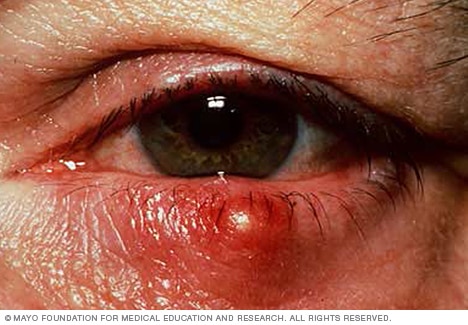
Stye
A stye is a bacterial infection involving one or more of the small glands near the base of your eyelashes. It is similar to a boil or a pimple and is often painful.

Chalazion
A chalazion (shown prominently on the upper eyelid) is a clogged gland that has become inflamed just behind the base of the eyelashes. Although a chalazion can be painful when developing, it can become a relatively painless swelling that feels like a small bead in your eyelid. This photo shows a similar inflammation on the lower lid.
