Overview
Bradycardia (brad-e-KAHR-dee-uh) is a slow heart rate. The hearts of adults at rest usually beat between 60 and 100 times a minute. If you have bradycardia, your heart beats fewer than 60 times a minute.
Bradycardia can be a serious problem if the heart rate is very slow and the heart can't pump enough oxygen-rich blood to the body. If this happens, you may feel dizzy, very tired or weak, and short of breath. Sometimes bradycardia doesn't cause symptoms or complications.
A slow heart rate isn't always a concern. For example, a resting heart rate between 40 and 60 beats a minute is quite common during sleep and in some people, particularly healthy young adults and trained athletes.
If bradycardia is severe, an implanted pacemaker may be needed to help the heart maintain an appropriate rate.
Symptoms
A slower than typical heartbeat (bradycardia) can prevent the brain and other organs from getting enough oxygen, possibly causing these signs and symptoms:
- Chest pain
- Confusion or memory problems
- Dizziness or lightheadedness
- Easily tiring during physical activity
- Fatigue
- Fainting (syncope) or near-fainting
- Shortness of breath
When to see a doctor
Many things can cause signs and symptoms of bradycardia. It's important to get a prompt, accurate diagnosis and appropriate care. See your health care provider if you are concerned about a slow heart rate.
If you faint, have difficulty breathing or have chest pain lasting more than a few minutes, call 911 or emergency medical services.
Causes
Typical heartbeat
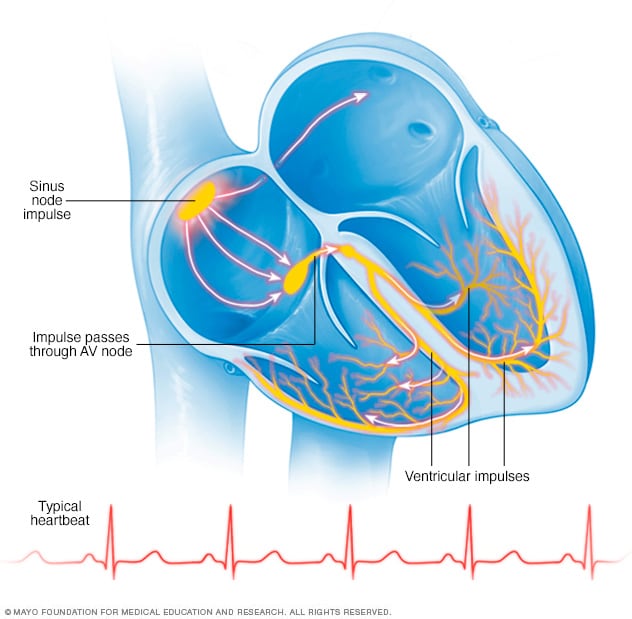
Typical heartbeat
In a typical heart rhythm, a tiny cluster of cells at the sinus node sends out an electrical signal. The signal then travels through the atria to the atrioventricular (AV) node and then passes into the ventricles, causing them to contract and pump out blood.
Bradycardia can be caused by:
- Heart tissue damage related to aging
- Damage to heart tissues from heart disease or heart attack
- A heart condition present at birth (congenital heart defect)
- Inflammation of heart tissue (myocarditis)
- A complication of heart surgery
- An underactive thyroid gland (hypothyroidism)
- Imbalance of chemicals in the blood, such as potassium or calcium
- Repeated pauses in breathing during sleep (obstructive sleep apnea)
- Inflammatory disease, such as rheumatic fever or lupus
- Certain medications, including sedatives, opioids, and drugs used to treat heart rhythm disorders, high blood pressure and certain mental health disorders
To better understand the causes of bradycardia, it may be helpful to know how the heart typically beats.
The typical heart has four chambers — two upper chambers (atria) and two lower chambers (ventricles). Within the upper right chamber of the heart (right atrium) is a group of cells called the sinus node. The sinus node is the heart's natural pacemaker. It produces the signal that starts each heartbeat.
Bradycardia occurs when these signals slow down or are blocked.
Sinus node problems
Bradycardia

Bradycardia
Bradycardia, shown on the right, is a slower than typical heart rhythm that often starts in the area of the heart called the sinus node. A typical heart rhythm is shown in the image on the left.
Bradycardia often starts in the area of the heart called the sinus node. In some people, sinus node problems cause alternating slow and fast heart rates (bradycardia-tachycardia syndrome).
Heart block (atrioventricular block)
Bradycardia can also occur if the heart's electrical signals don't move correctly from the upper chambers (atria) to the lower chambers (ventricles). If this occurs, the condition is called heart block, or atrioventricular block.
Heart blocks fall into three main groups.
- First-degree heart block. In the mildest form, all electrical signals from the atria reach the ventricles, but the signal is slowed. First-degree heart block rarely causes symptoms and usually needs no treatment if there's no other problem in electrical signaling.
- Second-degree heart block. Not all electrical signals reach the ventricles. Some beats are dropped, resulting in a slower and sometimes irregular heart rhythm.
- Third-degree (complete) heart block. None of the electrical signals from the atria reaches the ventricles. When this happens, the ventricles will usually beat on their own but at a very slow rate.
Risk factors
Bradycardia is often associated with damage to heart tissue from some type of heart disease. Anything that increases the risk of heart problems can increase the risk of bradycardia. Risk factors for heart disease include:
- Older age
- High blood pressure
- Smoking
- Heavy alcohol use
- Illegal drug use
- Stress and anxiety
Healthy-lifestyle changes or medical treatment may help lower the risk of heart disease.
Complications
Possible complications of bradycardia can include:
- Frequent fainting
- Inability of the heart to pump enough blood (heart failure)
- Sudden cardiac arrest or sudden death
Prevention
Bradycardia can be caused by certain medications, particularly if they are taken at high doses, so it's important to take all medications as directed. Although bradycardia is not typically preventable, health care providers recommend strategies to reduce the risk of developing heart disease. Take the following heart-healthy steps:
- Get regular exercise. Your health care provider may give you recommendations about how much and what type of exercise is best for you.
- Eat a healthy diet. Choose a healthy, low-fat, low-salt, low-sugar diet that's rich in fruits, vegetables and whole grains.
- Maintain a healthy weight. Being overweight increases the risk of developing heart disease.
- Keep blood pressure and cholesterol under control. Make lifestyle changes and take medications as prescribed to manage high blood pressure, diabetes and high cholesterol.
- Don't smoke. If you need help quitting, talk to your health care provider about strategies or programs to help.
- If you drink, do so in moderation. If you choose to drink alcohol, do so in moderation. For healthy adults, that means up to one drink a day for women and up to two drinks a day for men. If you can't control your alcohol use, talk to a health care provider about a program to quit drinking and manage other behaviors related to alcohol abuse.
- Manage stress. Intense emotions may affect heart rate. Some ways to relieve stress are getting regular exercise, joining a support group and trying relaxation techniques, such as yoga.
- Go to scheduled checkups. Have regular physical exams and report signs or symptoms to your health care provider.
Monitor and treat existing heart disease
If you already have heart disease, there are steps you can take to lower your risk of developing bradycardia or another heart rhythm disorder:
- Follow the plan. Be sure you understand your treatment plan. Take all medications as prescribed.
- Report changes immediately. If your symptoms change or worsen or you develop new symptoms, tell your health care provider immediately.