Overview
Chickenpox
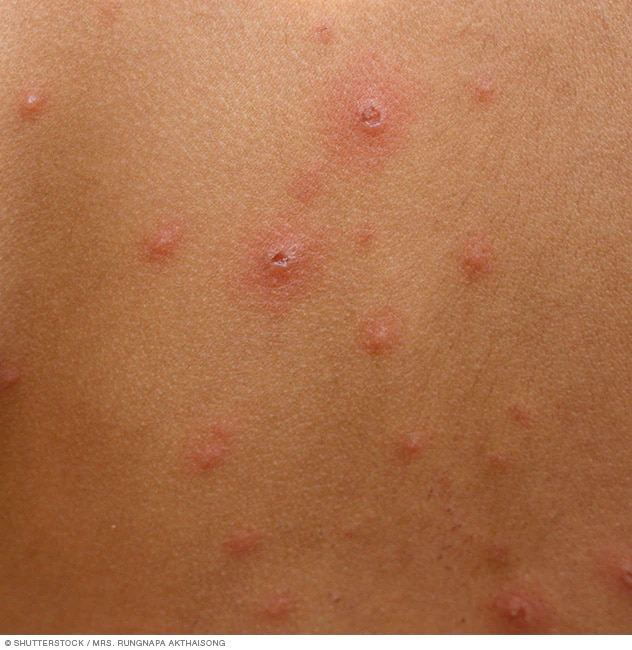
Chickenpox
With chickenpox an itchy rash breaks out mostly on the face, scalp, chest, back with some spots on the arms and legs. The spots quickly fill with a clear fluid, break open and then turn crusty.
Chickenpox

Chickenpox
With chickenpox an itchy rash breaks out mostly on the face, scalp, chest, back with some spots on the arms and legs. The spots quickly fill with a clear fluid, break open and then turn crusty.
Chickenpox is an illness caused by the varicella-zoster virus. It brings on an itchy rash with small, fluid-filled blisters. Chickenpox spreads very easily to people who haven't had the disease or haven't gotten the chickenpox vaccine. Chickenpox used to be a widespread problem, but today the vaccine protects children from it.
The chickenpox vaccine is a safe way to prevent this illness and the other health problems that can happen during it.
Symptoms
The rash caused by chickenpox appears 10 to 21 days after you're exposed to the varicella-zoster virus. The rash often lasts about 5 to 10 days. Other symptoms that may appear 1 to 2 days before the rash include:
- Fever.
- Loss of appetite.
- Headache.
- Tiredness and a general feeling of being unwell.
Once the chickenpox rash appears, it goes through three phases:
- Raised bumps called papules, which break out over a few days.
- Small fluid-filled blisters called vesicles, which form in about one day and then break and leak.
- Crusts and scabs, which cover the broken blisters and take a few more days to heal.
New bumps keep showing up for several days. So you may have bumps, blisters and scabs at the same time. You can spread the virus to other people for up to 48 hours before the rash appears. And the virus stays contagious until all broken blisters have crusted over.
The disease is by and large mild in healthy children. But sometimes, the rash can cover the whole body. Blisters may form in the throat and eyes. They also may form in tissue that lines the inside of the urethra, anus and vagina.
When to see a doctor
If you think you or your child might have chickenpox, call your health care provider. Often, chickenpox can be diagnosed with an exam of the rash and other symptoms. You may need medicines that can help fight off the virus or treat other health problems that can happen because of chickenpox. To avoid infecting others in the waiting room, call ahead for an appointment. Mention that you think you or your child may have chickenpox.
Also, let your provider know if:
- The rash spreads to one or both eyes.
- The rash gets very warm or tender. This might be a sign that the skin is infected with bacteria.
- You have more serious symptoms along with the rash. Watch for dizziness, new confusion, fast heartbeat, shortness of breath, shakiness, loss of the ability to use muscles together, a cough that becomes worse, vomiting, stiff neck or a fever higher than 102 F (38.9 C).
- You live with people who've never had chickenpox and haven't gotten the chickenpox vaccine yet.
- Someone in your household is pregnant.
- You live with someone who has a disease or takes medicines that affect the immune system.
Causes
A virus called varicella-zoster causes chickenpox. It can spread through direct contact with the rash. It also can spread when a person with chickenpox coughs or sneezes and you breathe in the air droplets.
Risk factors
Your risk of getting infected with the virus that causes chickenpox is higher if you haven't already had chickenpox or if you haven't had the chickenpox vaccine. It's extra important for people who work in child care or school settings to be vaccinated.
Most people who have had chickenpox or have gotten the vaccine are immune to chickenpox. If you've been vaccinated and still get chickenpox, symptoms are often milder. You may have fewer blisters and mild or no fever. A few people can get chickenpox more than once, but this is rare.
Complications
Chickenpox is often a mild disease. But it can be serious and can lead to other health problem including:
- Infected skin, soft tissues, bones, joints or bloodstream caused by bacteria.
- Dehydration, when the body runs too low on water and other fluids.
- Pneumonia, an illness in one or both lungs.
- Swelling of the brain called encephalitis.
- Toxic shock syndrome, a dangerous complication of some illnesses caused by bacteria.
- Reye's syndrome, a disease that causes swelling in the brain and liver. This can happen in children and teens who take aspirin during chickenpox.
In very rare cases, chickenpox could lead to death.
Who's at risk?
People who are at higher risk of chickenpox complications include:
- Newborns and infants whose mothers never had chickenpox or the vaccine. This includes children under age 1, who have not yet had the vaccine.
- Teens and adults.
- Pregnant women who haven't had chickenpox.
- People who smoke.
- People with cancer or HIV who are taking medication that has an effect on the immune system.
- People with a chronic condition, such as asthma, who take medicine that calms immune response. Or those who have had an organ transplant and take medicine to limit the immune system's action.
Chickenpox and pregnancy
Low birth weight and limb problems are more common in babies born to women who are infected with chickenpox early in their pregnancies. When a pregnant person catches chickenpox in the week before birth or within a couple of days after giving birth, the baby has a higher risk of getting a life-threatening infection.
If you're pregnant and not immune to chickenpox, talk to your health care provider about these risks.
Chickenpox and shingles
If you've had chickenpox, you're at risk of a complication called shingles. The varicella-zoster virus stays in your nerve cells after the chickenpox rash goes away. Many years later, the virus can turn back on and cause shingles, a painful cluster of blisters. The virus is more likely to come back in older adults and people who have weaker immune systems.
The pain of shingles can last long after the blisters go away, and it can be serious. This is called postherpetic neuralgia.
In the United States, the Centers for Disease Control and Prevention (CDC) suggests you get the shingles vaccine, Shingrix, if you're 50 or older. The agency also suggests Shingrix if you're 19 or older and you have a weaker immune system because of diseases or treatments. Shingrix is recommended even if you've already had shingles or you've gotten the older shingles vaccine, Zostavax.
Other shingles vaccines are offered outside of the United States. Talk to your provider for more information on how well they prevent shingles.
Prevention
The chickenpox vaccine, also called the varicella vaccine, is the best way to prevent chickenpox. In the United States, experts from the CDC report that two doses of the vaccine prevent illness over 90% of the time. Even if you get chickenpox after receiving the vaccine, your symptoms may be much milder.
In the United States, two chickenpox vaccines are licensed for use: Varivax contains only the chickenpox vaccine. It can be used in the United States to vaccinate people age 1 or older. ProQuad combines the chickenpox vaccine with the measles, mumps and rubella vaccine. It can be used in the United States for children ages 1 to 12. This is also called the MMRV vaccine.
In the United States, children receive two doses of the varicella vaccine: the first between ages 12 and 15 months and the second between ages 4 and 6 years. This is part of the routine vaccination schedule for children.
For some children between the ages of 12 and 23 months, the MMRV combination vaccine may raise the risk of fever and seizure from the vaccine. Ask your child's health care provider about the pros and cons of using the combined vaccines.
Children 7 to 12 years old who haven't been vaccinated should receive two doses of the varicella vaccine. The doses should be given at least three months apart.
People age 13 or older who haven't been vaccinated should receive two catch-up doses of the vaccine at least four weeks apart. It's even more important to get the vaccine if you have a higher risk of getting exposed to chickenpox. This includes health care workers, teachers, child-care employees, international travelers, military personnel, adults who live with young children and all nonpregnant women of childbearing age.
If you don't remember whether you've had chickenpox or the vaccine, your provider can give you a blood test to find out.
Other chickenpox vaccines are offered outside the United States. Talk to your health care provider for more information on how well they prevent chickenpox.
Do not get the chickenpox vaccine if you're pregnant. If you decide to get vaccinated before pregnancy, don't try to get pregnant during the series of shots or for one month after the last dose of the vaccine.
Other people also shouldn't get the vaccine, or they should wait. Check with your health care provider about whether you should get the vaccine if you:
- Have a weaker immune system. This includes people who have HIV or take medicines that have an effect on the immune system.
- Are allergic to gelatin or the antibiotic neomycin.
- Have any kind of cancer or are getting cancer treatment with radiation or medicines.
- Recently received blood from a donor or other blood products.
Talk to your provider if you're not sure whether you need the vaccine. If you plan on getting pregnant, ask your provider if you're up to date on your vaccines.
Is it safe and effective?
Parents often wonder whether vaccines are safe. Since the chickenpox vaccine became available, studies have found that it's safe and it works well. Side effects are often mild. They include pain, redness, soreness and swelling at the site of the shot. Rarely, you might get a rash at the site or a fever.