Overview
Coronary artery bypass surgery
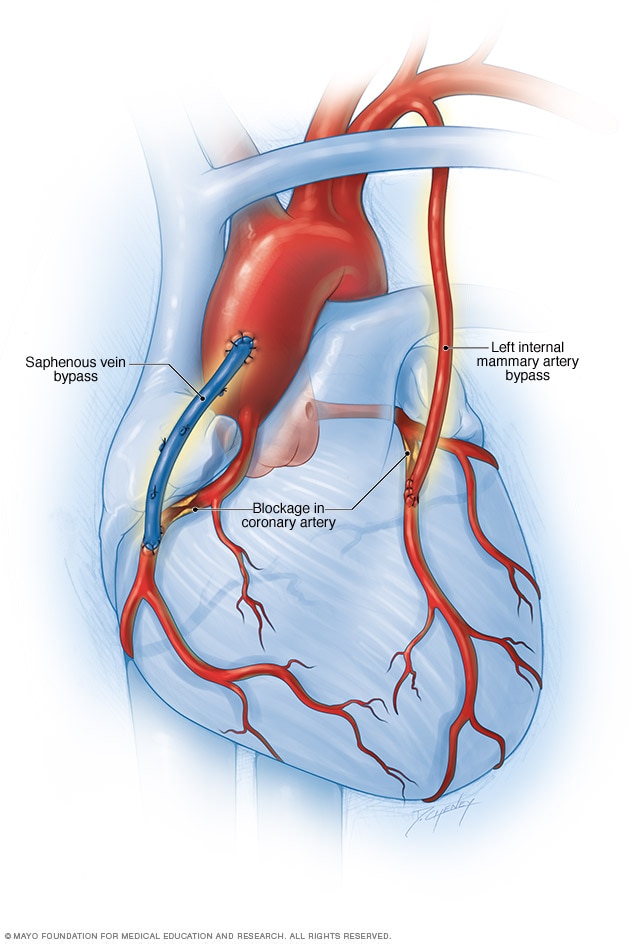
Coronary artery bypass surgery
Coronary artery bypass surgery creates a new path for blood to flow to the heart. A healthy blood vessel from another part of the body is used to redirect blood around a blocked area of an artery. Usually the blood vessel is taken from an artery in the chest, called the internal mammary artery. Sometimes it's taken from a leg vein, called the saphenus vein.
Coronary artery bypass surgery creates a new path for blood to flow around a blocked or partially blocked artery in the heart. The surgery involves taking a healthy blood vessel from the chest or leg area. The vessel is connected below the blocked heart artery. The new pathway improves blood flow to the heart muscle.
Other names for this surgery are:
- Coronary artery bypass grafting.
- CABG — pronounced "cabbage."
- Coronary artery bypass graft surgery.
- Heart bypass surgery.
Coronary artery bypass surgery doesn't cure the heart disease that caused a blockage, such as atherosclerosis or coronary artery disease. But it can reduce symptoms such as chest pain and shortness of breath. The surgery, commonly called CABG, may reduce the risk of heart disease-related death.
Products & Services
Why it's done
Coronary artery bypass surgery is done to restore blood flow around a blocked heart artery. The surgery may be done as an emergency treatment for a heart attack, if other immediate treatments aren't working.
Your health care provider might recommend coronary artery bypass surgery if you have:
- A blockage in the left main heart artery. This artery supplies a lot of blood to the heart muscle.
- Severe narrowing of the main heart artery.
- Severe chest pain caused by narrowing of several heart arteries. The narrowing reduces blood flow to the heart even during light exercise or at rest.
- More than one diseased heart artery and your lower left heart chamber doesn't work well.
- A blocked heart artery that can't be treated with coronary angioplasty. This less-invasive treatment uses a balloon on the tip of a thin tube, called a catheter, to widen the artery. A small coil called a stent is typically used to keep the artery open.
- An angioplasty with or without a stent that hasn't worked. For example, an artery narrowed again after stenting.
Risks
Coronary artery bypass surgery is open-heart surgery. All surgeries have some risks. Possible complications of coronary artery bypass surgery include:
- Bleeding.
- Death.
- Heart attack due to a blood clot after surgery.
- Infection at the site of the chest wound.
- Long-term need for a breathing machine.
- Irregular heart rhythms, called arrhythmias.
- Kidney problems.
- Memory loss or trouble thinking clearly, which often is temporary.
- Stroke.
The risk of complications is higher if the surgery is done as an emergency procedure.
Your specific risk of complications after coronary artery bypass surgery also depends on your overall health before surgery. Having the following medical conditions increases the risk of complications:
- Blocked arteries in the legs.
- Chronic obstructive pulmonary disease (COPD).
- Diabetes.
- Kidney disease.
Medicines to control bleeding and blood pressure and to prevent infection are typically given before surgery to reduce the risk of complications. If you have diabetes, you may get medicine to control blood sugar during surgery.
How you prepare
Before coronary artery bypass surgery, you may need to make changes to your activities, diet and medicines. Your health care provider gives you specific instructions.
Arrange for someone to drive you home after your hospital stay. Also make plans to have help at home during your recovery.
What you can expect
Before the procedure
If coronary artery bypass surgery is a scheduled procedure, you are usually admitted to the hospital the morning of the surgery. You have many heart tests and blood tests the days and hours before surgery.
During the procedure
Coronary artery bypass surgery is major surgery that's done in a hospital. Doctors trained in heart surgery, called cardiovascular surgeons, do the surgery. Heart doctors, called cardiologists, and a team of other providers help care for you.
Before you go into the operating room, a health care provider inserts an IV into your forearm or hand and gives you medicine called a sedative to help you relax.
When you are in the operating room, you can expect these things:
- Anesthetics. You receive a combination of medicines through the IV and a face mask. These medicines put you in a pain-free, sleep-like state. This is called general anesthesia.
- Breathing machine. A care provider inserts a breathing tube into your mouth. This tube attaches to a breathing machine called a ventilator. The machine breathes for you during and immediately after the surgery.
- Heart-lung machine. During surgery, a heart-lung machine keeps blood and oxygen flowing through your body. This is called on-pump coronary bypass.
Coronary artery bypass surgery usually takes about 3 to 6 hours. How long surgery takes depends on how many arteries are blocked.
A surgeon typically makes a long cut down the center of the chest along the breastbone. The surgeon spreads open the rib cage to show the heart. After the chest is opened, the heart is temporarily stopped with medicine. The heart-lung machine is turned on.
The surgeon removes a section of healthy blood vessel, often from inside the chest wall or from the lower leg. This piece of healthy tissue is called a graft. The surgeon attaches the ends of the graft below the blocked heart artery. This creates a new pathway for blood to flow around a blockage. More than one graft may be used during coronary artery bypass surgery.
Some variations of coronary artery bypass surgery include:
- Off-pump or beating-heart surgery. Sometimes a heart-lung machine is not used during coronary artery bypass surgery. Instead the surgery is done on the beating heart. Special equipment stabilizes the specific area of the heart being operated on. This type of surgery can be challenging because the rest of the heart is still moving. It's not an option for everyone.
- Minimally invasive surgery. A heart surgeon does the surgery through small cuts in the chest. Minimally invasive heart surgery might be called port-access or keyhole surgery.
After the surgery is done, the health care providers restore your heartbeat in the operating room and stop the heart-lung machine. The surgeon uses wire to close the chest bone. The wire stays in your body after the bone heals.
After the procedure
After coronary artery bypass surgery, a team of health care providers checks on you and makes sure you are as comfortable as possible. You may feel sore and confused when you wake up. You can usually expect the following:
- Breathing tube. The breathing tube stays in your throat until you wake up and can breathe on your own.
- Hospital stay. Expect to spend 1 to 2 days in a hospital intensive care unit. The length of your entire hospital stay depends on how you recover and if you have complications. Some people who have coronary artery bypass surgery go home within a week.
- Heart rhythm and breathing checks. Your health care team watches you closely after surgery to check for complications. Machines record your breathing and heart rhythm. You have frequent temperature checks.
- Medicines. Medicines are given to you by IV to reduce pain and prevent complications such as blood clots. If you don't already take a daily aspirin, your health care provider may recommend you do so. You may need to take the aspirin every day for life. There are specific medical recommendations about who benefits from aspirin therapy. Talk to your health care provider about aspirin use.
- Cardiac rehabilitation. Often called cardiac rehab, this supervised program of education, counseling and exercise helps improve heart health after heart surgery. You'll be encouraged to start moving and walking while you're still in the hospital. When you go home, you continue a cardiac rehab program at a medical center until you can safely follow a home program.
After surgery and when you're at home, you need to watch for symptoms of complications. Call your health care provider if you have:
- Fever.
- Rapid heart rate.
- New or worsened pain around your chest wound.
- A change in skin color around your chest wound.
- Bleeding or other discharge from your chest wound.
It usually takes about 6 to 12 weeks to recover after coronary artery bypass surgery. With your provider's OK, you can usually drive, return to work or the gym, and resume sexual activity after 4 to 6 weeks. But everyone recovers differently. Ask your health care provider for guidance.
Results
After recovering from coronary artery bypass surgery, most people feel better. Some people remain symptom-free for many years. But the graft or other arteries may become clogged in the future. If this happens, you might need another surgery or procedure.
Your results and long-term outcome depend on how well you control blood pressure and cholesterol levels and chronic conditions such as diabetes. It's important to take your medicines as directed.
You can manage and even improve your heart health by making lifestyle changes. Try these recommended steps:
- Don't smoke. Smoking is a major risk factor for heart disease, especially atherosclerosis. Quitting is the best way to reduce the risk of heart disease and its complications. If you need help quitting, talk to your provider.
- Eat healthy foods. Choose plenty of fruits, vegetables and whole grains. Limit sugar, salt and saturated fats.
- Manage weight. Being overweight increases the risk of heart disease. Ask your provider what a healthy weight is for you.
- Exercise. Regular exercise helps control diabetes, high cholesterol and high blood pressure — all risk factors for heart disease. With your provider's OK, aim for 30 to 60 minutes of physical activity most days of the week. After coronary artery bypass surgery, your provider will tell you when it's safe to begin exercising again.
- Manage stress. Find ways to help reduce emotional stress. Practicing mindfulness and connecting with others in support groups might be helpful. If you have anxiety or depression, talk to your provider about strategies to help.
- Get good sleep. Poor sleep may increase the risk of heart disease and other chronic conditions. Adults should aim to get 7 to 9 hours of sleep daily.
Clinical trials
Explore Mayo Clinic studies of tests and procedures to help prevent, detect, treat or manage conditions.
Jan. 20, 2024