Overview
Cystitis (sis-TIE-tis) is the medical term for inflammation of the bladder. Inflammation is when a part of your body is swollen and hot. It can also be painful.
Most of the time, cystitis happens when there's an infection caused by bacteria. This is called a urinary tract infection (UTI). Having a bladder infection can be painful and annoying. It can become a serious health problem if the infection spreads to your kidneys.
Cystitis also may occur as a reaction to certain drugs or radiation therapy. Things that sometimes irritate the bladder, such as hygiene products, spermicide jelly or long-term catheter use, can also lead to cystitis. Cystitis can also happen as a complication of another illness.
The usual treatment for cystitis caused by bacteria is to take antibiotic medication. Treatment for other types of cystitis depends on the cause.
Products & Services
Symptoms
Cystitis signs and symptoms may include:
- A strong, persistent urge to urinate
- Pain or a burning feeling when urinating
- Passing frequent, small amounts of urine
- Blood in the urine (hematuria)
- Passing cloudy or strong-smelling urine
- Pelvic discomfort
- A feeling of pressure in the area below your belly button (abdomen)
- Low-grade fever
In young children, new episodes of accidental daytime wetting also may be a sign of a urinary tract infection (UTI). Nighttime bed-wetting on its own isn't likely to happen because of a UTI.
When to see a doctor
Get medical help right away if you have signs and symptoms common to a kidney infection. These include:
- Back or side pain
- Fever and chills
- Nausea and vomiting
If you develop urgent, frequent or painful urination that lasts for several hours or longer or if you notice blood in your urine, call your health care provider. If you've been diagnosed with a UTI in the past and you develop symptoms that mimic a previous UTI, call your provider.
Also call your provider if cystitis symptoms come back after you're done with antibiotic treatment. You may need to try a different type of medicine.
If your child starts having daytime wetting accidents, call your child's health care provider.
In otherwise healthy men, cystitis is rare. Any symptoms should be checked by a health care provider.
Causes
Female urinary system

Female urinary system
Your urinary system includes the kidneys, ureters, bladder and urethra. The urinary system removes waste from the body through urine. The kidneys are located toward the back of the upper abdomen. They filter waste and fluid from the blood and produce urine. Urine moves from the kidneys through narrow tubes to the bladder. These tubes are called the ureters. The bladder stores urine until it's time to urinate. Urine leaves the body through another small tube called the urethra.
Male urinary system
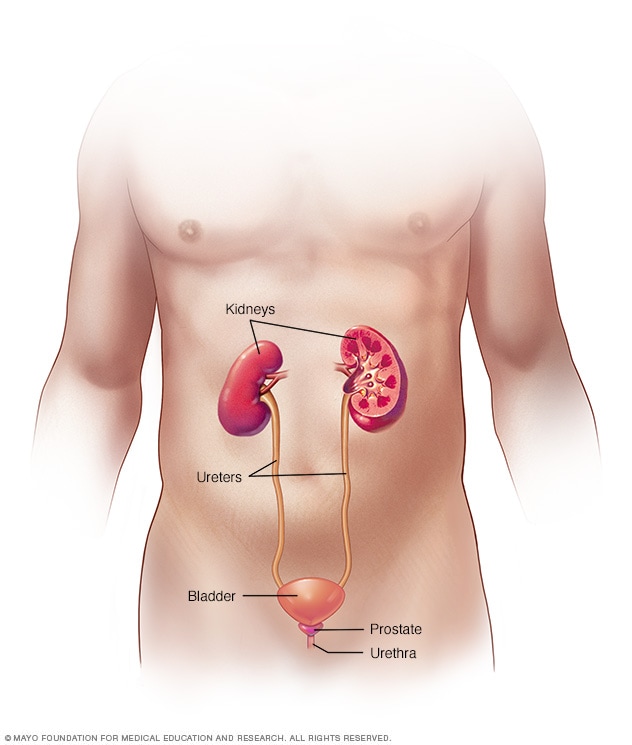
Male urinary system
Your urinary system includes the kidneys, ureters, bladder and urethra. The urinary system removes waste from the body through urine. The kidneys are located toward the back of the upper abdomen. They filter waste and fluid from the blood and produce urine. Urine moves from the kidneys through narrow tubes to the bladder. These tubes are called the ureters. The bladder stores urine until it's time to urinate. Urine leaves the body through another small tube called the urethra.
Your urinary system includes the kidneys, ureters, bladder and urethra. All play a role in removing waste from your body.
Your kidneys are a pair of bean-shaped organs located toward the back of your upper abdomen. They filter waste from your blood and regulate the concentrations of many substances.
Tubes called ureters carry urine from the kidneys to the bladder. The bladder stores the urine until you feel the need to urinate. Urine then leaves your body through the urethra.
Bacterial cystitis
UTIs typically occur when bacteria outside the body enter the urinary tract through the urethra and begin to multiply. Most cases of cystitis are caused by a type of Escherichia coli (E. coli) bacteria. But other types of bacteria can cause infections, too.
Bacterial bladder infections may happen in women after sex. Even in those who aren't sexually active, UTIs can happen because the female genital area often harbors bacteria that can cause cystitis.
Noninfectious cystitis
Although bacterial infections are the most common cause of cystitis, a number of noninfectious factors also may cause the bladder to become inflamed. Some examples include:
- Interstitial cystitis. The cause of this chronic bladder inflammation, also called painful bladder syndrome, is not clear. Most cases happen in women. The condition can be difficult to diagnose and treat.
- Drug-related cystitis. Some medicines, such as certain drugs used to treat cancer (chemotherapy), can cause inflammation of the bladder as the broken-down components of the drugs exit the body.
- Radiation cystitis. Radiation treatment of the pelvic area can cause inflammatory changes in bladder tissue.
- Foreign-body cystitis. Long-term use of a catheter can make bacterial infections and tissue damage more likely. Both of these can cause bladder inflammation.
- Chemical cystitis. Some people may be extra sensitive to chemicals found in certain products. These might include bubble bath, personal hygiene spray or spermicidal jelly. An allergic-type reaction can happen within the bladder, causing inflammation.
- Cystitis associated with other conditions. Cystitis may sometimes occur as a complication of other conditions, such as diabetes, kidney stones, an enlarged prostate or spinal cord injury.
Risk factors
Some people are more likely than others to develop bladder infections or repeated urinary tract infections. Women can have this problem. A key reason is physical anatomy. Women have a short urethra. This means bacteria that can cause an infection don't have as far to travel to reach the bladder.
You may be at greater risk of bladder infections or repeated UTIs
if you:
- Are sexually active. During sex, bacteria can be pushed into the urethra.
- Use certain types of birth control. Using a diaphragm increases the risk of a UTI. Diaphragms that contain spermicide may increase risk even more.
- Are pregnant. Hormone changes during pregnancy may increase the risk of a bladder infection.
- Have gone through menopause. Changes to hormones that happen after menopause often can lead to UTIs.
Other risk factors include:
- Interference with the flow of urine. This can occur in conditions such as a stone in the bladder or an enlarged prostate.
- Changes in the immune system. This can happen with certain conditions, such as diabetes, HIV infection and cancer treatment.
- Long-term use of urinary catheters. These tubes may be needed in people with chronic illnesses or in older adults. Prolonged use can put you at greater risk of bacterial infections as well as bladder tissue damage.
In generally healthy men, cystitis is rare.
Complications
When treated right away with the proper medicine, bladder infections rarely lead to complications. But if they aren't treated, they can become something more serious. Complications may include:
- Kidney infection. An untreated bladder infection can lead to a kidney infection. This is also called pyelonephritis (pie-uh-low-nuh-FRY-tis). Kidney infections may permanently damage the kidneys.
-
Blood in the urine. With cystitis, you may have blood cells in the urine. Often, they can be seen only with a microscope. This condition is called microscopic hematuria. It usually goes away after treatment. If blood cells still appear in the urine after treatment, you may need to see a specialist to find out the cause.
Blood in the urine that you can see is called gross hematuria. This happens rarely with typical, bacterial cystitis. But this sign may be more common if you have cystitis that happens after chemotherapy or radiation therapy for cancer.
Prevention
Self-care measures to prevent repeated bladder infections aren't well studied. But some providers recommend these tips for prevention:
- Drink plenty of liquids, especially water. Drinking lots of fluids is especially important after chemotherapy or radiation therapy, particularly on treatment days.
- Urinate frequently. If you feel the urge to urinate, don't delay using the toilet.
- Wipe from front to back after a bowel movement. This prevents bacteria in the anal region from spreading to the vagina and urethra.
- Take showers rather than tub baths. If you're prone to infections, showering rather than taking a bath may help prevent them.
- Gently wash the skin around the genitals. Do this daily, but don't use harsh soaps or wash too vigorously. The delicate skin in this area can become irritated.
- Empty your bladder as soon as possible after sex. Drink a full glass of water to help flush bacteria.
- Avoid using deodorant sprays or hygiene products in the genital area. These products can irritate the urethra and bladder.
Cranberry
Cranberry juice or tablets containing proanthocyanidin are often recommended to help reduce the risk of recurrent bladder infections. Although research in this area is inconsistent, there is some evidence that cranberry may work to prevent recurrent infections for some people.
Cranberry products are generally considered to be safe in healthy people without any medical conditions.
But as a home remedy, be careful with cranberry juice or cranberry products if you're taking the blood-thinning medication warfarin (Coumadin). It's possible that there could be an interaction between cranberry and warfarin that could lead to bleeding. But the evidence is mixed.
Cranberry has not been shown to be an effective treatment if you already have a bladder infection.
Aug. 16, 2022