Overview
Esophagus
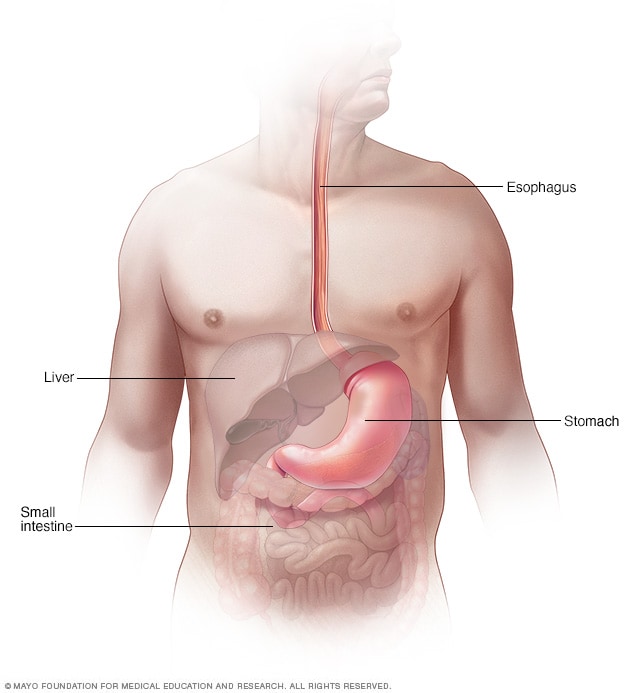
Esophagus
The esophagus is a muscular tube that connects the mouth and the stomach. Rings of muscle called sphincters contract and relax to allow food and liquid to pass.
Dysphagia is a medical term for difficulty swallowing. Dysphagia can be a painful condition. In some cases, swallowing is impossible.
Occasional difficulty swallowing, such as when you eat too fast or don't chew your food well enough, usually isn't cause for concern. But ongoing dysphagia can be a serious medical condition that needs treatment.
Dysphagia can happen at any age, but it's more common in older adults. The causes of swallowing problems vary, and treatment depends on the cause.
Products & Services
Symptoms
Symptoms associated with dysphagia can include:
- Pain while swallowing.
- Not being able to swallow.
- Feeling as if food is stuck in the throat or chest or behind the breastbone.
- Drooling.
- Hoarseness.
- Food coming back up, called regurgitation.
- Frequent heartburn.
- Food or stomach acid backing up into the throat.
- Weight loss.
- Coughing or gagging when swallowing.
When to see a doctor
See a healthcare professional if you regularly have difficulty swallowing or if weight loss, regurgitation or vomiting happens with your dysphagia.
If a blockage makes it hard to breathe, call for emergency help immediately. If you're unable to swallow because you feel that food is stuck in your throat or chest, go to the nearest emergency department.
Causes
Swallowing is complex, involving many muscles and nerves. Any condition that weakens or damages these muscles and nerves or causes narrowing of the back of the throat or esophagus can cause dysphagia.
Dysphagia generally falls into one of the following categories.
Esophageal dysphagia
Esophageal dysphagia refers to the sensation of food sticking or getting caught in the base of the throat or in the chest after swallowing begins. Some causes of esophageal dysphagia include:
- Achalasia. Achalasia is a condition that leads to trouble swallowing. Damaged nerves or muscles make it hard for the esophagus to squeeze food and liquid into the stomach. Achalasia tends to worsen over time.
- Esophageal spasm. This condition causes high-pressure, poorly coordinated contractions of the esophagus, usually after swallowing. Esophageal spasm affects the involuntary muscles in the walls of the lower esophagus.
- A narrowed esophagus. Known as a stricture, a narrowed esophagus can trap large pieces of food. Tumors or scar tissue, often caused by gastroesophageal reflux disease (GERD), can cause narrowing.
- Esophageal tumors. Difficulty swallowing tends to get progressively worse when esophageal tumors are present. Growing tumors steadily narrow the esophagus.
- Foreign bodies. Sometimes food or another object can partially block the throat or esophagus. Older adults with dentures and people who have difficulty chewing their food may be more likely to have a piece of food become stuck in the throat or esophagus.
- Esophageal ring. A thin area of narrowing in the lower esophagus can occasionally cause difficulty swallowing solid foods.
- GERD. Stomach acid backing up into the esophagus can damage esophageal tissues. This can lead to spasm or scarring and narrowing of the lower esophagus.
- Eosinophilic esophagitis. Eosinophilic esophagitis is a disease of the immune system. It is caused when white blood cells, called eosinophils, build up in the esophagus.
- Scleroderma. Scleroderma causes the development of scar-like tissue, resulting in stiffening and hardening of tissues. This can weaken the lower esophageal sphincter. As a result, acid backs up into the esophagus and causes frequent heartburn.
- Radiation therapy. This cancer treatment can lead to inflammation and scarring of the esophagus.
Oropharyngeal dysphagia
Certain conditions can weaken the throat muscles, making it difficult to move food from the mouth into the throat and esophagus during swallowing. A person might choke, gag or cough when trying to swallow, or have the sensation of food or fluids going down the windpipe, called the trachea, or up the nose. This can lead to pneumonia.
Causes of oropharyngeal dysphagia include:
- Neurological disorders. Certain disorders — such as multiple sclerosis, muscular dystrophy and Parkinson's disease — can cause dysphagia.
- Neurological damage. Sudden neurological damage, such as from a stroke or a brain or spinal cord injury, can affect the ability to swallow.
- Pharyngoesophageal diverticulum, also known as Zenker diverticulum. A small pouch, known as a diverticulum, that forms and collects food particles in the throat, often just above the esophagus, leads to difficulty swallowing, gurgling sounds, bad breath, and repeated throat clearing or coughing.
- Cancer. Certain cancers and some cancer treatments, such as radiation, can cause difficulty swallowing.
Risk factors
The following are risk factors for dysphagia:
- Aging. Older adults are at higher risk of swallowing difficulties. This is due to natural aging and wear and tear on the esophagus as well as a greater risk of certain conditions, such as stroke or Parkinson's disease. But dysphagia isn't considered a typical sign of aging.
- Certain health conditions. People with certain neurological or nervous system disorders are more likely to have difficulty swallowing.
Complications
Difficulty swallowing can lead to:
- Malnutrition, weight loss and dehydration. Dysphagia can make it difficult to take in enough food and fluids.
- Aspiration pneumonia. Food or liquid entering the airway during attempts to swallow can cause aspiration pneumonia as a result of the food introducing bacteria into the lungs.
- Choking. Food stuck in the throat can cause choking. If food completely blocks the airway and no one intervenes with a successful Heimlich maneuver, death can occur.
Prevention
Although swallowing difficulties can't be prevented, you can reduce your risk of occasional difficulty swallowing by eating slowly and chewing your food well. However, if you have symptoms of dysphagia, see a healthcare professional.
If you have GERD, see a healthcare professional for treatment.
Oct. 26, 2023