Overview
Dizziness is a term used to describe a range of sensations, such as feeling faint, woozy, weak or unsteady. Dizziness that creates the false sense that you or your surroundings are spinning or moving is called vertigo.
Dizziness is one of the more common reasons adults visit their doctors. Frequent dizzy spells or constant dizziness can significantly affect your life. But dizziness rarely signals a life-threatening condition.
Treatment of dizziness depends on the cause and your symptoms. It's usually effective, but the problem may recur.
Products & Services
Symptoms
People experiencing dizziness may describe it as any of a number of sensations, such as:
- A false sense of motion or spinning (vertigo)
- Lightheadedness or feeling faint
- Unsteadiness or a loss of balance
- A feeling of floating, wooziness or heavy-headedness
These feelings may be triggered or worsened by walking, standing up or moving your head. Your dizziness may be accompanied by nausea or be so sudden or severe that you need to sit or lie down. The episode may last seconds or days and may recur.
When to see a doctor
Generally, see your doctor if you experience any recurrent, sudden, severe, or prolonged and unexplained dizziness or vertigo.
Get emergency medical care if you experience new, severe dizziness or vertigo along with any of the following:
- Sudden, severe headache
- Chest pain
- Difficulty breathing
- Numbness or paralysis of arms or legs
- Fainting
- Double vision
- Rapid or irregular heartbeat
- Confusion or slurred speech
- Stumbling or difficulty walking
- Ongoing vomiting
- Seizures
- A sudden change in hearing
- Facial numbness or weakness
Causes
Inner ear and balance
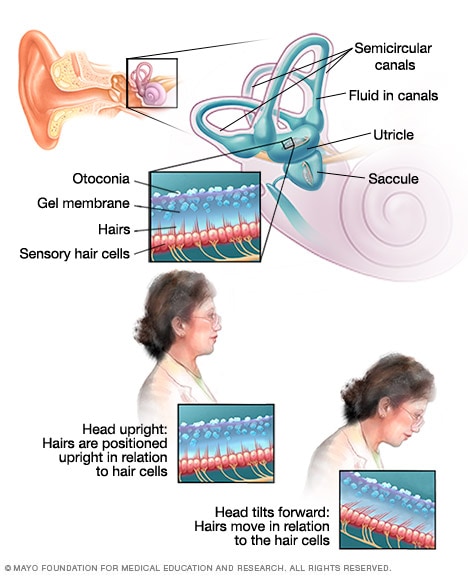
Inner ear and balance
Loop-shaped canals in your inner ear contain fluid and fine, hairlike sensors that help you keep your balance. At the base of the canals are the utricle and saccule, each containing a patch of sensory hair cells. Within these cells are tiny particles (otoconia) that help monitor the position of your head in relation to gravity and linear motion, such as going up and down in an elevator or moving forward and backward in a car.
Dizziness has many possible causes, including inner ear disturbance, motion sickness and medication effects. Sometimes it's caused by an underlying health condition, such as poor circulation, infection or injury.
The way dizziness makes you feel and your triggers provide clues for possible causes. How long the dizziness lasts and any other symptoms you have also help pinpoint the cause.
Inner ear problems that cause dizziness (vertigo)
Your sense of balance depends on the combined input from the various parts of your sensory system. These include your:
- Eyes, which help you determine where your body is in space and how it's moving
- Sensory nerves, which send messages to your brain about body movements and positions
- Inner ear, which houses sensors that help detect gravity and back-and-forth motion
Vertigo is the false sense that your surroundings are spinning or moving. With inner ear disorders, your brain receives signals from the inner ear that aren't consistent with what your eyes and sensory nerves are receiving. Vertigo is what results as your brain works to sort out the confusion.
- Benign paroxysmal positional vertigo (BPPV). This condition causes an intense and brief but false sense that you're spinning or moving. These episodes are triggered by a rapid change in head movement, such as when you turn over in bed, sit up or experience a blow to the head. BPPV is the most common cause of vertigo.
- Infection. A viral infection of the vestibular nerve, called vestibular neuritis, can cause intense, constant vertigo. If you also have sudden hearing loss, you may have labyrinthitis.
- Meniere's disease. This disease involves the excessive buildup of fluid in your inner ear. It's characterized by sudden episodes of vertigo lasting as long as several hours. You may also experience fluctuating hearing loss, ringing in the ear and the feeling of a plugged ear.
- Migraine. People who experience migraines may have episodes of vertigo or other types of dizziness even when they're not having a severe headache. Such vertigo episodes can last minutes to hours and may be associated with headache as well as light and noise sensitivity.
Circulation problems that cause dizziness
You may feel dizzy, faint or off balance if your heart isn't pumping enough blood to your brain. Causes include:
- Drop in blood pressure. A dramatic drop in your systolic blood pressure — the higher number in your blood pressure reading — may result in brief lightheadedness or a feeling of faintness. It can occur after sitting up or standing too quickly. This condition is also called orthostatic hypotension.
- Poor blood circulation. Conditions such as cardiomyopathy, heart attack, heart arrhythmia and transient ischemic attack could cause dizziness. And a decrease in blood volume may cause inadequate blood flow to your brain or inner ear.
Other causes of dizziness
- Neurological conditions. Some neurological disorders — such as Parkinson's disease and multiple sclerosis — can lead to progressive loss of balance.
- Medications. Dizziness can be a side effect of certain medications — such as anti-seizure drugs, antidepressants, sedatives and tranquilizers. In particular, blood pressure lowering medications may cause faintness if they lower your blood pressure too much.
- Anxiety disorders. Certain anxiety disorders may cause lightheadedness or a woozy feeling often referred to as dizziness. These include panic attacks and a fear of leaving home or being in large, open spaces (agoraphobia).
- Low iron levels (anemia). Other signs and symptoms that may occur along with dizziness if you have anemia include fatigue, weakness and pale skin.
- Low blood sugar (hypoglycemia). This condition generally occurs in people with diabetes who use insulin. Dizziness (lightheadedness) may be accompanied by sweating and anxiety.
- Carbon monoxide poisoning. Symptoms of carbon monoxide poisoning are often described as "flu-like" and include headache, dizziness, weakness, upset stomach, vomiting, chest pain and confusion.
- Overheating and dehydration. If you're active in hot weather or if you don't drink enough fluids, you may feel dizzy from overheating (hyperthermia) or from dehydration. This is especially true if you take certain heart medications.
Risk factors
Factors that may increase your risk of getting dizzy include:
- Age. Older adults are more likely to have medical conditions that cause dizziness, especially a sense of imbalance. They're also more likely to take medications that can cause dizziness.
- A past episode of dizziness. If you've experienced dizziness before, you're more likely to get dizzy in the future.
Complications
Dizziness can increase your risk of falling and injuring yourself. Experiencing dizziness while driving a car or operating heavy machinery can increase the likelihood of an accident. You may also experience long-term consequences if an existing health condition that may be causing your dizziness goes untreated.
Dec. 03, 2022