Overview
Ebstein anomaly
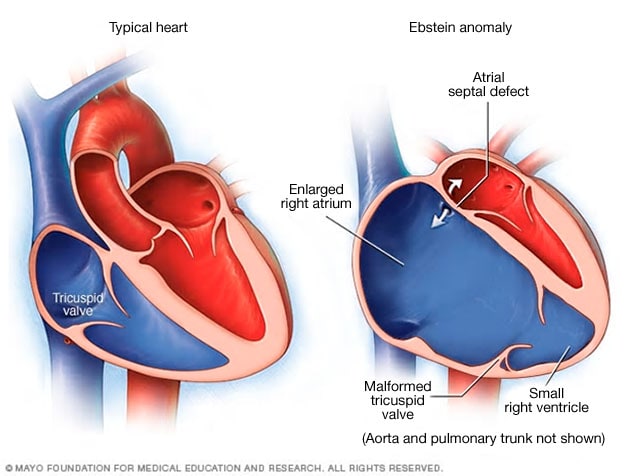
Ebstein anomaly
Ebstein anomaly is a rare heart problem present at birth. This means it's a congenital heart defect. The tricuspid valve is incorrectly formed and located lower than usual in the heart. The condition may occur with a hole between the two upper chambers of the heart, called an atrial septal defect.
Ebstein anomaly is a rare heart problem that's present at birth. That means it's a congenital heart defect.
In this condition, the valve that separates the top and bottom right heart chambers does not form correctly. This valve is called the tricuspid valve. As a result, the valve does not close as it should. Blood moves backward from the bottom to top chamber, making it harder for the heart to work.
In people with Ebstein anomaly, the heart can grow larger. The condition can lead to heart failure.
Treatment of Ebstein anomaly depends on the symptoms. Some people without symptoms only need regular health checkups. Others may need medicines and surgery.
Products & Services
Symptoms
Some babies born with Ebstein anomaly have few or no symptoms. Others have a tricuspid valve that leaks severely and causes more-noticeable problems. Sometimes symptoms don't occur until later in life.
Symptoms of Ebstein anomaly may include:
- Blue or gray lips or fingernails. Depending on skin color, these color changes may be harder or easier to see.
- Fatigue.
- Feeling of a pounding or rapid heartbeat or irregular heartbeats.
- Shortness of breath, especially with activity.
When to see a doctor
Serious heart problems in a baby are often diagnosed at birth or during routine pregnancy checkups.
Make a health appointment if you or your baby have symptoms of heart problems. These symptoms include feeling short of breath or easily tired with little activity, irregular heartbeats, or blue or gray skin. You may be referred to a doctor trained in heart diseases, called a cardiologist.
Causes
Ebstein anomaly is a heart problem that a person is born with. The cause is unknown. To understand more about Ebstein anomaly, it may help to know how the heart works.
How the heart works
Chambers and valves of the heart
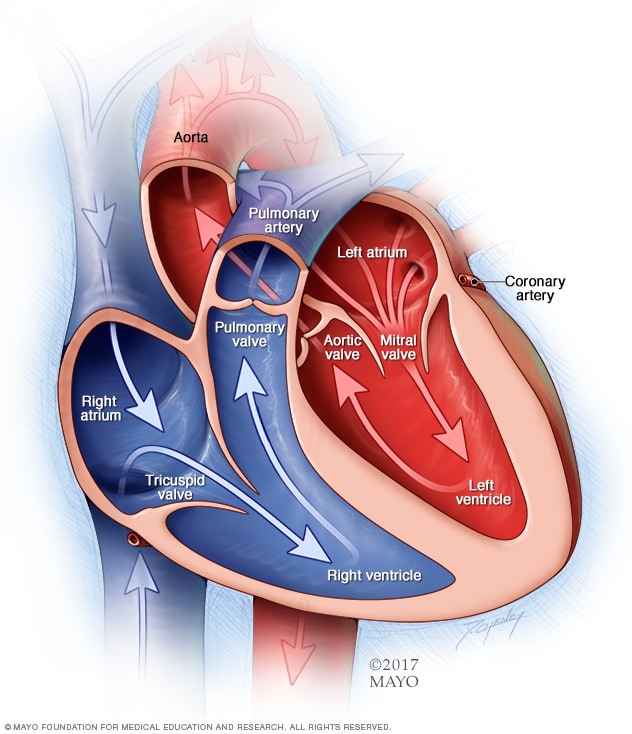
Chambers and valves of the heart
A typical heart has two upper and two lower chambers. The upper chambers, the right and left atria, receive incoming blood. The lower chambers, the more muscular right and left ventricles, pump blood out of the heart. The heart valves, which keep blood flowing in the right direction, are gates at the chamber openings.
The typical heart has four chambers.
- The two upper chambers are called the atria. They receive blood.
- The two lower chambers are called the ventricles. They pump blood.
Four valves open and close to let blood flow in one direction through the heart. Each valve has two or three strong, thin flaps of tissue. The flaps are called leaflets or cusps.
- A valve that is closed stops blood from flowing into the next chamber.
- A closed valve also prevents blood from going back to the previous chamber.
In a typical heart, the tricuspid valve sits between the two right heart chambers.
In Ebstein anomaly, the tricuspid valve is lower than usual in the right lower heart chamber. Also, the shape of the tricuspid valve's flaps is changed. This can cause blood to flow backward into the right upper heart chamber. When this happens, the condition is called tricuspid valve regurgitation.
Heart conditions associated with Ebstein anomaly
Babies born with Ebstein anomaly may have other heart problems, including:
- Holes in the heart. A hole in the heart can lower the amount of oxygen in the blood. Many babies with Ebstein anomaly have a hole between the two upper chambers of the heart. This hole is called an atrial septal defect. Or there may be an opening called a patent foramen ovale (PFO). A PFO is a hole between the upper heart chambers that all babies have before birth that usually closes after birth. It can remain open in some people.
- Irregular heartbeats, called arrhythmias. Heart arrhythmias may feel like a fluttering, pounding or racing heartbeat. Changes in the heartbeat can make it harder for the heart to work as it should.
- Wolff-Parkinson-White (WPW) syndrome. In this condition, an extra signaling pathway between the heart's upper and lower chambers causes a fast heartbeat and fainting.
Risk factors
Ebstein anomaly occurs as the baby grows in the womb during pregnancy.
During the first six weeks of pregnancy, a baby's heart begins to form and starts beating. The major blood vessels that run to and from the heart also begin to develop during this critical time.
It's at this point in a baby's development that congenital heart problems may begin to develop. Researchers aren't sure exactly what increases the risk of a baby having Ebstein anomaly. Genetics and environmental factors are believed be involved. Using some medicines during pregnancy, such as lithium, might increase the risk of Ebstein anomaly in the child.
Complications
Possible complications of Ebstein anomaly include:
- Irregular heartbeats.
- Heart failure.
- Sudden cardiac arrest.
- Stroke.
Pregnancy and Ebstein anomaly
It may be possible to have a successful pregnancy with mild Ebstein anomaly. But pregnancy, labor and delivery put extra strain on the heart. Rarely, extreme complications can develop that can cause serious health concerns in the mother or baby.
Before becoming pregnant, talk to your health care provider about the possible risks and complications. Together you can discuss and plan for any special care needed during pregnancy.