Overview
An enlarged liver is one that's bigger than normal. The medical term is hepatomegaly (hep-uh-toe-MEG-uh-le).
Rather than a disease, an enlarged liver is a sign of an underlying problem, such as liver disease, congestive heart failure or cancer. Treatment involves identifying and controlling the cause of the condition.
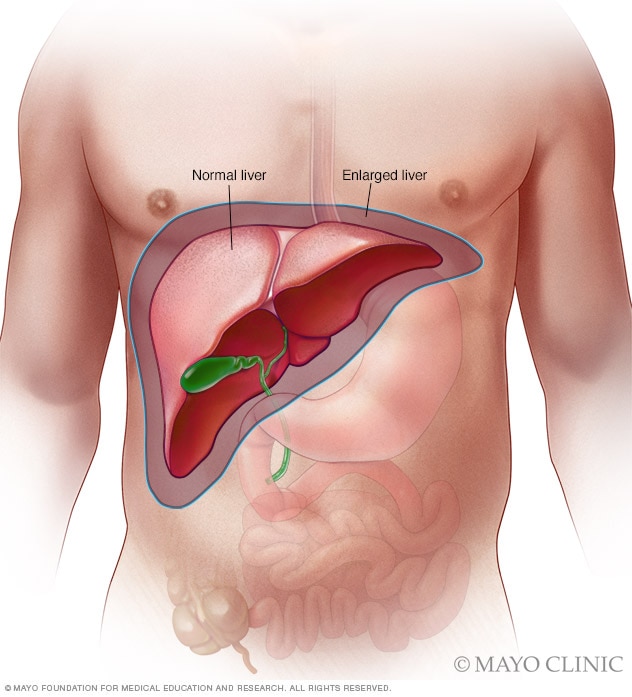
Enlarged liver
An enlarged liver can have many possible causes.
Symptoms
An enlarged liver might not cause symptoms.
When enlarged liver results from liver disease, it might be accompanied by:
- Abdominal pain
- Fatigue
- Nausea and vomiting
- Yellowing of the skin and the whites of the eyes (jaundice)
When to see a doctor
Make an appointment with your doctor if you have symptoms that worry you.
From Mayo Clinic to your inbox
Causes
The liver is a large, football-shaped organ found in the upper right portion of your abdomen. The size of the liver varies with age, sex and body size. Many conditions can cause it to enlarge, including:
Liver diseases
- Cirrhosis
- Hepatitis caused by a virus — including hepatitis A, B and C — or caused by infectious mononucleosis
- Nonalcoholic fatty liver disease
- Alcoholic fatty liver disease
- A disorder that causes abnormal protein to accumulate in your liver (amyloidosis)
- A genetic disorder that causes copper to accumulate in your liver (Wilson's disease)
- A disorder that causes iron to accumulate in your liver (hemachromatosis)
- A disorder that causes fatty substances to accumulate in your liver (Gaucher's disease)
- Fluid-filled pockets in the liver (liver cysts)
- Noncancerous liver tumors, including hemangioma and adenoma
- Obstruction of the gallbladder or bile ducts
- Toxic hepatitis
Cancers
- Cancer that begins in another part of the body and spreads to the liver
- Leukemia
- Liver cancer
- Lymphoma
Heart and blood vessel problems
- Blockage of the veins that drain the liver (Budd-Chiari syndrome)
- Heart failure
- Inflammation of the tissue surrounding the heart (pericarditis)
Risk factors
You're more likely to develop an enlarged liver if you have a liver disease. Factors that can increase your risk of liver problems include:
- Excessive alcohol use. Drinking large amounts of alcohol can be damaging to your liver.
-
Large doses of medicines, vitamins or supplements. Taking larger than recommended doses of vitamins, supplements, or over-the-counter (OTC) or prescription medicines can increase your risk of liver damage.
Acetaminophen overdose is the most common cause of acute liver failure in the United States. Besides being the ingredient in over-the-counter (OTC) pain relievers such as Tylenol, it's in more than 600 medications, both OTC and prescription.
Know what's in the medications you take. Read labels. Look for "acetaminophen," "acetam" or "APAP." Check with your doctor if you're not sure what's too much.
- Herbal supplements. Certain supplements, including black cohosh, ma huang and valerian, can increase your risk of liver damage.
- Infections. Infectious diseases, viral, bacterial or parasitic, can increase your risk of liver damage.
- Hepatitis viruses. Hepatitis A, B and C can cause liver damage.
- Poor eating habits. Being overweight increases your risk of liver disease, as does eating unhealthy foods, such as those with excess fat or sugar.
Prevention
To reduce your risk of liver disease, you can:
- Eat a healthy diet. Choose a diet full of fruits, vegetables and whole grains.
- Drink alcohol in moderation, if at all. Check with your doctor to find out what's the right amount of alcohol for you, if any.
- Follow directions when taking medications, vitamins or supplements. Limit yourself to the recommended doses.
- Limit contact with chemicals. Use aerosol cleaners, insecticides and other toxic chemicals only in well-ventilated areas. Wear gloves, long sleeves and a mask.
- Maintain a healthy weight. Eat a balanced diet and limit foods that are high in sugar and fat. If you're overweight, ask your doctor or a nutritionist about the best way for you to lose weight.
- Quit smoking. Ask your doctor about strategies to help you quit.
-
Use supplements with caution. Talk with your doctor about the risks and benefits of herbal supplements before you take them. Some alternative medicine treatments can harm your liver.
Herbs and supplements to avoid include black cohosh, ma huang and other Chinese herbs, comfrey, germander, greater celandine, kava, pennyroyal, skullcap, and valerian.
