Overview
Frostbite is an injury caused by freezing of the skin and underlying tissues. The early stage of frostbite is called frostnip. It causes a cold feeling followed by numbness. As frostbite gets worse, the affected skin may change color and become hard or waxy-looking.
Exposed skin is at risk of frostbite in conditions that are freezing cold and windy or wet. Frostbite also can occur on skin covered by gloves or other clothing.
Mild frostbite gets better with rewarming. Seek medical attention for anything more serious than mild frostbite because the condition can cause permanent damage to skin, muscle, bone and other tissue.
Symptoms
Stages of frostbite
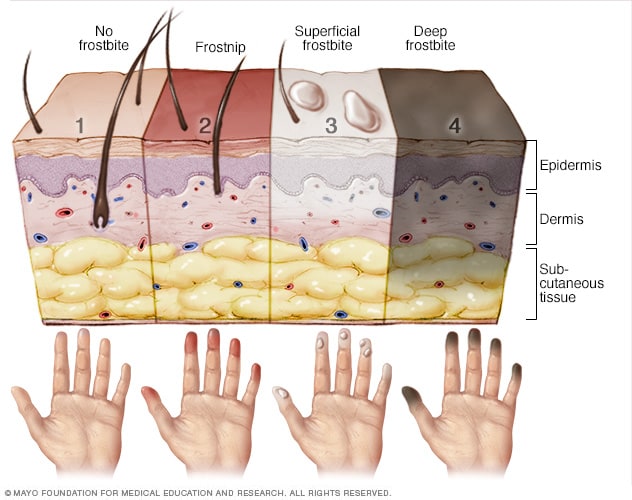
Stages of frostbite
Skin without cold damage (1) has no change in color or texture. Frostnip (2) is the early stage of frostbite. It causes a slight change in skin color and a cold feeling followed by numbness. Frostnip doesn't injure the skin and can be treated with first aid. With superficial frostbite (3), the skin feels warm. A fluid-filled blister may form 12 to 36 hours after rewarming. With deep frostbite (4), skin changes worsen and large blisters may appear 24 to 48 hours after rewarming. Tissue may turn black and hard as it dies.
Symptoms of frostbite include:
- Numbness.
- Tingling.
- Patches of skin in shades of red, white, blue, gray, purple or brown. The color of affected skin depends on how serious the frostbite is and the usual skin color.
- Cold, hard, waxy-looking skin.
- Clumsiness due to joint stiffness.
- Pain.
- Blistering after rewarming.
Frostbite is most common on the fingers, toes, ears, cheeks, penis, chin and tip of the nose. Because of numbness, you may not notice you have frostbite until someone points it out. Changes in the color of the affected area might be difficult to see on brown and Black skin.
Frostbite occurs in several stages:
- Frostnip. Frostnip is the early stage of frostbite. Symptoms are pain, tingling and numbness. Frostnip doesn't cause permanent damage to the skin.
- Mild to moderate frostbite. Frostbite causes slight changes in skin color. The skin may begin to feel warm. This is a sign of serious skin involvement. If you treat frostbite with rewarming at this stage, the surface of the skin may look patchy. The affected area may sting, burn and swell. A fluid-filled blister may form 12 to 36 hours after rewarming. This stage also is called superficial frostbite.
- Deep frostbite. As frostbite progresses, it affects all layers of the skin and the tissues below. The affected skin turns white or blue-gray. Large blood blisters may appear 24 to 48 hours after rewarming. Weeks after the injury, tissue may turn black and hard as it dies.
When to see a doctor
Other than frostnip, frostbite injuries need to be checked by a healthcare professional to find out how serious they are.
Seek emergency care for:
- Intense pain even after taking a pain reliever and rewarming.
- Intense shivering.
- Slurred speech.
- Drowsiness.
- Trouble walking.
People with frostbite also might have hypothermia. Shivering, slurred speech, and being sleepy or clumsy are symptoms of hypothermia. In babies, symptoms are cold skin, a change in skin color and very low energy. Hypothermia is a serious condition in which the body loses heat faster than it can be produced.
What you can do in the meantime
While you wait for emergency medical help or an appointment with a healthcare professional, take these steps as needed:
- Get out of the cold and remove wet clothing.
- If you suspect hypothermia, wrap up in a warm blanket until help arrives.
- Protect the injured area from further damage.
- Don't walk on frostbitten feet or toes if possible.
- Take a pain reliever if needed.
- Drink a warm, nonalcoholic beverage if possible.
Causes
The most common cause of frostbite is exposure to freezing cold. The risk rises if the weather also is wet and windy. Frostbite also can be caused by direct contact with ice, freezing metals or very cold liquids.
Risk factors
Risk factors for frostbite include:
- Being in freezing conditions without protective clothing.
- Having certain medical conditions, such as diabetes, exhaustion, poor blood flow or congestive heart failure.
- Regularly smoking tobacco.
- Having impaired judgment while in very cold conditions.
- Having had frostbite or another cold injury in the past.
- Being an infant or older adult in cold conditions. People in these age groups have a harder time producing and retaining body heat.
- Being in cold conditions at high altitude.
Complications
Complications of frostbite include:
- Hypothermia.
- Increased sensitivity to cold and a higher risk of frostbite in the future.
- Long-term numbness in the affected area.
- Excessive sweating, also called hyperhidrosis.
- Changes in or loss of nails.
- Growth problems in children if frostbite damages a bone's growth plate.
- Infection.
- Tetanus.
- Gangrene, which can result in having the affected area removed. This procedure is called amputation.
Prevention
Frostbite can be prevented. Here are tips to help you stay safe and warm.
- Limit time outdoors when it's freezing cold and wet or windy. Pay attention to weather forecasts and wind chill readings. The risk of frostbite increases the longer you're in freezing conditions. And frostbite can happen in an instant if bare skin touches something cold, such as freezing metal.
- Dress in loose layers. Air trapped between the layers helps insulate you from the cold. Choose undergarments that wick moisture away from the skin. Next put on something made of fleece or wool. For the outer layer, wear something windproof and waterproof. Change out of wet gloves, hats and socks as soon as possible.
- Wear a hat or headband made for cold weather. Make sure it covers your ears.
- Wear mittens. Mittens provide better protection than do gloves. Under a pair of heavy mittens, also wear glove liners, which wick moisture away from the skin.
- Wear socks and sock liners. Make sure they fit well, wick moisture and provide insulation.
- Watch for symptoms of frostbite. Early signs of frostbite are slight changes in skin color, prickling and numbness. Seek warm shelter if you notice symptoms of frostbite.
- Plan to protect yourself. When traveling in cold weather, carry emergency supplies and warm clothing in case you become stranded. If you'll be in remote territory, tell others your route and expected return date.
- Don't drink alcohol if you plan to be outdoors in cold weather. Alcoholic beverages cause the body to lose heat faster and can impair judgment.
- Eat well-balanced meals and stay hydrated. Doing this even before you go out in the cold helps you stay warm.
- Keep moving. Exercise can get your blood flowing and help you stay warm, but don't do it to the point of exhaustion.