Overview
Galactorrhea (guh-lack-toe-REE-uh) is a milky nipple discharge unrelated to the usual milk production of breastfeeding. Galactorrhea itself isn't a disease, but it could be a sign of another medical condition. It usually happens in women, even those who have never had children or who have gone through menopause. But galactorrhea can happen in men and babies.
Excessive breast stimulation, medicine side effects or conditions of the pituitary gland all may contribute to galactorrhea. Often, galactorrhea results from increased levels of prolactin, the hormone that stimulates milk production.
Sometimes, the cause of galactorrhea can't be determined. The condition may go away on its own.
Products & Services
Symptoms
Symptoms linked to galactorrhea include:
- Milky nipple discharge that may be constant, or it may come and go.
- Nipple discharge involving multiple milk ducts.
- Spontaneously leaked or manually expressed nipple discharge.
- Nipple discharge from one or both breasts.
- Absent or irregular menstrual periods.
- Headaches or vision problems.
When to see a doctor
If you have a persistent, spontaneous milky nipple discharge from one or both of your breasts and you're not pregnant or breastfeeding, make an appointment to see your healthcare professional.
If breast stimulation — such as excessive nipple manipulation during sexual activity — triggers nipple discharge from multiple ducts, you have little cause for worry. The discharge probably doesn't signal anything serious. This discharge often goes away on its own. If you have persistent discharge that doesn't go away, make an appointment with your healthcare professional to get it checked out.
Nonmilky nipple discharge — particularly bloody, yellow or clear spontaneous discharge that comes from one duct or is associated with a lump you can feel — requires prompt medical attention. It may be a sign of an underlying breast cancer.
Causes
Pituitary gland and hypothalamus
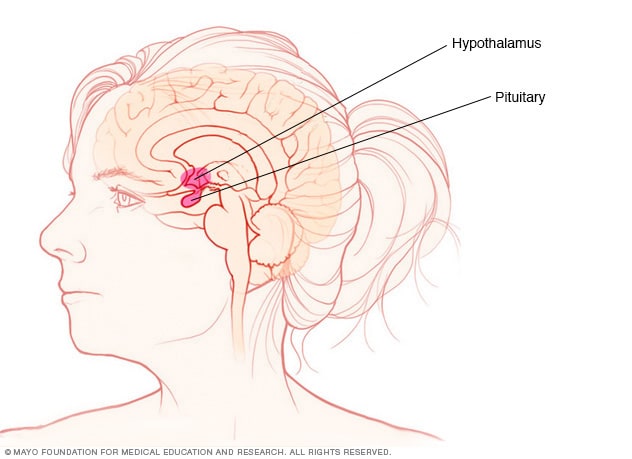
Pituitary gland and hypothalamus
The pituitary gland and the hypothalamus are in the brain. They control hormone production.
Galactorrhea often results from having too much prolactin in the body. Prolactin is the hormone responsible for milk production after a baby is born. Prolactin is made by the pituitary gland, a small bean-shaped gland at the base of the brain that secretes and regulates several hormones.
Possible causes of galactorrhea include:
- Medicines, such as certain sedatives, antidepressants, antipsychotics and high blood pressure drugs.
- Opioid use.
- Herbal supplements, such as fennel, anise or fenugreek seed.
- Birth control pills.
- A noncancerous pituitary tumor, called prolactinoma, or other conditions of the pituitary gland.
- Underactive thyroid, called hypothyroidism.
- Chronic kidney disease.
- Excessive breast stimulation, which may be associated with sexual activity, frequent breast self-exams with nipple manipulation or prolonged clothing friction.
- Nerve damage to the chest wall from chest surgery, burns or other chest injuries.
- Spinal cord surgery, injury or tumors.
- Stress.
Idiopathic galactorrhea
Sometimes healthcare professionals can't find a cause for galactorrhea. This is called idiopathic galactorrhea. It may mean that your breast tissue is particularly sensitive to the milk-producing hormone prolactin in your blood. If you have increased sensitivity to prolactin, even normal prolactin levels can lead to galactorrhea.
Galactorrhea in men
In males, galactorrhea may be associated with testosterone deficiency, called male hypogonadism. This usually happens along with breast enlargement or tenderness, called gynecomastia. Erectile dysfunction and a lack of sexual desire also are associated with testosterone deficiency.
Galactorrhea in newborns
Galactorrhea sometimes occurs in newborns. High maternal estrogen levels cross the placenta into the baby's blood. This can cause enlargement of the baby's breast tissue, which may be associated with a milky nipple discharge. This milky discharge is temporary and goes away on its own. If the discharge is persistent, the newborn should be evaluated by a healthcare professional.
Risk factors
Anything that triggers the release of the hormone prolactin can increase the risk of galactorrhea. Risk factors include:
- Certain medicines, illicit drugs and herbal supplements.
- Conditions that affect the pituitary gland, such as noncancerous pituitary tumors.
- Certain medical conditions, such as chronic kidney disease, spinal cord injury, injuries to the chest wall and underactive thyroid.
- A lot of touching and rubbing of the breasts.
- Stress.
Feb. 17, 2024