Overview
Enlarged breasts in men (gynecomastia)
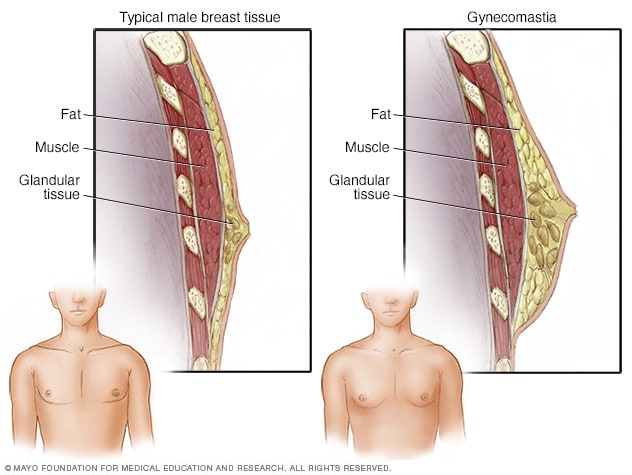
Enlarged breasts in men (gynecomastia)
With gynecomastia, tissue inside the breast glands grows. This can cause female-appearing breasts.
Gynecomastia (guy-nuh-koh-MAS-tee-uh) is an increase in the amount of breast gland tissue in boys or men. An imbalance of the hormones estrogen and testosterone causes it. Gynecomastia can affect one or both breasts, sometimes unevenly.
Pseudogynecomastia is an increase in fat but not gland tissue in male breasts.
Newborns, boys going through puberty and older men may develop gynecomastia due to natural changes in hormone levels. There are other causes too.
Most often, gynecomastia isn't a serious problem. But it can be tough to cope with the condition. People with gynecomastia sometimes have pain in their breasts. And they may feel embarrassed.
Gynecomastia may go away on its own. If it doesn't, medicine or surgery may help.
Products & Services
Symptoms
Gynecomastia symptoms can include:
- Pain, especially in teenagers.
- Swollen breast tissue.
- Tender breasts.
- Sensitive nipples when they rub against clothes.
When to see a doctor
See a member of your health care team if you have:
- Swelling.
- Pain or tenderness.
- Fluid coming out of one or both breast nipples. This is called nipple discharge.
- A firm or hard lump.
- Dimpled skin on the breast.
Causes
In people assigned male at birth, the body mainly makes the sex hormone testosterone. It also makes small amounts of the hormone estrogen. Gynecomastia can happen when the amount of testosterone in the body drops compared with estrogen. The decrease can be caused by conditions that lower testosterone or block its effects. Or it can be caused by conditions that raise the estrogen level.
Some things that can change the body's hormone balance include the following:
Natural hormone changes
The hormones testosterone and estrogen control sex traits. Testosterone controls traits such as muscle mass and body hair. Estrogen controls traits that include the growth of breasts.
Estrogen levels that are too high or are out of balance with testosterone levels can cause gynecomastia.
- Gynecomastia in infants. More than half of male babies are born with enlarged breasts due to the effects of estrogen during pregnancy. The swollen breast tissue usually goes away within 2 to 3 weeks after birth.
- Gynecomastia during puberty. Gynecomastia caused by hormone changes during puberty is somewhat common. Most of the time, the swollen breast tissue goes away without treatment within 6 months to 2 years.
- Gynecomastia in adults. About 24% to 65% of men ages 50 to 80 get gynecomastia. But most adults with the condition have no symptoms.
Medicines
The following medicines can cause gynecomastia:
- Anti-androgens used to treat conditions such as an enlarged prostate and prostate cancer. Examples of these medicines include flutamide, finasteride (Proscar, Propecia) and spironolactone (Aldactone, Carospir).
- Anabolic steroids and androgens to treat delayed puberty or muscle loss from another disease.
- Antiretroviral medicines. The estrogen-like properties of some HIV medicines can cause gynecomastia, especially efavirenz.
- ADHD medicines that contain amphetamines, such as Adderall.
- Anti-anxiety medications, such as diazepam (Valium).
- Tricyclic antidepressants.
- Some antibiotics.
- Opioids to treat chronic pain.
- Ulcer medicines, such as the nonprescription medicines cimetidine (Tagamet HB) and omeprazole (Prilosec).
- Chemotherapy to treat cancer.
- Heart medicines, such as digoxin (Lanoxin) and calcium channel blockers.
- Stomach-emptying medicines, such as metoclopramide
Recreational drugs, illegal drugs and alcohol
Substances that can cause gynecomastia include:
- Alcohol.
- Anabolic steroids used to build muscle and improve athletic performance.
- Amphetamines.
- Marijuana.
- Heroin.
- Methadone (Methadose).
Health conditions
Certain health conditions that affect the balance of hormones can either cause or be linked with gynecomastia. They include:
- Hypogonadism. Conditions that lower the amount of testosterone the body makes can be linked with gynecomastia. Some examples are Klinefelter syndrome and pituitary insufficiency.
- Aging. Hormone changes that happen with aging can cause gynecomastia, especially in people who are overweight.
- Tumors. Some tumors can make hormones that shift the body's hormone balance. These include tumors involving the testes, adrenal glands or pituitary gland.
- Hyperthyroidism. In this condition, the thyroid gland makes too much of the hormone thyroxine.
- Kidney failure. About half the people who receive dialysis treatment develop gynecomastia due to hormone changes.
- Liver failure and cirrhosis. Changes in hormone levels related to liver problems and cirrhosis medicines are linked with gynecomastia.
- Malnutrition and starvation. When the body doesn't get enough nutrition, testosterone levels drop. But estrogen levels stay the same. This causes an imbalance in the hormones.
Herbal products
Some plant oils used in shampoos, soaps or lotions have been associated with gynecomastia. These include tea tree or lavender oil. This likely is due to compounds in the oil that may mimic estrogen or affect testosterone.
Risk factors
Risk factors for gynecomastia include:
- Puberty.
- Older age.
- Obesity.
- Use of anabolic steroids to improve athletic performance.
- Certain health conditions. These include liver and kidney disease, thyroid disease, Klinefelter syndrome and some tumors.
Complications
Gynecomastia has few physical complications. But it may lead to mental health concerns due to changes in how the chest looks.
Prevention
Several factors within your control may lower the risk of gynecomastia:
- Don't use drugs. Examples include anabolic steroids, amphetamines, heroin and marijuana.
- Limit or stay away from alcohol. It helps not to drink alcohol. If you do drink, do so in moderation. That means no more than two drinks a day for men.
Oct. 26, 2023