Overview
Hand-foot-and-mouth disease is a mild, contagious viral infection common in young children. Symptoms include sores in the mouth and a rash on the hands and feet. Hand-foot-and-mouth disease is most commonly caused by a coxsackievirus.
There's no specific treatment for hand-foot-and-mouth disease. Frequent hand-washing and avoiding close contact with people who have hand-foot-and-mouth disease may help lower your child's risk of infection.
Symptoms
Hand-foot-and-mouth disease may cause all of the following symptoms or only some of them. They include:
- Fever.
- Sore throat.
- Feeling sick.
- Painful, blister-like lesions on the tongue, gums and inside of the cheeks.
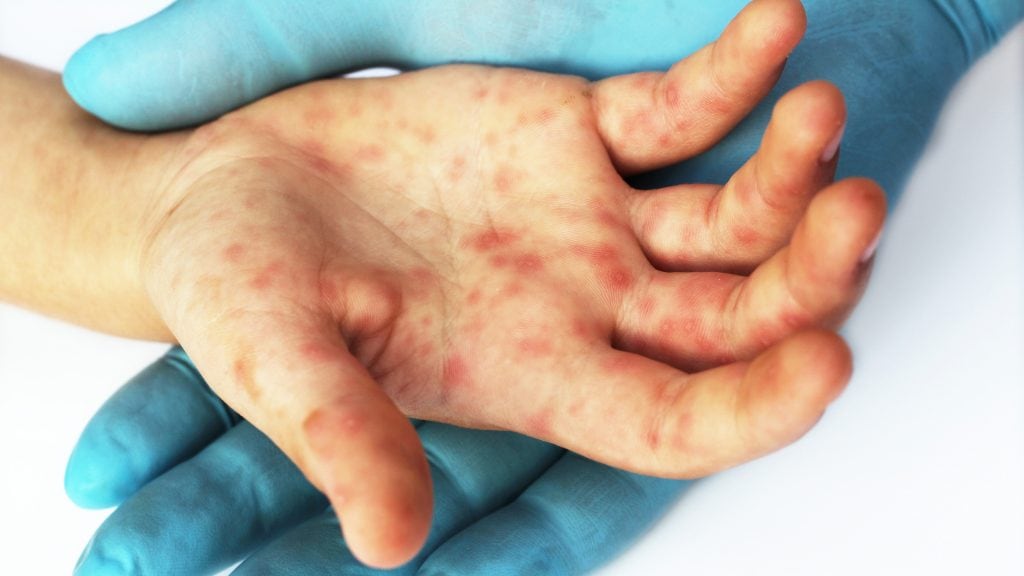
- A rash on the palms, soles and sometimes the buttocks. The rash is not itchy, but sometimes it has blisters. Depending on skin tone, the rash may appear red, white, gray, or only show as tiny bumps.
- Fussiness in infants and toddlers.
- Loss of appetite.

Hand-foot-and-mouth disease on the hand
Hand-foot-and-mouth disease often causes a rash of painful, blister-like lesions on the palms of the hands. Rashes appear differently depending on skin tone.

Hand-foot-and-mouth disease on the foot
Hand-foot-and-mouth disease often causes a rash of painful, blister-like lesions on the soles of the feet. Rashes appear differently depending on skin tone.
The usual period from initial infection to the time symptoms appear (incubation period) is 3 to 6 days. Children may get a fever and develop a sore throat. They sometimes lose their appetites and don't feel well.
One or two days after the fever begins, painful sores may develop in the front of the mouth or throat. A rash on the hands and feet and sometimes on the buttocks may also appear.
Sores that develop in the back of the mouth and throat may suggest a related viral illness called herpangina. Other features of herpangina include a sudden high fever and, in some instances, seizure. In rare cases, sores develop on the hands, feet or other parts of the body.
When to see a doctor
Hand-foot-and-mouth disease is usually a minor illness. It typically only causes fever and mild symptoms for a few days. Call your health care provider if your child is younger than six months, has a weakened immune system, or has mouth sores or a sore throat that makes it painful to drink fluids. Call your provider, too, if your child's symptoms don't improve after 10 days.
From Mayo Clinic to your inbox
Causes
The most common cause of hand-foot-and-mouth disease is infection from coxsackievirus 16. This coxsackievirus belongs to a group of viruses called nonpolio enteroviruses. Other types of enteroviruses also may cause hand-foot-and-mouth disease.
Most people get the coxsackievirus infection — and hand-foot-and-mouth disease — through the mouth. The illness spreads by person-to-person contact with an infected person's:
- Nose secretions or throat discharge
- Saliva
- Fluid from blisters
- Stool
- Respiratory droplets sprayed into the air after a cough or sneeze
Common in child care setting
Hand-foot-and-mouth disease is most common in children in child care. That's because young children need frequent diaper changes and help using the toilet. They also tend to put their hands in their mouths.
Your child is most contagious during the first week of having hand-foot-and-mouth disease. But the virus can remain in the body for weeks after the symptoms go away. That means your child still can infect others.
Some people, especially adults, can pass the virus without showing any symptoms of the disease.
Outbreaks of the disease are more common in summer and early autumn in the United States. In tropical climates, outbreaks occur during the rainy season.
Different from foot-and-mouth disease
Hand-foot-and-mouth disease isn't related to foot-and-mouth disease (sometimes called hoof-and-mouth disease), which is an infectious viral disease found in farm animals. You can't get hand-foot-and-mouth disease from pets or other animals, and you can't spread it to them.
Risk factors
Age is the main risk factor for hand-foot-and-mouth disease. The disease mostly affects children younger than ages 5 to 7 years. Children in child care settings are especially vulnerable because the infection spreads by person-to-person contact.
Hand-foot-mouth-disease typically affects young children, but anyone can get it.
Older children and adults are thought to have immunity against hand-foot-and-mouth disease. They often build antibodies after exposure to the viruses that cause the disease. But adolescents and adults sometimes still get hand-foot-and-mouth disease.
Complications
The most common complication of hand-foot-and-mouth disease is dehydration. The illness can cause sores in the mouth and throat, making it painful to swallow.
Encourage your child to drink fluids during the illness. If children become too dehydrated, they may need intravenous (IV) fluids in the hospital.
Hand-foot-and-mouth disease is usually a minor illness. It usually only causes fever and mild symptoms for a few days. Sometimes the enterovirus that causes hand-foot-and-mouth disease enters the brain and causes serious complications:
- Viral meningitis. This is a rare infection and inflammation of the membranes (meninges) and cerebrospinal fluid surrounding the brain and spinal cord.
- Encephalitis. This severe and potentially life-threatening disease involves brain inflammation. Encephalitis is rare.
Prevention
You can lower your child's risk of hand-foot-and-mouth disease in many ways:
- Wash hands often. Wash your hands for at least 20 seconds. Be sure to wash your hands after using the toilet or changing a diaper. Also, wash your hands before preparing or eating food and after blowing your nose, sneezing or coughing. When soap and water aren't available, use hand sanitizer.
- Teach good hygiene. Show your children how to wash their hands and help them do it often. Show them how to practice overall good hygiene. Explain to them why it's best not to put their fingers, hands or any other objects in their mouths.
- Disinfect common areas. Clean high-traffic areas and surfaces first with soap and water. Next, clean with a diluted solution of chlorine bleach and water. If you're in a child care setting, follow a strict schedule of cleaning and disinfecting. The virus can live for days on surfaces in common areas, including on door knobs, and on shared items such as toys.
- Avoid close contact. Because hand-foot-and-mouth disease is highly contagious, people with the illness should limit their exposure to others while they have symptoms. Keep children with hand-foot-and-mouth disease out of their child care setting or school until fever is gone and mouth sores have healed. If you have the illness, stay home from work.