Overview
Hydrocephalus is the buildup of fluid in cavities called ventricles deep within the brain. The excess fluid increases the size of the ventricles and puts pressure on the brain.
Cerebrospinal fluid usually flows through the ventricles and bathes the brain and spinal column. But the pressure of too much cerebrospinal fluid can damage brain tissues and cause a range of symptoms related to brain function.
Hydrocephalus can happen at any age, but it occurs more often among infants and among adults 60 and older. Surgery can restore and maintain healthy cerebrospinal fluid levels in the brain. Therapies can manage symptoms resulting from hydrocephalus.
Products & Services
Symptoms
The symptoms of hydrocephalus can vary by age.
Infants
Common symptoms of hydrocephalus in infants include:
Changes in the head
- A head that is larger than usual.
- A rapid increase in the size of an infant's head.
- A bulge or tense soft spot on the top of the head.
Physical symptoms
- Nausea and vomiting.
- Sleepiness or sluggishness, known as lethargy.
- Irritability.
- Poor eating.
- Seizures.
- Eyes fixed downward, known as sunsetting of the eyes.
- Problems with muscle tone and strength.
Toddlers and older children
Among toddlers and older children, symptoms might include:
Physical symptoms
- Headache.
- Blurred or double vision.
- Eye movements that are not usual.
- Enlargement of a toddler's head.
- Sleepiness or sluggishness.
- Nausea or vomiting.
- Trouble with balance.
- Poor coordination.
- Poor appetite.
- Loss of bladder control or urinating often.
Behavioral and cognitive changes
- Irritability.
- Change in personality.
- Decline in school performance.
- Delays or problems with earlier gained skills, such as walking or talking.
Young and middle-aged adults
Common symptoms in this age group include:
- Headache.
- Sluggishness.
- Loss of coordination or balance.
- Loss of bladder control or needing to urinate often.
- Vision problems.
- Decline in memory, concentration and other thinking skills that may affect job performance.
Older adults
Among adults 60 and older, the more common symptoms of hydrocephalus are:
- Loss of bladder control or needing to urinate often.
- Memory loss.
- Progressive loss of other thinking or reasoning skills.
- Trouble walking, often described as shuffling or the feeling of the feet being stuck.
- Poor coordination or balance.
When to see a doctor
Seek emergency medical care for infants and toddlers with these symptoms:
- A high-pitched cry.
- Problems with sucking or feeding.
- Recurrent vomiting with no clear cause.
- Seizures.
Seek prompt medical attention for other hydrocephalus symptoms in any age group.
More than one condition can cause the problems associated with hydrocephalus. It's important to get a timely diagnosis and appropriate care.
Causes
Brain ventricles
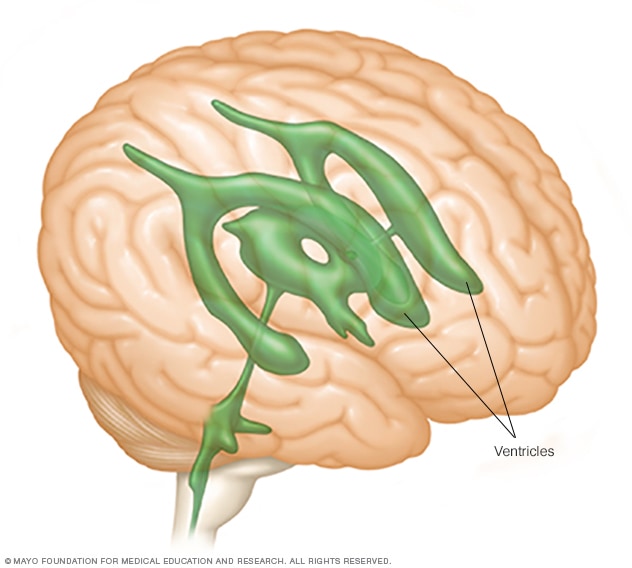
Brain ventricles
Your brain floats in a bath of cerebrospinal fluid. This fluid also fills large open structures, called ventricles, which lie deep inside your brain. The fluid-filled ventricles help keep the brain buoyant and cushioned.
Hydrocephalus is caused by an imbalance between how much cerebrospinal fluid is produced and how much is absorbed into the bloodstream.
Tissues lining the ventricles of the brain produce cerebrospinal fluid. It flows through the ventricles by way of channels. The fluid eventually flows into spaces around the brain and spinal column. It's absorbed primarily by blood vessels in tissues on the surface of the brain.
Cerebrospinal fluid plays an important role in brain function by:
- Allowing the relatively heavy brain to float within the skull.
- Cushioning the brain to prevent injury.
- Removing waste products of the brain's metabolism.
- Flowing back and forth between the brain cavity and spinal column. This flow maintains a constant pressure within the brain and allows for changes in blood pressure in the brain.
Too much cerebrospinal fluid in the ventricles can occur for one of the following reasons:
- Obstruction. Partial blockage of the flow of cerebrospinal fluid is the most common cause of too much cerebrospinal fluid in the ventricles. A blockage may happen from one ventricle to another or from the ventricles to other spaces around the brain.
- Poor absorption. Less common is a problem with absorbing cerebrospinal fluid. This is often related to inflammation of brain tissues from disease or injury.
- Overproduction. Rarely, cerebrospinal fluid is created more quickly than it can be absorbed.
Risk factors
Much of the time, the cause of hydrocephalus is not known. However, developmental or medical problems can contribute to or trigger hydrocephalus.
Newborns
Hydrocephalus may be present at or before birth, known as congenital hydrocephalus. Or it can occur shortly after birth. Any of the following incidents may cause hydrocephalus in newborns:
- The central nervous system developed in a way that blocks the flow of cerebrospinal fluid.
- Bleeding occurred within the ventricles. This is a possible complication of premature birth.
- There was an infection in the uterus during pregnancy, such as rubella or syphilis. An infection can cause swelling in the brain tissues of an unborn baby.
Other contributing factors
Other factors that can contribute to hydrocephalus among any age group include:
- Tumors of the brain or spinal cord.
- Central nervous system infections, such as bacterial meningitis or mumps.
- Bleeding in the brain from a stroke or head injury.
- Other traumatic injury to the brain.
Complications
In most cases, hydrocephalus worsens. Without treatment, hydrocephalus leads to complications. Complications may include learning disabilities or developmental and physical disabilities. Complications of this condition also can result in death. When hydrocephalus is mild and it's treated, there may be few, if any, serious complications.
Sept. 15, 2023