Overview
Hypopituitarism is a rare condition in which the pituitary gland doesn't make one or more hormones or doesn't make enough hormones.
The pituitary gland is a kidney-bean-sized gland at the base of your brain. It is part of the body's system of glands that make hormones, called the endocrine system. The pituitary gland makes several hormones. They act on nearly every part of the body.
Pituitary gland and hypothalamus
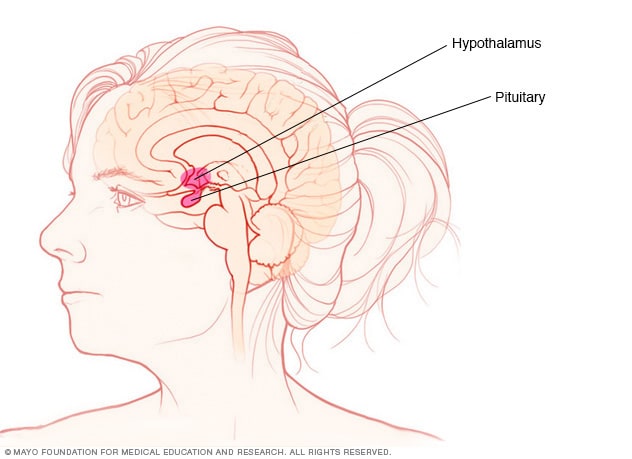
Pituitary gland and hypothalamus
The pituitary gland and the hypothalamus are in the brain. They control hormone production.
Endocrine system
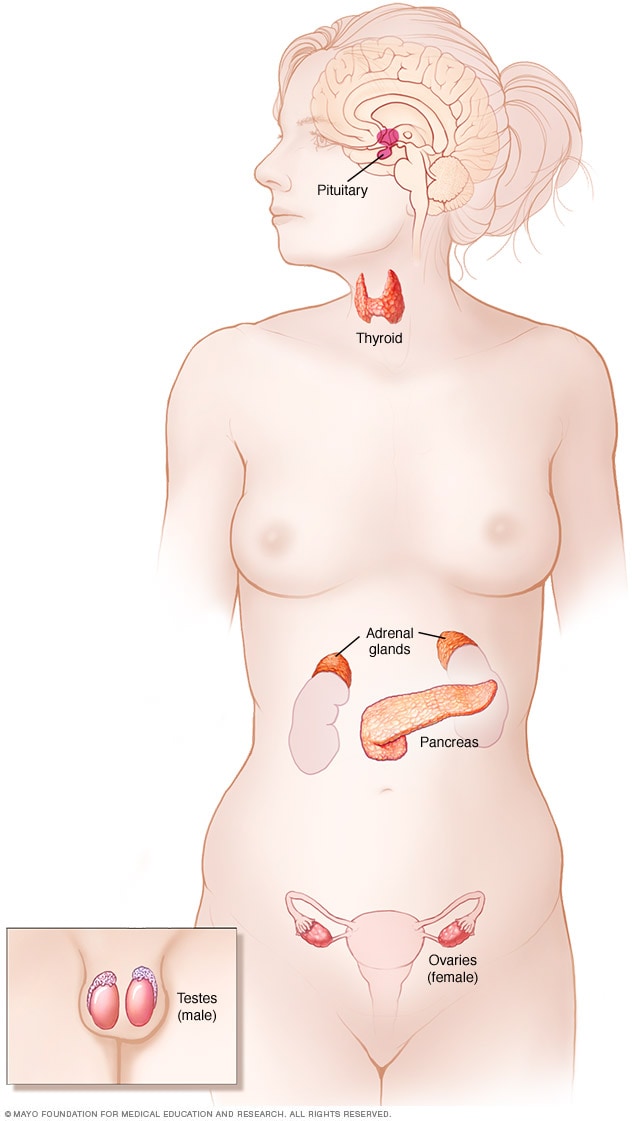
Endocrine system
The endocrine system is made up of glands and organs that make hormones. The endocrine system includes the pituitary gland, thyroid gland, parathyroid glands, adrenal glands, pancreas, ovaries and testicles.
Hypopituitarism is when there isn't enough of one or more of the pituitary hormones. This lack of hormones, called a deficiency, can affect how the body works in many ways. These include growth, blood pressure and the ability to have children, among others. Symptoms depend on which hormones are missing.
People who have hypopituitarism usually need to take medicines for the rest of their lives. These medicines replace the missing hormones, which helps control symptoms.
Products & Services
Symptoms
The symptoms of hypopituitarism usually start slowly and get worse over time. They might not be noticed for months or even years. But for some people, symptoms start suddenly.
Symptoms of hypopituitarism vary from person to person. Symptoms depend on what hormones are missing and how little of the hormone is being made. There might be more than one hormone that's low. A second hormone deficiency might increase the symptoms of the first one. Or sometimes, it might hide those symptoms.
Growth hormone (GH) deficiency
In children, GH deficiency can cause growth problems and short stature. Most adults who have GH deficiency don't have symptoms. But some adults have:
- Fatigue.
- Muscle weakness.
- Changes in body fat.
- Loss of interest in activities.
- Lack of social contacts.
Luteinizing hormone (LH) and follicle-stimulating hormone (FSH) deficiency
A lack of these hormones, called gonadotropins, affects the reproductive system.
The lack of hormones keeps the ovaries from making enough eggs and estrogen. It keeps the testicles from making enough sperm and testosterone. This can lower sex drive and cause tiredness. It also can make it hard or impossible to have children — a condition called infertility. In children, the physical changes to an adult body, known as puberty, may not occur or may be late.
Some people might have symptoms such as:
- Hot flashes.
- Irregular periods or no periods.
- Loss of pubic hair.
- Not being able to make milk for breastfeeding.
- Not being able to get or keep an erection, known as erectile dysfunction.
- Decreased facial or body hair.
- Mood changes.
- Fatigue.
Thyroid-stimulating hormone (TSH) deficiency
This hormone controls the thyroid gland. Too little TSH leads to low levels of thyroid hormones. This condition is called hypothyroidism. It causes symptoms such as:
- Tiredness.
- Weight gain.
- Dry skin.
- Constipation.
- Sensitivity to cold or trouble staying warm.
Adrenocorticotropic hormone (ACTH) deficiency
This hormone helps the adrenal glands work correctly. It also helps the body react to stress. Symptoms of ACTH deficiency include:
- Severe tiredness.
- Low blood pressure.
- Many and lasting infections.
- Nausea, vomiting or abdominal pain.
- Confusion.
Anti-diuretic hormone (ADH) deficiency
This hormone, which also is called vasopressin, helps the body balance its fluid levels. An ADH deficiency can lead to a disorder called diabetes insipidus, which can cause:
- Urinating more than usual.
- Extreme thirst.
- Imbalances in minerals such as sodium and potassium, known as electrolytes.
Prolactin deficiency
Prolactin is the hormone that tells the body when to start making breast milk. Low levels of prolactin can cause problems with making milk for breastfeeding.
When to see a doctor
See your health care provider if you develop any symptoms of hypopituitarism.
Contact your health care provider right away if symptoms of hypopituitarism start suddenly or come with a bad headache, changes in vision, confusion or a drop in blood pressure. These could be symptoms of sudden damage to the pituitary gland tissue. This condition is known as pituitary apoplexy.
Bleeding into the pituitary gland can cause pituitary apoplexy. Pituitary apoplexy is a medical emergency and needs medical attention quickly.
Causes
Hypopituitarism has a number of causes. One common cause is a tumor of the pituitary gland. As a pituitary tumor grows, it can press on and damage pituitary tissue. This disrupts the pituitary gland's ability to make hormones. A tumor also can press on the optic nerves, causing vision problems.
Other potential causes of damage to the pituitary gland that may lead to hypopituitarism include:
- Lack of blood flow to the brain or pituitary gland, known as a stroke, or bleeding, called hemorrhage, into the brain or pituitary gland.
- Certain medicines, such as narcotics, high-dose steroids or certain cancer medicines called checkpoint inhibitors.
- Swelling, known as inflammation, of the pituitary gland caused by an unusual immune system response, called hypophysitis.
- Infections of the brain, such as meningitis, or infections that can spread to the brain, such as tuberculosis or syphilis.
- Significant blood loss during childbirth, which can damage the front part of the pituitary gland. This condition is known as Sheehan syndrome or postpartum pituitary necrosis.
In some cases, a change in a gene causes hypopituitarism. That change is heredity, which means it is passed down in families. The genetic change affects the pituitary gland's ability to make one or more of its hormones. This often starts at birth or in early childhood.
Tumors or diseases of a part of the brain that's just above the pituitary, called the hypothalamus, also can cause hypopituitarism. The hypothalamus makes hormones that affect how the pituitary gland works.
Sometimes, the cause of hypopituitarism isn't known.
Risk factors
Most people with hypopituitarism don't have any factors that put them at higher risk of developing the condition. But the following may raise the risk of developing hypopituitarism:
- A head injury.
- Brain surgery.
- Radiation treatment to the head or neck.
- Diseases that affect more than one part of the body. These include an inflammatory disease that affects various organs, called sarcoidosis; a disease in which unusual cells cause scarring, called Langerhans cell histiocytosis; and a disease that causes too much iron in the liver and other tissues, called hemochromatosis.
Feb. 13, 2024