Overview
Lung transplant
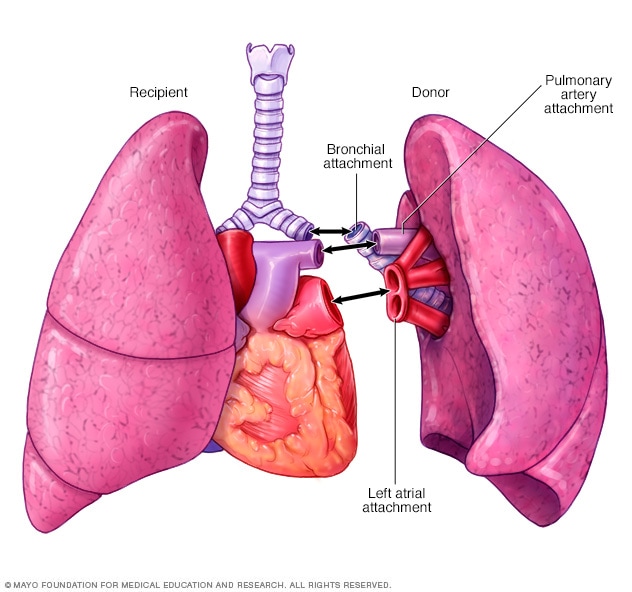
Lung transplant
During a lung transplant, surgeons remove your diseased lung and then attach a donor lung to your airway and to the blood vessels that lead to and from your heart.
A lung transplant is a surgical procedure to replace a diseased or failing lung with a healthy lung, usually from a deceased donor. A lung transplant is reserved for people who have tried medications or other treatments, but their conditions haven't sufficiently improved.
Depending on your medical condition, a lung transplant may involve replacing one of your lungs or both of them. In some situations, the lungs may be transplanted along with a donor heart.
While a lung transplant is a major operation that can involve many complications, it can greatly improve your health and quality of life.
When faced with a decision about having a lung transplant, know what to expect of the lung transplant process, the surgery itself, potential risks and follow-up care.
Products & Services
Why it's done
Unhealthy or damaged lungs can make it difficult for your body to get the oxygen it needs to survive. A variety of diseases and conditions can damage your lungs and keep them from functioning effectively. Some of the more common causes include:
- Chronic obstructive pulmonary disease (COPD), including emphysema
- Scarring of the lungs (pulmonary fibrosis)
- Cystic fibrosis
- High blood pressure in the lungs (pulmonary hypertension)
Lung damage can often be treated with medication or with special breathing devices. But when these measures no longer help or your lung function becomes life-threatening, your health care provider might suggest a single-lung transplant or a double-lung transplant.
Some people with coronary artery disease may need a procedure to restore blood flow to a blocked or narrowed artery in the heart, in addition to a lung transplant. In some cases, people with serious heart and lung conditions may need a combined heart-lung transplant.
Factors that may affect your eligibility for a lung transplant
A lung transplant isn't the right treatment for everyone. Certain factors may mean you're not a good candidate for a lung transplant. While each case is considered individually by a transplant center, a lung transplant may not be appropriate if you:
- Have an active infection
- Have a recent personal medical history of cancer
- Have serious diseases such as kidney, liver or heart diseases
- Are unwilling or unable to make lifestyle changes necessary to keep your donor lung healthy, such as not drinking alcohol or not smoking
- Do not have a supportive network of family and friends
Risks
Complications associated with a lung transplant can be serious and sometimes fatal. Major risks include rejection and infection.
Risk of rejection
Your immune system defends your body against foreign substances. Even with the best possible match between you and the donor, your immune system will try to attack and reject your new lung or lungs. The risk of rejection is highest soon after the lung transplant and is reduced over time.
Your drug regimen after transplant includes medications to suppress your immune system (immunosuppressant medications) in an effort to prevent organ rejection. You take these anti-rejection drugs for the rest of your life.
Side effects of anti-rejection drugs
Anti-rejection drugs may cause noticeable side effects, including:
- Weight gain
- Unwanted hair growth or hair loss
- High cholesterol
- Stomach problems
Some anti-rejection medications can also increase your risk of developing new conditions or aggravating existing conditions, such as:
- Diabetes
- Kidney damage
- Osteoporosis
- Cancer
- High blood pressure (hypertension)
Risk of infection
Anti-rejection drugs suppress your immune system, making your body more susceptible to infections, particularly in your lungs.
To help prevent infections, your doctor may recommend that you:
- Wash your hands regularly
- Brush your teeth and gums regularly
- Avoid contact with pets and avoid cleaning pet areas
- Protect your skin from scratches and sores, such as from razors or nail files
- Avoid sharing utensils
- Avoid crowds and people who are ill
- Receive appropriate vaccinations
How you prepare
Preparations for a lung transplant often begin long before the surgery to place a transplanted lung. You may begin preparing for a lung transplant weeks, months or years before you receive a donor lung, depending on the waiting time for a transplant.
Taking the first steps
If your health care provider recommends that you consider a lung transplant, you'll likely be referred to a transplant center for evaluation. You're also free to choose a transplant center on your own. When evaluating a lung transplant center:
- Check with your health insurance provider to see which transplant centers are covered under your insurance plan.
- Consider the number of lung transplants a center performs each year and transplant recipient survival rates. You can review this information in a database on the web maintained by the Scientific Registry of Transplant Recipients.
- Consider additional services that may be provided by a transplant center. These can include support groups, assistance with travel arrangements and help finding local housing for your recovery period. The transplant center may also provide information about organizations that can help with these concerns.
Once you decide where you would like to have your lung transplant, you'll need to have an evaluation to see if you're eligible for a lung transplant. During an evaluation, your health care providers and transplant team review your medical history, conduct a physical examination, order many tests, and evaluate your mental and emotional health.
Your transplant team also discusses with you the benefits and risks of a transplant and what to expect before, during and after a transplant.
Waiting for a donor organ
If the transplant team determines that you're a candidate for a lung transplant, the transplant center will register you and place your name on a waiting list. The number of people needing lung transplants far exceeds the number of donated lungs available. Unfortunately, some people die while waiting for a transplant.
While you're on the waiting list, your health care team will closely monitor your condition and make changes to your treatment as needed. Your health care provider may recommend healthy lifestyle changes, such as eating a healthy diet, getting regular exercise and avoiding tobacco.
Your health care providers may recommend that you participate in a pulmonary rehabilitation program while you wait for a donor lung. Pulmonary rehabilitation can help you improve your health and ability to function in daily life before and after your transplant.
When a donor organ becomes available, the donor-recipient matching system administered by the United Network for Organ Sharing (UNOS) finds an appropriate match based on specific criteria, including:
- Blood type
- Size of organ compared with chest cavity
- Geographic distance between donor organ and transplant recipient
- Severity of the recipient's lung disease
- Recipient's overall health
- Likelihood that the transplant will be successful
Immediately before your transplant surgery
It may take months or even years before a suitable donor becomes available, but you must be prepared to act quickly when one does. Make sure the transplant team knows how to reach you at all times.
Keep your packed hospital bag handy — including an extra 24-hour supply of your medications — and arrange transportation to the transplant center in advance. You may be expected to arrive at the hospital within just a few hours.
Once you arrive at the hospital, you will undergo tests to make sure the lung is a good match and that you are healthy enough to have the surgery. The donor lung also must be healthy, or it will be declined by the transplant team. The transplant will be canceled if it doesn't appear that the surgery will be a success.
What you can expect
During your lung transplant
Double-lung transplant

Double-lung transplant
During a double-lung transplant, surgeons remove your diseased lungs, one at a time, and then attach the donor lungs to your airways and to the blood vessels that lead to and from your heart.
The procedure will be done with general anesthesia, so you will be unaware and won't feel any pain. You'll have a tube guided through your mouth and into your windpipe so that you can breathe.
Your surgeon will make a cut in your chest to remove your damaged lung. The main airway to that lung and the blood vessels between that lung and your heart will then be connected to the donor lung. For some lung transplants, you may be connected to a heart-lung bypass machine, which circulates your blood during the procedure.
After your lung transplant
Immediately after the surgery, you'll spend several days in the hospital's intensive care unit (ICU). A mechanical ventilator will help you breathe for a few days, and tubes in your chest will drain fluids from around your lungs and heart.
A tube in a vein will deliver strong medications to control pain and to prevent rejection of your new lung. As your condition improves, you'll no longer need the mechanical ventilator, and you'll be moved out of the ICU. Recovery often involves a one- to three-week hospital stay. The amount of time you'll spend in the ICU and in the hospital can vary.
After you leave the hospital, you'll require about three months of frequent monitoring by the lung transplant team to prevent, detect and treat complications and to assess your lung function. During this time, you'll generally need to stay close to the transplant center. Afterward, the follow-up visits are usually less frequent, and you can travel back and forth for follow-up visits.
Your follow-up visits may involve laboratory tests, chest X-rays, an electrocardiogram (ECG), lung function tests, a lung biopsy and checkups with a specialist.
Bronchoscopy
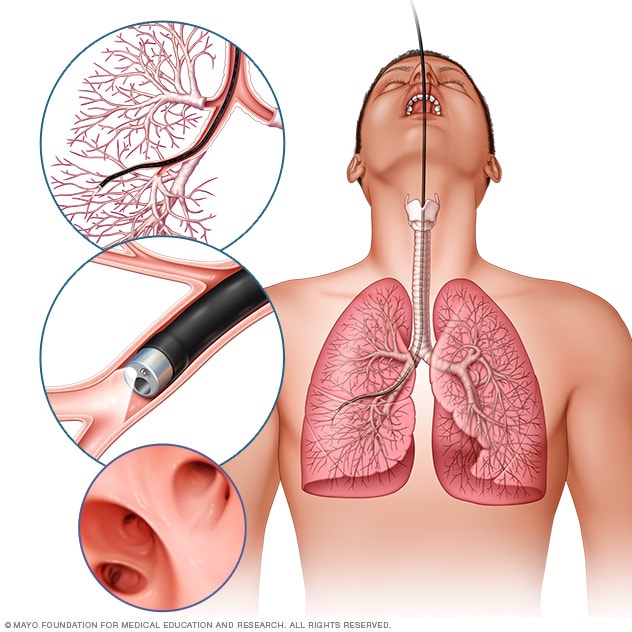
Bronchoscopy
In flexible bronchoscopy, a healthcare professional inserts a thin, bendable tube through the mouth or nose into the lungs. A light and a small camera on the bronchoscope allow the health professional to look inside the lungs' airways.
In a lung biopsy, your health care provider removes very small lung tissue samples to test for signs of rejection and infection. This test may be conducted during a bronchoscopy, in which the provider inserts a small, flexible tube (bronchoscope) through the mouth or nose into the lungs. A light and a small camera attached to the bronchoscope allow the provider to look inside the lungs' airways. The provider may also use special tools to remove small samples of lung tissue to test in a lab.
Your transplant team will monitor you closely and help you manage immunosuppressant medications' side effects. Your transplant team may also monitor and treat infections. Your health care provider might prescribe antibiotic, antiviral or antifungal medications to help prevent infections. Your transplant team may also instruct you about ways you can help prevent infections at home.
You'll also be monitored for any signs or symptoms of rejection. These can include:
- Shortness of breath
- Fever
- Coughing
- Chest congestion
It's important to let your transplant team know if you notice any signs or symptoms of rejection.
You'll generally need to make long-term adjustments after your lung transplant, including:
- Taking immunosuppressants. You'll need to take immunosuppressant medications for life to suppress your immune system and prevent rejection of the donor lung or lungs.
-
Managing medications, therapies and a lifelong care plan. Your health care provider may give you instructions to follow after your transplant. It's important to take all your medications as your provider instructs. It's also important to check your lung function at home as directed by your provider. Attend follow-up appointments and follow a lifelong care plan.
It's a good idea to set up a daily routine for taking your medications so that you won't forget. Keep a list of all your medications with you at all times in case you need emergency medical care. Tell all your health care providers what you take each time you're prescribed a new medicine.
-
Living a healthy lifestyle. Living a healthy lifestyle is key in helping to keep your new lung healthy. Your health care provider may advise you to not use tobacco products and to limit alcohol use. Following a nutritious diet also can help you stay healthy.
Exercise is an extremely important part of rehabilitation after your lung transplant and will begin within days of your surgery. Your health care team works with you to design an exercise program that's right for you. Your provider may recommend pulmonary rehabilitation — a program of exercise and education that may help improve your breathing and daily functioning — after your transplant.
-
Emotional support. Your new medical therapies and the stress of having a lung transplant may make you feel overwhelmed. Many people who have had a lung transplant feel this way.
Talk to your health care provider if you're feeling stressed or overwhelmed. Transplant centers often have support groups and other resources to help you manage your condition.
Results
A lung transplant can substantially improve your quality of life. The first year after the transplant — when surgical complications, rejection and infection pose the greatest threats — is the most critical period.
Although some people have lived 10 years or more after a lung transplant, only about half the people who undergo the procedure are still alive after five years.
Clinical trials
Explore Mayo Clinic studies of tests and procedures to help prevent, detect, treat or manage conditions.
Coping and Support
It's typical to feel anxious or overwhelmed while waiting for a transplant or to have fears about rejection, returning to work or other issues after a transplant. Seeking the support of friends and family members can help you cope during this stressful time.
Your transplant team also can assist you with other useful resources and coping strategies throughout the transplant process, such as:
- Joining a support group for transplant recipients. Talking with others who have shared your experience can ease fears and anxiety.
- Getting additional treatment. If you're depressed, talk to your health care provider. Your provider may recommend medications or refer you to a mental health provider.
- Finding rehabilitation services. If you're returning to work, your social worker may be able to connect you with rehabilitation services provided by your home state's vocational rehabilitation services.
- Setting realistic goals and expectations. Recognize that life after a transplant may not be exactly the same as life before a transplant. Having realistic expectations about results and recovery time can help reduce stress.
- Educating yourself. Read as much as you can about your procedure and ask questions about things you don't understand. Knowledge is empowering.
Immunosuppressant medication
After your lung transplant, you'll need to take immunosuppressant medications for life to prevent rejection. These medications may cause serious side effects, and they may cause you to be more susceptible to infections.
You may take a combination of medications to prevent rejection, and the combination and amounts may change over time. Your treatment team can explain your medications and potential side effects. Your health care providers also can help you manage your immunosuppressant medications, based on your side effects and any signs of rejection.
Some common immunosuppressant options include:
-
Glucocorticoids. Transplant recipients take corticosteroids (prednisone, others) to prevent rejection. However, corticosteroids may cause weight gain, high blood pressure and osteoporosis. They may also cause diabetes, high cholesterol, and other side effects and complications.
At some point, it may be possible to reduce or stop taking corticosteroids after your lung transplant, which may lessen your side effects and complications. You'll still need to take other immunosuppressant medications.
- Monoclonal antibody. Basiliximab (Simulect) is an immunosuppressant that may be given during the first few days after surgery to prevent rejection.
- Nucleotide blocking agents. Other immunosuppressant options that may be used for people with lung transplants include mycophenolate mofetil (CellCept) and azathioprine (Azasan, Imuran).
- Calcineurin inhibitors. These immunosuppressant medications include tacrolimus (Astagraf XL, Envarsus XR, Prograf) and cyclosporine (Gengraf, Neoral, Sandimmune). They're typically part of immunosuppressant therapy, but can have significant side effects.
-
mTOR inhibitors. Health care providers may sometimes prescribe the medications sirolimus (Rapamune) or everolimus (Zortress) about three months after a lung transplant. These drugs may be considered for people who can't tolerate mycophenolate mofetil and azathioprine. These medications will only be used after there has been adequate healing of the airway after transplant.
Health care providers may also prescribe sirolimus or everolimus to people experiencing kidney problems due to calcineurin inhibitors. In some cases, people with kidney problems after transplant may be able to reduce or stop taking calcineurin inhibitors if they are taking sirolimus or everolimus. This may improve their kidney problems.
Researchers continue to study the potential use of other immunosuppressants for people with lung transplants.
Diet and nutrition
After your lung transplant, you may need to adjust your diet to stay healthy. Maintaining a healthy weight through diet and exercise can help you avoid complications such as high blood pressure, heart disease and diabetes.
Your transplant team includes a nutrition specialist (dietitian) who can discuss your nutrition and diet needs and answer any questions you may have after your transplant. Your dietitian will let you know if any foods might impact your medications and can explain how to prepare food safely to lessen the risk of an infection from food.
Exercise
After your lung transplant, your care team may recommend that you make exercise and physical activity a regular part of your life.
Exercising regularly helps you control your blood pressure, control stress, maintain a healthy weight, strengthen your bones and increase your physical function. As you become more fit, your body is able to use oxygen more effectively.
Your treatment team will create an exercise program to meet your needs. You'll likely participate in pulmonary rehabilitation — a program of exercise and education that may help improve your breathing and daily functioning. Your team may provide training and education in many areas, including exercise, nutrition and breathing strategies.
Your exercise program may include warm-up exercises, such as stretching or slow walking. Your treatment team may suggest physical activities such as walking, bicycling or strength training as part of your exercise program. Specialists in the treatment team will likely recommend that you cool down after you exercise, perhaps by walking slowly. Discuss with your treatment team what activities may be appropriate for you.
Take a break from exercising if you feel tired. If you feel symptoms such as shortness of breath or dizziness, stop exercising. If your symptoms don't go away, contact your health care provider.
Jan. 19, 2024