Overview
Oral lichen planus
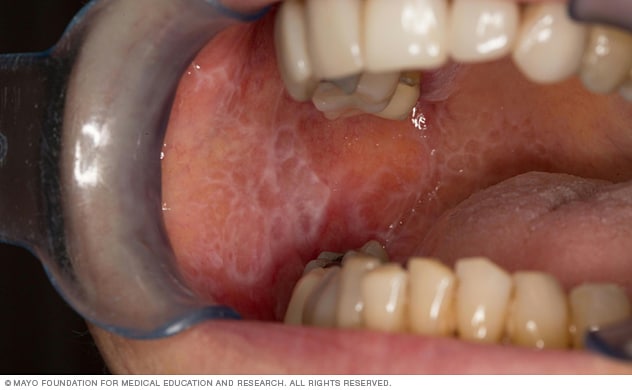
Oral lichen planus
This white lacelike patch on the interior surface of the cheek is typical for oral lichen planus.
Oral lichen planus (LIE-kun PLAY-nus) is an ongoing (chronic) inflammatory condition that affects mucous membranes inside your mouth. Oral lichen planus may appear as white, lacy patches; red, swollen tissues; or open sores. These lesions may cause burning, pain or other discomfort.
Oral lichen planus can't be passed from one person to another. The disorder occurs when the immune system mounts an attack against cells of the oral mucous membranes for unknown reasons.
Symptoms can usually be managed, but people who have oral lichen planus need regular monitoring because they may be at risk of developing mouth cancer in the affected areas.
Products & Services
Symptoms
Signs and symptoms of oral lichen planus affect the mucous membranes of the mouth.
Appearance
The lesions may appear as:
- Lacy, white, raised patches of tissues
- Red, swollen, tender patches of tissues
- Open sores
Location
These lesions may appear on the:
- Inside of the cheeks, the most common location
- Gums
- Tongue
- Inner tissues of the lips
- Palate
Pain or discomfort
The white, lacy patches may not cause discomfort when they appear on the inside of the cheeks. However, symptoms accompanying red, swollen patches and open sores may include:
- Burning sensation or pain
- Sensitivity to hot, acidic or spicy foods
- Bleeding and irritation with tooth brushing
- Inflammation of the gums (gingivitis)
- Painful, thickened patches on the tongue
- Discomfort when speaking, chewing or swallowing
Other types of lichen planus
If you have oral lichen planus, you may have lichen planus lesions affecting other parts of your body.
- Skin. Lesions usually appear as purplish, flat-topped bumps that are often itchy.
- Genitals. Lesions on the female genitalia often cause pain or burning and discomfort with intercourse. The lesions are usually red and eroded and occasionally appear as white areas. Lesions can also occur on male genitalia.
- Ears. Lichen planus of the ears can lead to hearing loss.
- Scalp. When skin lesions appear on the scalp, they may cause temporary or permanent hair loss.
- Nails. Though rare, lichen planus of the toenails or fingernails may result in ridges on the nails, thinning or splitting of nails, and temporary or permanent nail loss.
- Eyes. Rarely, lichen planus may involve the mucous membrane surfaces of the eyes, and can cause scarring and blindness.
- Esophagus. Lichen planus of the esophagus is rare, but when it occurs, it may result in a narrowing of the esophagus or the formation of tightened, ringlike bands in the esophagus that can make swallowing difficult.
When to see a doctor
See your doctor or dentist if you have any signs or symptoms listed above.
Causes
It's not known what causes oral lichen planus. However, T lymphocytes — certain white blood cells involved in inflammation — appear to be activated in oral lichen planus. This could indicate an immune disorder, and genetic factors may be involved. But more research is needed to determine the exact cause.
It's possible that, in some people, oral lichen planus may be triggered by certain medications, mouth injury, infection or allergy-causing agents such as dental materials. Stress may be involved in symptoms becoming worse or recurring. However, these causes are not confirmed.
Risk factors
Anyone can develop oral lichen planus, but it's more common in middle-aged women.
Some factors may increase your risk of developing oral lichen planus, such as having a disorder that lowers your immunity or taking certain medications, though more research is needed.
Complications
Severe cases of oral lichen planus may increase the risk of:
- Significant pain
- Weight loss or nutritional deficiency
- Stress or anxiety
- Depression
- Scarring from erosive lesions
- Secondary oral yeast or fungal infections
- Oral cancer
Dec. 06, 2019