Overview
Oral thrush
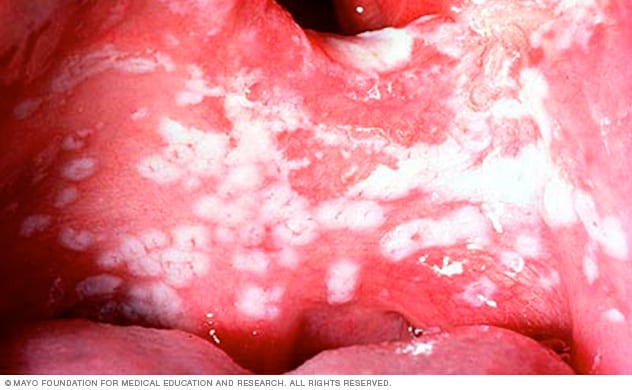
Oral thrush
Oral thrush produces slightly raised, creamy white, sore patches in your mouth or on your tongue.
Oral thrush — also called oral candidiasis (kan-dih-DIE-uh-sis) — is a condition in which the fungus Candida albicans accumulates on the lining of your mouth. Candida is a normal organism in your mouth, but sometimes it can overgrow and cause symptoms.
Oral thrush causes creamy white lesions, usually on your tongue or inner cheeks. Sometimes oral thrush may spread to the roof of your mouth, your gums or tonsils, or the back of your throat.
Although oral thrush can affect anyone, it's more likely to occur in babies and older adults because they have reduced immunity; in other people with suppressed immune systems or certain health conditions; or people who take certain medications. Oral thrush is a minor problem if you're healthy, but if you have a weakened immune system, symptoms may be more severe and difficult to control.
Symptoms
Children and adults
Initially, you may not even notice symptoms of oral thrush. Signs and symptoms may include:
- Creamy white lesions on your tongue, inner cheeks, and sometimes on the roof of your mouth, gums and tonsils
- Slightly raised lesions with a cottage cheese-like appearance
- Redness, burning or soreness that may be severe enough to cause difficulty eating or swallowing
- Slight bleeding if the lesions are rubbed or scraped
- Cracking and redness at the corners of your mouth
- A cottony feeling in your mouth
- Loss of taste
- Redness, irritation and pain under dentures (denture stomatitis)
In severe cases, usually related to cancer or a weakened immune system from HIV/AIDS, the lesions may spread downward into your esophagus — the long, muscular tube stretching from the back of your mouth to your stomach (Candida esophagitis). If this occurs, you may experience difficulty swallowing and pain or feel as if food is getting stuck in your throat.
Infants and breast-feeding mothers
In addition to the distinctive white mouth lesions, infants may have trouble feeding or be fussy and irritable. They can pass the infection to their mothers during breast-feeding. The infection may then pass back and forth between the mother's breasts and the baby's mouth.
Women whose breasts are infected with candida may experience these signs and symptoms:
- Unusually red, sensitive, cracked or itchy nipples
- Shiny or flaky skin on the darker, circular area around the nipple (areola)
- Unusual pain during nursing or painful nipples between feedings
- Stabbing pains deep within the breast
When to see a doctor
If you or your child develops white lesions inside the mouth, see your doctor or dentist.
Thrush is uncommon in healthy older children, teenagers and adults, so if thrush develops, see your doctor to determine if further evaluation is needed to check for an underlying medical condition or other cause.
Causes
Normally, your immune system works to repel harmful invading organisms, such as viruses, bacteria and fungi, while maintaining a balance between "good" and "bad" microbes that normally inhabit your body. But sometimes these protective mechanisms fail, increasing the number of candida fungus and allowing an oral thrush infection to take hold.
The most common type of candida fungus is Candida albicans. Several factors, such as a weakened immune system, can increase your risk of oral thrush.
Risk factors
You may have an increased risk of oral thrush infection if any of these issues apply:
- Weakened immunity. Oral thrush is more likely to occur in infants and older adults due to reduced immunity. Some medical conditions and treatments can suppress your immune system, such as cancer and its treatments, organ transplantation and required drugs that suppress the immune system, and HIV/AIDS.
- Diabetes. If you have untreated diabetes or the disease isn't well-controlled, your saliva may contain large amounts of sugar, which encourages the growth of candida.
- Vaginal yeast infections. Vaginal yeast infections are caused by the same fungus that causes oral thrush. You can pass the infection to your baby.
- Medications. Drugs such as prednisone, inhaled corticosteroids, or antibiotics that disturb the natural balance of microorganisms in your body can increase your risk of oral thrush.
- Other oral conditions. Wearing dentures, especially upper dentures, or having conditions that cause dry mouth can increase the risk of oral thrush.
Complications
Oral thrush is seldom a problem for healthy children and adults.
For people with lowered immunity, such as from cancer treatment or HIV/AIDS, thrush can be more serious. Untreated oral thrush can lead to more-serious systemic candida infections. If you have a weakened immune system, thrush may spread to your esophagus or other parts of your body.
Prevention
These measures may help reduce your risk of developing candida infections:
- Rinse your mouth. If you need to use a corticosteroid inhaler, be sure to rinse your mouth with water or brush your teeth after taking your medication.
- Brush your teeth at least twice a day and floss daily or as often as your dentist recommends.
- Check your dentures. Remove your dentures at night. Make sure dentures fit properly and don't cause irritation. Clean your dentures daily. Ask your dentist for the best way to clean your type of dentures.
- See your dentist regularly, especially if you have diabetes or wear dentures. Ask your dentist how often you need to be seen.
- Watch what you eat. Try limiting the amount of sugar-containing foods you eat. These may encourage the growth of candida.
- Maintain good blood sugar control if you have diabetes. Well-controlled blood sugar can reduce the amount of sugar in your saliva, discouraging the growth of candida.
- Treat a vaginal yeast infection as soon as possible.
- Treat dry mouth. Ask your doctor about ways to avoid or treat your dry mouth.