Overview
Claudication
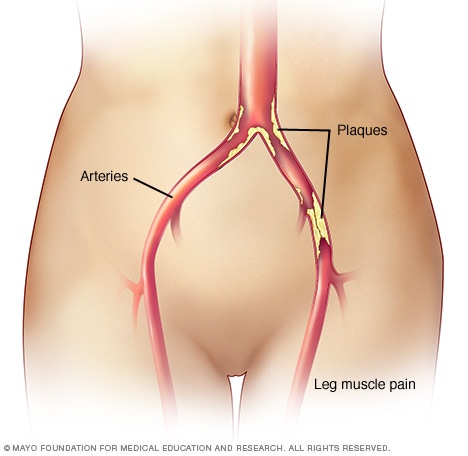
Claudication
Claudication is pain in the legs or arms that occurs while walking or using the arms. The pain is caused by too little blood flow to the legs or arms. Claudication is usually a symptom of peripheral artery disease, in which the arteries that supply blood to the arms or legs, usually the legs, are narrowed. The narrowing is usually due to a buildup of fatty deposits (plaques) on the artery walls.
Peripheral artery disease (also called peripheral arterial disease) is a common condition in which narrowed arteries reduce blood flow to the arms or legs.
In peripheral artery disease (PAD), the legs or arms — usually the legs — don't receive enough blood flow to keep up with demand. This may cause leg pain when walking (claudication) and other symptoms.
Peripheral artery disease is usually a sign of a buildup of fatty deposits in the arteries (atherosclerosis). Atherosclerosis causes narrowing of the arteries that can reduce blood flow in the legs and, sometimes, the arms.
Peripheral artery disease treatment includes exercising, eating a healthy diet and not smoking or using tobacco.
Products & Services
Symptoms
Many people with peripheral artery disease have mild or no symptoms. Some people have leg pain when walking (claudication).
Claudication symptoms include muscle pain or cramping in the legs or arms that begins during exercise and ends with rest. The pain is most commonly felt in the calf. The pain ranges from mild to severe. Severe leg pain may make it hard to walk or do other types of physical activity.
Other peripheral artery disease symptoms may include:
- Coldness in the lower leg or foot, especially when compared with the other side
- Leg numbness or weakness
- No pulse or a weak pulse in the legs or feet
- Painful cramping in one or both of the hips, thighs or calf muscles after certain activities, such as walking or climbing stairs
- Shiny skin on the legs
- Skin color changes on the legs
- Slower growth of the toenails
- Sores on the toes, feet or legs that won't heal
- Pain when using the arms, such as aching and cramping when knitting, writing or doing other manual tasks
- Erectile dysfunction
- Hair loss or slower hair growth on the legs
If peripheral artery disease gets worse, pain may occur during rest or when lying down. The pain may interrupt sleep. Hanging the legs over the edge of the bed or walking may temporarily relieve the pain.
When to see a doctor
Call your health care provider if you have leg pain, numbness or other symptoms of peripheral artery disease.
Causes
Development of atherosclerosis

Development of atherosclerosis
If there's too much cholesterol in the blood, the cholesterol and other substances may form deposits called plaque. Plaque can cause an artery to become narrowed or blocked. If a plaque ruptures, a blood clot can form. Plaque and blood clots can reduce blood flow through an artery.
Peripheral artery disease is often caused by a buildup of fatty, cholesterol-containing deposits (plaques) on artery walls. This process is called atherosclerosis. It reduces blood flow through the arteries.
Atherosclerosis affects arteries throughout the body. When it occurs in the arteries supplying blood to the limbs, it causes peripheral artery disease.
Less common causes of peripheral artery disease include:
- Blood vessel inflammation
- Injury to the arms or legs
- Changes in the muscles or ligaments
- Radiation exposure
Risk factors
Smoking or having diabetes greatly increases the risk of developing peripheral artery disease.Other things that increase the risk of peripheral artery disease include:
- A family history of peripheral artery disease, heart disease or stroke
- High blood pressure
- High cholesterol
- High levels of an amino acid called homocysteine, which increase the risk for coronary artery disease
- Increasing age, especially after 65 (or after 50 if you have risk factors for atherosclerosis)
- Obesity (a body mass index over 30)
Complications
Complications of peripheral artery disease caused by atherosclerosis include:
- Critical limb ischemia. In this condition, an injury or infection causes tissue to die. Symptoms include open sores on the limbs that don't heal. Treatment may include amputation of the affected limb.
- Stroke and heart attack. Plaque buildup in the arteries can also affect the blood vessels in the heart and brain.
Prevention
The best way to prevent leg pain due to peripheral artery disease is to maintain a healthy lifestyle. That means:
- Don't smoke.
- Control blood sugar.
- Eat foods that are low in saturated fat.
- Get regular exercise — but check with your care provider about what type and how much is best for you.
- Maintain a healthy weight.
- Manage blood pressure and cholesterol.