Overview
A pinched nerve occurs when too much pressure is applied to a nerve by surrounding tissues, such as bones, cartilage, muscles or tendons. This pressure can cause pain, tingling, numbness or weakness.
A pinched nerve can occur in many areas of the body. For example, a herniated disk in the lower spine may put pressure on a nerve root. This may cause pain that radiates down the back of the leg. A pinched nerve in the wrist can lead to pain and numbness in the hand and fingers, known as carpal tunnel syndrome.
With rest and other conservative treatments, most people recover from a pinched nerve within a few days or weeks. Sometimes, surgery is needed to relieve pain from a pinched nerve.
Symptoms
Pinched nerve symptoms include:
- Numbness or less feeling in the area supplied by the nerve.
- Sharp, aching or burning pain, which may radiate outward.
- Tingling, or a pins and needles feeling.
- Muscle weakness in the affected area.
- Often feeling as if a foot or hand has "fallen asleep."
Symptoms related to a pinched nerve may be worse when you're sleeping.
When to see a doctor
Self-care measures such as rest and pain relievers available without a prescription may resolve the symptoms of a pinched nerve. See your healthcare professional if symptoms last for several days and don't respond to self-care.
Causes
Pinched nerve due to herniated disk

Pinched nerve due to herniated disk
A herniated disk in the lower spine may "pinch" a nerve root. This can cause pain that radiates down the back of the leg, known as sciatica.
Pinched median nerve
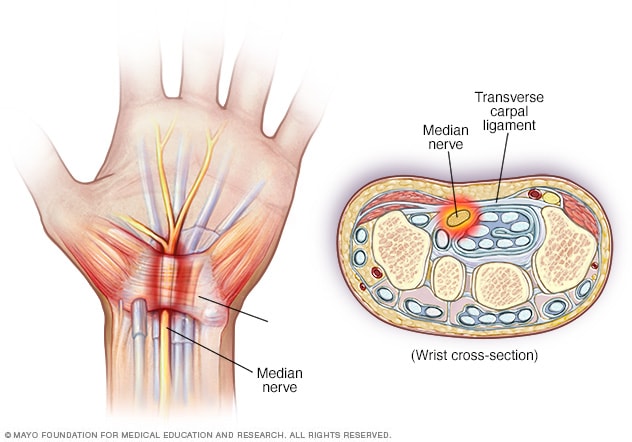
Pinched median nerve
A pinched median nerve in the wrist can lead to pain, numbness and weakness in the hand and fingers, known as carpal tunnel syndrome.
A pinched nerve occurs when too much pressure, known as compression, is applied to a nerve by surrounding tissues.
This tissue might be bone or cartilage, such as when a herniated spinal disk compresses a nerve root. Or muscle or tendons may compress a nerve.
In carpal tunnel syndrome, a variety of tissues may be responsible for compression of the carpal tunnel's median nerve in the wrist. It can be caused by swollen tendon sheaths within the tunnel, enlarged bone that narrows the tunnel, or a thickened and degenerated ligament.
A number of conditions may cause tissue to compress a nerve or nerves, including:
- Injury.
- Rheumatoid or wrist arthritis.
- Stress from repetitive work.
- Hobbies or sports.
- Obesity.
If a nerve is pinched for only a short time, there's often no permanent damage. Once the pressure is relieved, nerve function returns. However, if the pressure continues, chronic pain and permanent nerve damage can occur.
Risk factors
The following factors may increase your risk of experiencing a pinched nerve:
- Sex assigned at birth. Women are more likely to develop carpal tunnel syndrome, possibly due to having smaller carpal tunnels.
- Bone spurs. Trauma or a condition that causes bone thickening, such as osteoarthritis, can cause bone spurs. Bone spurs can stiffen the spine as well as narrow the space where your nerves travel, pinching nerves.
- Rheumatoid arthritis. Inflammation caused by rheumatoid arthritis can compress nerves, especially in your joints.
- Thyroid disease. People with thyroid disease are at higher risk of carpal tunnel syndrome.
Other risk factors include:
- Diabetes. People with diabetes are at higher risk of nerve compression.
- Overuse. Jobs or hobbies that require repetitive hand, wrist or shoulder movements increase the risk of a pinched nerve. This includes assembly line work.
- Obesity. Excess weight can add pressure to nerves.
- Pregnancy. Water and weight gain associated with pregnancy can swell nerve pathways, compressing your nerves.
- Prolonged bed rest. Long periods of lying down can increase the risk of nerve compression.
Prevention
The following measures may help you prevent a pinched nerve:
- Maintain good positioning. Don't cross your legs or lie in any one position for a long time.
- Incorporate strength and flexibility exercises into your regular exercise program.
- Limit repetitive activities and take frequent breaks when engaging in these activities.
- Maintain a healthy weight to put less pressure on nerves.
Dec. 21, 2023