Overview
Plantar warts
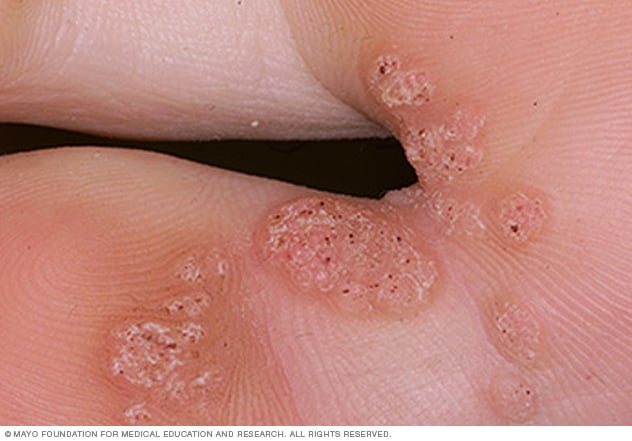
Plantar warts
Plantar warts are caused by the same type of virus that causes warts on your hands and fingers. But, because of their location, they can be painful.
Plantar warts are small, rough growths on the feet. They usually show up on the balls and heels of the feet, the areas that bear the most pressure. This pressure may also cause a wart to grow inward beneath a hard, thick layer of skin (callus).
Plantar warts are caused by HPV. This virus enters through tiny cuts or breaks on the bottom of the feet.
Most plantar warts aren't a serious health concern and often go away without treatment, especially in children under 12. To get rid of them sooner, you can try self-care treatments or see your health care provider.
Symptoms
Plantar wart signs and symptoms include:
- A small, rough growth on the bottom of your foot, usually at the base of the toes or on the ball or heel
- On brown and Black skin, the growth may be lighter than unaffected skin
- Hard, thickened skin (callus) over a spot on the skin, where a wart has grown inward
- Black pinpoints, which are small clotted blood vessels commonly called wart seeds
- A cluster of growths on the sole of the foot (mosaic warts)
- A growth that interrupts the normal lines and ridges in the skin of your foot
- Pain or tenderness when walking or standing
When to see a doctor
See your health care provider for the growth on your foot if:
- The growth is bleeding, painful or changes in shape or color
- You've tried treating the wart, but it persists, multiplies or comes back after clearing for a time (recurs)
- Your pain interferes with your activities
- You also have diabetes or poor feeling in your feet
- You also have a weak immune system because of immune-suppressing drugs, HIV/AIDS or other immune system disorders
- You aren't sure if the growth is a wart
Causes
Plantar warts are caused by an infection with HPV in the outer layer of skin on the soles of the feet. The warts develop when the virus enters through tiny cuts, breaks or weak spots on the bottom of the foot. If left untreated, warts can last from a few months to 2 years in children, and several years in in adults.
HPV is very common, and more than 100 kinds of the virus exist. But only a few of them cause warts on the feet. Other types of HPV are more likely to cause warts on other areas of your skin or on mucous membranes.
Transmission of the virus
Each person's immune system responds differently to HPV. Not everyone who comes in contact with it develops warts. Even people in the same family react to the virus differently.
The HPV strains that cause plantar warts aren't highly contagious. So the virus isn't easily spread by direct contact from one person to another. But it thrives in warm, moist places, so you might get the virus by walking barefoot around swimming pools or locker rooms. If the virus spreads from the first site of infection, more warts may grow.
Risk factors
Anyone can develop plantar warts, but this type of wart is more likely to affect:
- Children and teenagers
- People with weak immune systems
- People who have had plantar warts before
- People who walk barefoot in areas where a wart-causing virus is common, such as locker rooms and swimming pools
Complications
When plantar warts cause pain, you may alter your normal posture or gait — perhaps without realizing it. Eventually, this change in how you stand, walk or run can cause muscle or joint discomfort.
Prevention
To help prevent plantar warts:
- Avoid direct contact with warts. This includes your own warts. Wash your hands carefully after touching a wart.
- Keep your feet clean and dry.
- Wear sandals or other foot protection when walking around swimming pools, in locker rooms or in gym showers.
- Don't pick at or scratch warts.
- When using an emery board, pumice stone or nail clipper on your warts, choose one that you don't use on your healthy skin and nails.
Feb. 07, 2024