Overview
Pneumonitis (noo-moe-NIE-tis) is a general term that refers to inflammation of lung tissue. Technically, pneumonia is a type of pneumonitis because the infection causes inflammation. Pneumonitis, however, is usually used by doctors to refer to noninfectious causes of lung inflammation.
Common causes of pneumonitis include airborne irritants at your job or from your hobbies. In addition, some types of cancer treatments and dozens of drugs can cause pneumonitis.
Difficulty breathing — often accompanied by a dry (nonproductive) cough — is the most common symptom of pneumonitis. Specialized tests are necessary to make a diagnosis. Treatment focuses on avoiding irritants and reducing inflammation.
Products & Services
Symptoms
The most common symptom of pneumonitis is shortness of breath, which may be accompanied by a dry cough. If pneumonitis is undetected or left untreated, you may gradually develop chronic pneumonitis, which can result in scarring (fibrosis) in the lungs.
Signs and symptoms of chronic pneumonitis include:
- Shortness of breath
- Cough
- Fatigue
- Loss of appetite
- Unintentional weight loss
When to call a doctor
Call your doctor anytime you have difficulty breathing, no matter what might be the cause.
Causes
Bronchioles and alveoli in the lungs
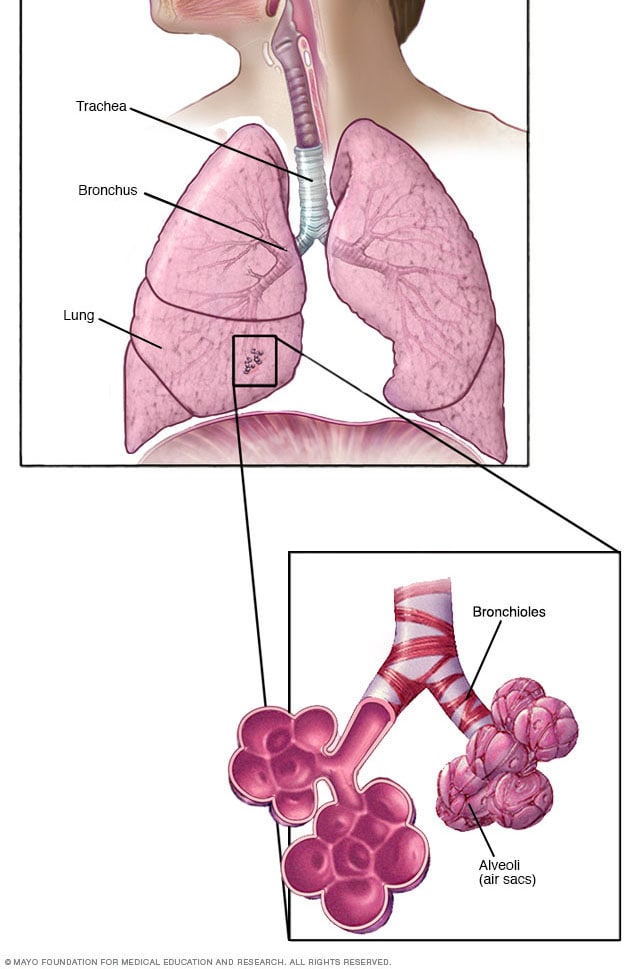
Bronchioles and alveoli in the lungs
In your lungs, the main airways, called bronchi, branch off into smaller and smaller passageways. The smallest airways, called bronchioles, lead to tiny air sacs called alveoli.
Pneumonitis occurs when an irritating substance causes the tiny air sacs (alveoli) in your lungs to become inflamed. This inflammation makes it difficult for oxygen to pass through the alveoli into the bloodstream.
Many irritants, ranging from airborne molds to chemotherapy drugs, have been linked to pneumonitis. But for most people, the specific substance causing the inflammation is never identified.
Pneumonitis causes may include:
- Drugs. A variety of drugs can cause pneumonitis, including some antibiotics, several types of chemotherapy drugs and medications that keep your heartbeat regular. An overdose of aspirin can cause pneumonitis.
- Molds and bacteria. Repeated exposure to some molds and bacteria can cause the lungs to become inflamed. Specific varieties of mold-related pneumonitis have received nicknames, such as "farmer's lung" or "hot tub lung."
- Birds. Exposure to feathers or bird excrement is a common cause of pneumonitis.
- Radiation treatments. Some people who undergo radiation therapy to the chest, such as for breast or lung cancer, may develop pneumonitis. Pneumonitis also can occur after whole-body radiation therapy, which is needed to prepare a person for a bone marrow transplant.
Risk factors
Occupations or hobbies
Some occupations and hobbies carry higher risks of pneumonitis, including:
- Farming. Many types of farming operations expose workers to aerosolized mists and pesticides. Inhaling airborne particles from moldy hay is one of the most common causes of occupational pneumonitis. Mold particles also can be inhaled during harvests of grain and hay.
- Bird handling. Poultry workers and people who breed or keep pigeons are often exposed to droppings, feathers and other materials that can cause pneumonitis.
- Hot tubs and humidifiers. Moldy conditions in hot tubs can trigger pneumonitis because the bubbling action makes a mist that can be inhaled. Home humidifiers are another common reservoir for mold.
Cancer treatment
Some chemotherapy drugs can cause pneumonitis, as can radiation therapy to the lungs. The combination of the two increases the risk of irreversible lung disease.
Complications
Pneumonitis that goes unnoticed or untreated can cause irreversible lung damage.
In normal lungs, the air sacs stretch and relax with each breath. Chronic inflammation of the thin tissue lining each air sac causes scarring and makes the sacs less flexible. They become stiff like a dried sponge. This is called pulmonary fibrosis. In severe cases, pulmonary fibrosis can cause right heart failure, respiratory failure and death.