Overview
Porphyria (por-FEAR-e-uh) refers to a group of rare disorders that result from a buildup of natural chemicals called porphyrins in the body. Porphyrins are needed to make heme, a part of hemoglobin. Hemoglobin is a protein in red blood cells. It carries oxygen to the body's organs and tissues.
Eight enzymes are needed to change porphyrins into heme. Without enough of any of these enzymes, porphyrins build up in the body. High levels of porphyrins can cause major problems, mainly in the nervous system and skin.
There are two general types of porphyrias. Acute porphyrias start rapidly and mainly affect the nervous system. Cutaneous porphyrias mainly affect the skin. A few types of porphyrias affect both the nervous system and the skin.
Symptoms of porphyria vary, depending on the specific type of porphyria and how severe it is. Porphyria is usually inherited. One or both parents pass along a changed gene to their child.
Although porphyria can't be cured, medicines and certain lifestyle changes may help you manage it. Treatment for symptoms depends on the type of porphyria you have.
Products & Services
Symptoms
Symptoms can vary widely by type of porphyria and in how severe the symptoms are. Symptoms also can vary among people with the condition. Some people with a gene change that causes porphyria never have any symptoms.
Acute porphyrias
Acute porphyrias include forms of the disease that usually cause nervous system symptoms. A few forms also can affect the skin. Symptoms appear quickly and can be severe. Symptoms may last hours, days or weeks.
The most common form of acute porphyria is called acute intermittent porphyria (AIP). AIP may last hours or days. Intermittent means that the symptoms may go away but return later. When the symptoms occur they are sometimes called attacks.
Symptoms of acute porphyrias may include:
- Severe pain in the belly, chest, legs or back.
- Digestive problems, such as constipation, nausea and vomiting.
- Muscle pain, tingling, numbness, weakness or paralysis.
- Red or brown urine.
- Mental changes, such as anxiety, hallucinations or mental confusion.
- Rapid or irregular heartbeats you can feel, called palpitations.
- Breathing problems.
- High blood pressure.
- Seizures.
Cutaneous porphyrias
Cutaneous porphyrias include forms of the disease that cause skin symptoms as a result of sensitivity to sunlight. These forms usually don't affect the nervous system. Porphyria cutanea tarda (PCT) is the most common type of all the porphyrias.
Sun exposure may cause:
- Sensitivity to the sun and sometimes artificial light, causing burning pain in the skin.
- Sudden painful skin redness and swelling.
- Blisters on exposed skin, usually the hands, arms and face.
- Fragile thin skin with changes in skin color.
- Itching.
- Too much hair growth in affected areas.
- Red or brown urine.
Erythropoietic protoporphyria (uh-rith-roe-poi-ET-ik pro-toe-por-FEAR-e-uh), also called EPP, is a rare type of cutaneous porphyria. It's the most common childhood porphyria. Sun or artificial light exposure quickly results in painful skin burning, irritation and swelling. Small bumps and blisters also appear. Repeated exposures can cause thick, leathery skin and scarring.
When to see a doctor
Many symptoms of porphyria are like those of other, more common conditions. This can make it difficult to know if you're having an attack of porphyria. If you have symptoms that could be porphyria, get medical attention. Prompt treatment is important.
Causes
Autosomal dominant inheritance pattern
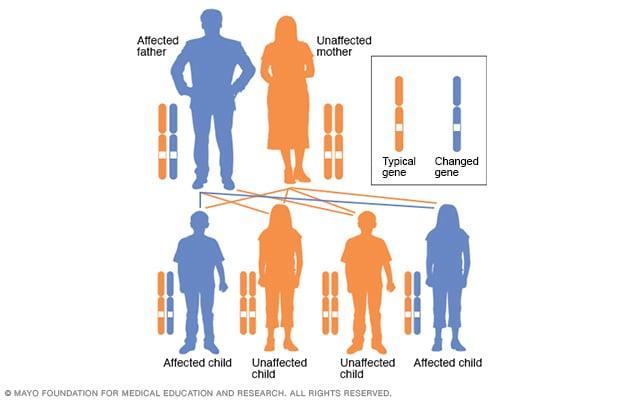
Autosomal dominant inheritance pattern
In an autosomal dominant disorder, the changed gene is a dominant gene. It's located on one of the nonsex chromosomes, called autosomes. Only one changed gene is needed to be affected by this type of condition. A person with an autosomal dominant condition — in this example, the father — has a 50 percent chance of having an affected child with one changed gene. The person has a 50 percent chance of having an unaffected child.
Autosomal recessive inheritance pattern
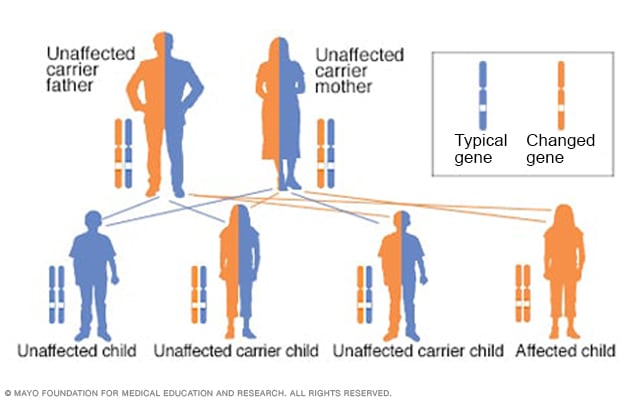
Autosomal recessive inheritance pattern
To have an autosomal recessive disorder, you inherit two changed genes, sometimes called mutations. You get one from each parent. Their health is rarely affected because they have only one changed gene. Two carriers have a 25% chance of having an unaffected child with two unaffected genes. They have a 50% chance of having an unaffected child who also is a carrier. They have a 25% chance of having an affected child with two changed genes.
All types of porphyria involve a problem making heme. Heme is a part of hemoglobin. Hemoglobin is the protein in red blood cells that carries oxygen from the lungs to all parts of the body. Heme also plays a role in clearing drugs and hormones from the body.
Heme is made in the bone marrow and liver. This process involves eight different enzymes that turn porphyrins into heme. A shortage or change in any of these enzymes causes a buildup of porphyrins. Which enzyme is affected determines the type of porphyria.
In cutaneous porphyrias, porphyrins build up in the skin. When exposed to sunlight, they cause symptoms. In acute porphyrias, the buildup affects the nervous system, causing symptoms.
Genetic forms
Most forms of porphyria are caused by a gene change passed down from one or both parents. Porphyria can occur if you inherit:
- A changed gene from one of your parents (autosomal dominant pattern).
- Changed genes from both parents (autosomal recessive pattern).
Just because you inherit a gene or genes that can cause porphyria doesn't mean that you'll have symptoms. You might never have symptoms. This also is the case for most carriers of the changed genes.
Acquired forms
Porphyria cutanea tarda (PCT) usually is not passed down in families. In PCT, certain triggers can cause a buildup of porphyrins that may cause symptoms. Examples of triggers include:
- Too much iron in the body, often due to a condition called hemochromatosis, which is caused by a gene change.
- Viral infections, such as HIV or hepatitis C.
- Heavy alcohol use.
- Smoking.
- Hormones changes during the menstrual period.
Risk factors
In addition to genetic risk factors, environmental risk factors may trigger symptoms in porphyria. When exposed to the trigger, the body's demand for heme production increases. This overwhelms the low level of a needed enzyme, setting in motion a process that causes a buildup of porphyrins.
Examples of triggers include:
- Exposure to sunlight.
- Certain medicines, for example, birth control pills, sedatives and barbiturates.
- Recreational or illicit drugs.
- Dieting or fasting.
- Smoking.
- Physical stress, such as infections or other illnesses or surgery.
- Emotional stress.
- Alcohol use.
- Hormone changes during the menstrual period.
Complications
Possible complications depend on the form of porphyria:
- Acute porphyrias can be life-threatening if an attack isn't promptly treated. During an attack, you may experience dehydration from loss of fluids, breathing problems, seizures or high blood pressure. You may need a stay in the hospital for treatment. Long-term complications with repeat acute attacks may include long-term pain, chronic kidney failure, liver damage or liver cancer.
- Cutaneous porphyrias can result in permanent skin damage. And the skin blisters can become infected. When your skin heals after symptoms, it may have a changed appearance and coloring, be fragile and slow to heal, or leave scars. Cutaneous porphyrias also increase the risk of liver damage or liver cancer.
In rare cases, a bone marrow transplant or liver transplant may be needed.
Prevention
Although there's no way to prevent porphyria, if you have the condition, avoid triggers to help prevent symptoms.
Because porphyria is usually an inherited disorder, your siblings and other family members may want to consider genetic testing to determine if they have the condition. Genetic counseling is important to help understand test results and risks.