Overview
Prolactinoma is a noncancerous tumor of the pituitary gland. This tumor causes the pituitary gland to make too much of a hormone called prolactin. The major effect of a prolactinoma is decreased levels of some sex hormones — namely, estrogen and testosterone.

Prolactinoma
A prolactinoma is a type of tumor that develops in the pituitary gland at the base of your brain.
A prolactinoma isn't life-threatening. But it can cause vision difficulties, infertility and other problems. Prolactinoma is the most common type of hormone-producing tumor that can develop in the pituitary gland.
A prolactinoma can usually be treated with medications to bring the prolactin level down into the standard range and shrink the tumor. In some cases, surgery to remove the tumor might be an option.
Symptoms
A prolactinoma might not cause any signs or symptoms. However, too much prolactin in your blood (hyperprolactinemia) can cause symptoms. So can pressure on surrounding tissues from a large tumor.
Because too much prolactin can disrupt the reproductive system (hypogonadism), some of the signs and symptoms of a prolactinoma are specific to females or males.
In females, prolactinoma can cause:
- Irregular menstrual periods or no menstrual periods
- Milky discharge from the breasts when not pregnant or breastfeeding
- Painful intercourse due to vaginal dryness
- Acne and excessive body and facial hair growth
In males, prolactinoma can cause:
- Erectile dysfunction
- Decreased body and facial hair
- Smaller muscles
- Enlarged breasts
In both females and males, prolactinoma can cause:
- Infertility
- Weak and brittle bones that break easily (osteoporosis)
- Loss of interest in sexual activity
Pressure from tumor growth can cause:
- Vision problems
- Headache
- Reduction of other hormones produced by the pituitary gland
Females who are premenopausal tend to notice signs and symptoms early, when tumors are smaller in size. This is probably because of missed or irregular menstrual periods. Females who are postmenopausal are more likely to notice signs and symptoms later, when tumors are larger and more likely to cause headache or vision problems. Males are also more likely to notice signs and symptoms later.
When to see a doctor
If you develop signs and symptoms that may be caused by a prolactinoma, see your health care provider to determine the cause.
If you have a prolactinoma and you want to become or are already pregnant, talk to your health care provider. Adjustments in your treatment and monitoring may be necessary.
From Mayo Clinic to your inbox
Causes
Prolactinoma is one type of tumor that develops in the pituitary gland. The cause of prolactinoma is usually unknown.
The pituitary gland is a small bean-shaped gland located at the base of your brain. Despite its small size, the pituitary gland has an effect on nearly every part of your body. Its hormones help control important functions such as growth, metabolism, blood pressure and reproduction.
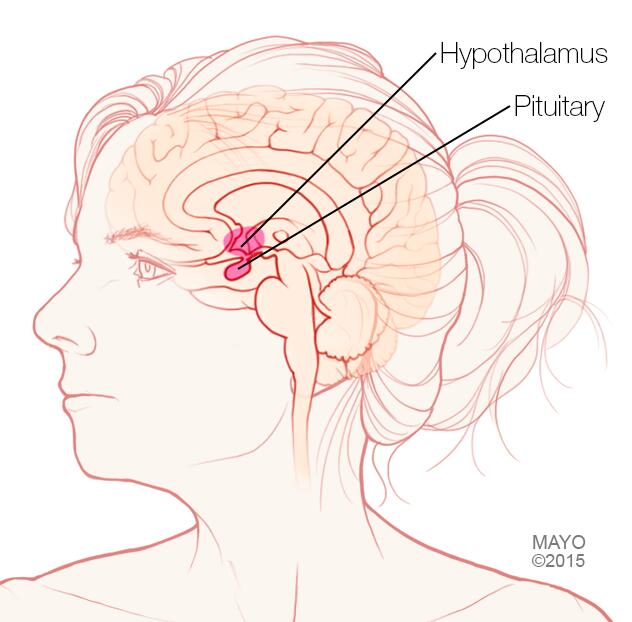
Pituitary gland and hypothalamus
The pituitary gland and the hypothalamus are located within the brain and control hormone production.

Endocrine system
The endocrine system includes the pituitary gland, thyroid gland, parathyroid glands, adrenal glands, pancreas, ovaries and testicles.
A prolactinoma causes the pituitary gland to make too much of a hormone called prolactin. This results in a decreased level of some sex hormones — namely, estrogen and testosterone.
Making too much prolactin (hyperprolactinemia) can also happen for reasons other than a prolactinoma. These can include:
- Medications
- Other types of pituitary tumors
- Kidney disease
- Underactive thyroid gland
- Pregnancy and breastfeeding
Risk factors
More prolactinomas occur in females than males. The disorder is rare in children.
Rarely, an inherited disorder such as multiple endocrine neoplasia, type 1 — a disorder that causes tumors in hormone-producing glands — may increase the risk of a prolactinoma.
Complications
Complications of prolactinoma may include:
- Infertility. A prolactinoma can interfere with reproduction. Too much prolactin reduces the production of the hormones estrogen and testosterone. Too much prolactin also can prevent the release of an egg during the menstrual cycle (anovulation) in females. In males, too much prolactin also can lead to decreased sperm production.
- Bone loss (osteoporosis). Reduced estrogen and testosterone also cause decreased bone strength. This results in weak and brittle bones that can break easily.
- Pregnancy complications. During a typical pregnancy, the production of estrogen increases. This may cause tumor growth. This can result in signs and symptoms such as headaches and changes in vision in pregnant females who have large prolactinomas.
- Vision loss. Left untreated, a prolactinoma may grow large enough to press on your optic nerve. This nerve sits near the pituitary gland. The nerve sends images from your eye to your brain so that you can see. The first sign of pressure on the optic nerve is a loss of your side (peripheral) vision.
- Low levels of other pituitary gland hormones. Larger prolactinomas can put pressure on the healthy part of the pituitary gland. This can lead to lower levels of other hormones controlled by the pituitary gland. These include thyroid hormones and cortisol. Cortisol is a stress-response hormone.
