Overview
Pulmonary hypertension
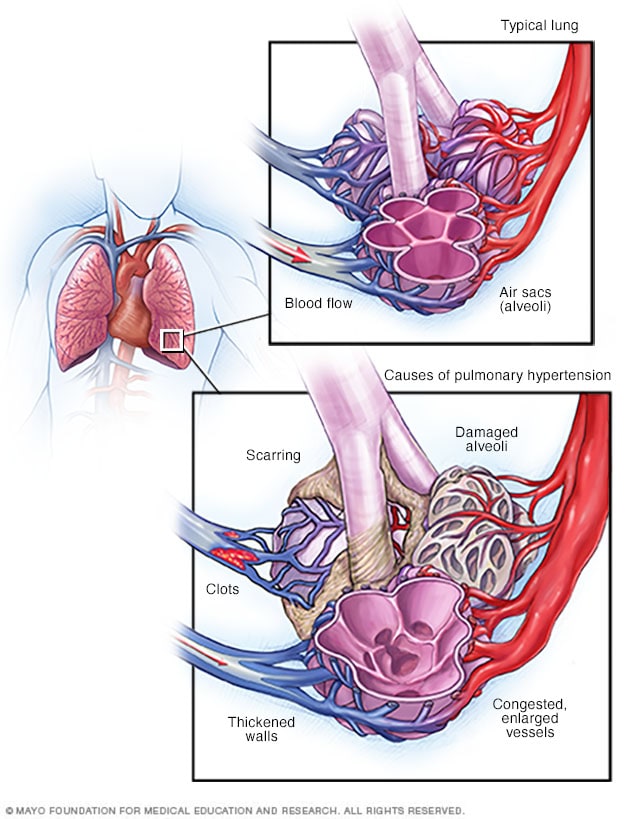
Pulmonary hypertension
When blood vessels in the lungs become thickened, narrowed, blocked or destroyed, it's harder for blood to flow through the lungs. As a result, blood pressure increases in the lungs. This condition is called pulmonary hypertension.
Pulmonary hypertension is a type of high blood pressure that affects the arteries in the lungs and the right side of the heart.
In one form of pulmonary hypertension, called pulmonary arterial hypertension (PAH), blood vessels in the lungs are narrowed, blocked or destroyed. The damage slows blood flow through the lungs. Blood pressure in the lung arteries goes up. The heart must work harder to pump blood through the lungs. The extra effort eventually causes the heart muscle to become weak and fail.
In some people, pulmonary hypertension slowly gets worse and can be life-threatening. There's no cure for pulmonary hypertension. But treatments are available to help you feel better, live longer and improve your quality of life.
Products & Services
Symptoms
The symptoms of pulmonary hypertension develop slowly. You may not notice them for months or even years. Symptoms get worse as the disease progresses.
Pulmonary hypertension symptoms include:
- Shortness of breath, at first while exercising and eventually while at rest.
- Blue or gray skin color due to low oxygen levels. Depending on your skin color, these changes may be harder or easier to see.
- Chest pressure or pain.
- Dizziness or fainting spells.
- Fast pulse or pounding heartbeat.
- Fatigue.
- Swelling in the ankles, legs and belly area.
Shortness of breath is the most common symptom of pulmonary hypertension. But it may be caused by other health conditions such as asthma. See a health care professional for an accurate diagnosis.
Causes
Chambers and valves of the heart
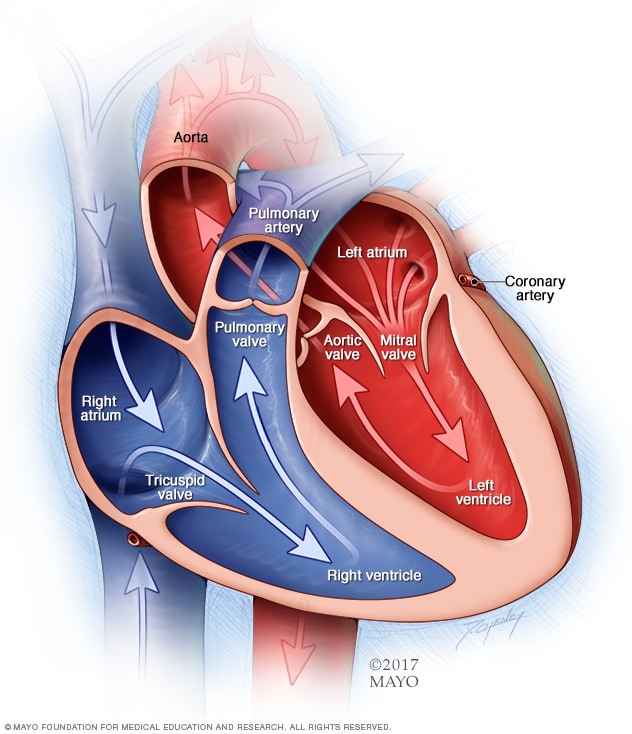
Chambers and valves of the heart
A typical heart has two upper and two lower chambers. The upper chambers, the right and left atria, receive incoming blood. The lower chambers, the more muscular right and left ventricles, pump blood out of the heart. The heart valves, which keep blood flowing in the right direction, are gates at the chamber openings.
The typical heart has two upper chambers and two lower chambers. Each time blood moves through the heart, the lower right chamber pumps blood to the lungs. The blood passes through a large blood vessel called the pulmonary artery.
Blood usually flows easily through blood vessels in the lungs to the left side of the heart. These blood vessels are the pulmonary arteries, capillaries and veins.
But changes in the cells that line the lung arteries can cause the artery walls to become narrow, stiff, swollen and thick. These changes may slow down or stop blood flow through the lungs, causing pulmonary hypertension.
Pulmonary hypertension is classified into five groups, depending on the cause.
Group 1: Pulmonary arterial hypertension (PAH)
Causes include:
- Unknown cause, called idiopathic pulmonary arterial hypertension.
- Changes in a gene passed down through families, called heritable pulmonary arterial hypertension.
- Use of some medicines or illegal drugs, including methamphetamine.
- Heart problems present at birth, called a congenital heart defect.
- Other health conditions, including scleroderma, lupus and chronic liver disease such as cirrhosis.
Group 2: Pulmonary hypertension caused by left-sided heart disease
This is the most common form of pulmonary hypertension. Causes include:
- Left heart failure.
- Left-sided heart valve disease such as mitral valve or aortic valve disease.
Group 3: Pulmonary hypertension caused by lung disease
Causes include:
- Scarring of the lungs, called pulmonary fibrosis.
- Chronic obstructive pulmonary disease.
- Sleep apnea.
- Long-term exposure to high altitudes in people who may be at higher risk of pulmonary hypertension.
Group 4: Pulmonary hypertension caused by chronic blood clots or blockages in the pulmonary artery
Causes include:
- Chronic blood clots in the lungs, called pulmonary emboli.
- Tumors that block the pulmonary artery.
Group 5: Pulmonary hypertension triggered by other health conditions
Causes include:
- Blood disorders, including polycythemia vera and essential thrombocythemia.
- Inflammatory disorders such as sarcoidosis.
- Metabolic disorders, including glycogen storage disease.
- Kidney disease.
Eisenmenger syndrome and pulmonary hypertension
Eisenmenger syndrome is a type of congenital heart disease that causes pulmonary hypertension. It can occur with unrepaired holes between the heart chambers. An example is a large hole in the heart between the two lower heart chambers called a ventricular septal defect.
The hole in the heart causes blood to flow incorrectly in the heart. Oxygen-rich blood mixes with oxygen-poor blood. The blood then returns to the lungs instead of going to the rest of the body. This increases the blood flow and pressure in the pulmonary arteries, causing pulmonary hypertension.
Risk factors
Pulmonary hypertension is usually diagnosed in people ages 30 to 60. Growing older can increase the risk of developing Group 1 pulmonary hypertension, called pulmonary arterial hypertension (PAH). PAH from an unknown cause is more common in younger adults.
Other things that can raise the risk of pulmonary hypertension are:
- A family history of the condition.
- Being overweight.
- Smoking.
- Blood-clotting disorders or a family history of blood clots in the lungs.
- Exposure to asbestos.
- A heart problem that you're born with, called a congenital heart defect.
- Living at a high altitude.
- Use of certain drugs, including some weight-loss medicines and illegal drugs such as cocaine or methamphetamine.
Complications
Potential complications of pulmonary hypertension include:
-
Right-sided heart enlargement and heart failure. Also called cor pulmonale, this condition causes the heart's right lower chamber to get larger. The chamber has to pump harder than usual to move blood through narrowed or blocked lung arteries.
As a result, the heart walls thicken. The right lower heart chamber stretches to increase the amount of blood it can hold. These changes create more strain on the heart, and eventually the right lower heart chamber fails.
- Blood clots. Having pulmonary hypertension increases the risk of blood clots in the small arteries in the lungs.
- Irregular heartbeats. Pulmonary hypertension can cause changes in the heartbeat, called arrhythmias, which can be life-threatening.
- Bleeding in the lungs. Pulmonary hypertension can lead to life-threatening bleeding into the lungs and coughing up blood.
- Pregnancy complications. Pulmonary hypertension can be life-threatening for the mother and the developing baby.