Overview
Strep throat is a bacterial infection that can make your throat feel sore and scratchy. Strep throat accounts for only a small portion of sore throats.
If untreated, strep throat can cause complications, such as kidney inflammation or rheumatic fever. Rheumatic fever can lead to painful and inflamed joints, a specific type of rash, or heart valve damage.
Strep throat is most common in children, but it affects people of all ages. If you or your child has signs or symptoms of strep throat, see your doctor for prompt testing and treatment.
Symptoms
Signs and symptoms of strep throat can include:
- Throat pain that usually comes on quickly
- Painful swallowing
- Red and swollen tonsils, sometimes with white patches or streaks of pus
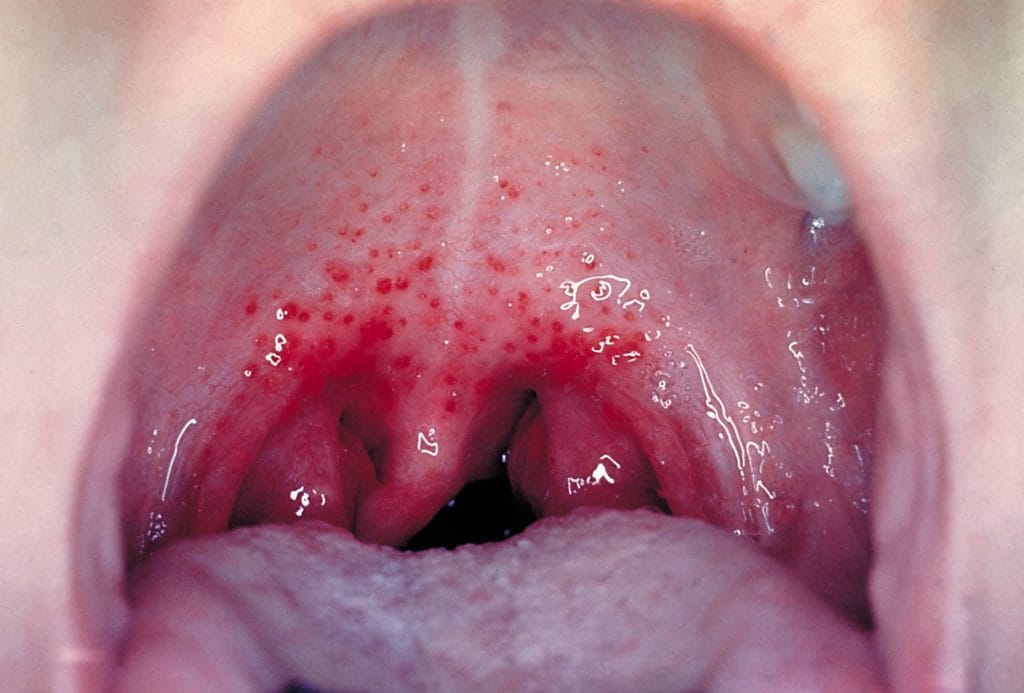
- Tiny red spots on the area at the back of the roof of the mouth (soft or hard palate)
- Swollen, tender lymph nodes in your neck
- Fever
- Headache
- Rash
- Nausea or vomiting, especially in younger children
- Body aches

Strep throat infection
Strep throat usually causes throat pain and difficulty swallowing. This photo of strep throat shows inflammation and red spots, caused by the infection.
It's possible for you or your child to have many of these signs and symptoms but not have strep throat. The cause of these signs and symptoms could be a viral infection or some other illness. That's why your doctor generally tests specifically for strep throat.
It's also possible for you to be exposed to a person who carries strep but shows no symptoms.
When to see a doctor
Call your doctor if you or your child has any of these signs and symptoms:
- A sore throat accompanied by tender, swollen lymph glands
- A sore throat that lasts longer than 48 hours
- A fever
- A sore throat accompanied by a rash
- Problems breathing or swallowing
- If strep has been diagnosed, a lack of improvement after taking antibiotics for 48 hours
From Mayo Clinic to your inbox
Causes
Strep throat is caused by infection with a bacterium known as Streptococcus pyogenes, also called group A streptococcus.
Streptococcal bacteria are contagious. They can spread through droplets when someone with the infection coughs or sneezes, or through shared food or drinks. You can also pick up the bacteria from a doorknob or other surface and transfer them to your nose, mouth or eyes.
Risk factors
Several factors can increase your risk of strep throat infection:
- Young age. Strep throat occurs most commonly in children.
- Time of year. Although strep throat can occur anytime, it tends to circulate in winter and early spring. Strep bacteria flourish wherever groups of people are in close contact.
Complications
Strep throat can lead to serious complications. Antibiotic treatment reduces the risk.
Spread of infection
Strep bacteria may spread, causing infection in:
- Tonsils
- Sinuses
- Skin
- Blood
- Middle ear
Inflammatory reactions
Strep infection may lead to inflammatory illnesses, including:
- Scarlet fever, a streptococcal infection characterized by a prominent rash
- Inflammation of the kidney (poststreptococcal glomerulonephritis)
- Rheumatic fever, a serious inflammatory condition that can affect the heart, joints, nervous system and skin
- Poststreptococcal reactive arthritis, a condition that causes inflammation of the joints
A possible relationship has been suggested between strep infection and a rare condition called pediatric autoimmune neuropsychiatric disorder associated with group A streptococci (PANDAS). Children with this condition experience worsened symptoms of neuropsychiatric conditions, such as obsessive-compulsive disorder or tic disorders, with strep. This relationship currently remains unproved and controversial.
Prevention
To prevent strep infection:
- Wash your hands. Proper hand-washing is the best way to prevent all kinds of infections. That's why it's important to wash your own hands regularly with soap and water for at least 20 seconds. Teach your children how to wash their hands properly using soap and water or to use an alcohol-based hand sanitizer if there is no soap and water available.
- Cover your mouth. Teach your children to cover their mouths with an elbow or tissue when they cough or sneeze.
- Don't share personal items. Don't share drinking glasses or eating utensils. Wash dishes in hot, soapy water or in a dishwasher.