Tattoos: Understand risks and precautions
Tattoos might be more common than ever, but don't take the risks lightly. Learn about tattoo safety and how to promote healthy healing.
By Mayo Clinic Staff
You could be the proud owner of a new tattoo within just a few hours. But don't let how easy it is to get a tattoo stop you from thinking carefully about permanent body art. Before you get a tattoo, know what's involved and understand the risks.
How tattoos are done
A tattoo is a permanent mark or design made on the skin with tattoo ink. Usually, a tattoo artist uses a handheld machine that acts much like a sewing machine. The machine has needles that pierce the skin many times. With every puncture, the needles insert tiny drops of ink into the top layer of the skin.
Tattooing causes a small amount of bleeding and some pain. As they create tattoos, tattoos artists usually don't use medicine to ease pain, called anesthetic.
Know the risks
Granuloma
Granuloma
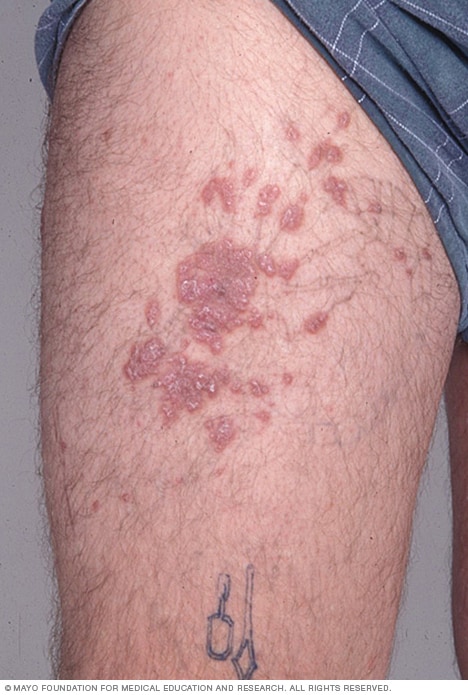
Granuloma
A granuloma is a small area of inflammation caused by tissue injury or the body's intolerance of a foreign substance. In this case, the injury was caused by punctures in the skin during tattooing. The skin is reacting to the tattoo ink.
The process of getting a tattoo breaks the skin. That means skin infections and other health problems can develop afterward. The risks include:
- Allergic reactions. Tattoo ink can cause allergic skin reactions, such as an itchy rash at the tattoo site. This can happen even years after getting a tattoo. Red ink tends to be more prone to allergic reactions that other tattoo ink colors.
- Skin infections. A skin infection is possible after getting a tattoo. An infection might be due to contaminated ink or equipment that isn't sterilized correctly. Getting a tattoo at a studio that doesn't follow good safety steps also can raise your risk of a skin infection.
- Other skin problems. Sometimes an area of inflammation can form around tattoo ink. This is called a granuloma. Tattooing also can lead to keloids. Keloids are raised areas caused by an overgrowth of scar tissue.
- Diseases spread through blood. If equipment used to create a tattoo has infected blood on it, you can get diseases that are spread through blood. Examples include methicillin-resistant Staphylococcus aureus, hepatitis B and hepatitis C. To lower your risk, get vaccinated for hepatitis B before you get a tattoo.
- Skin reactions to an MRI. Rarely, a magnetic resonance imaging (MRI) exam may trigger burning pain in the tattooed area. Sometimes, tattoos can lower the quality of an MRI image.
You might need medicine or other treatment if you develop an allergic reaction, infection or other health problems because of a tattoo.
Make sure you're ready
Before you get a tattoo, think carefully about it. If you're not sure about getting a tattoo or you're worried that you might regret it, you may want to wait. Don't let other people pressure you into getting a tattoo. And don't get a tattoo if you've been drinking alcohol or using drugs.
If you're confident that you want to get a tattoo, talk to friends who already have one. Ask if they have suggestions or tips for you.
Choose the location of a tattoo carefully. Think about whether you want to be able to hide your tattoo under clothing. Keep in mind that weight gain — including pregnancy weight gain — may change the way a tattoo looks.
Insist on safety steps
To make sure your tattoo is done safely, ask these questions:
- Who does the tattooing? Go to a tattooing studio that has properly trained employees. Tattooing rules and licensing vary from state to state. Check with your city, county or state health department for information on local licensing and regulations. Do not allow anyone who hasn't been trained in tattooing to tattoo your skin. Do not use a do-it-yourself tattoo kit.
- Does the tattoo artist wear gloves? Tattoo artists should wash their hands and wear a fresh pair of disposable gloves each time they create a tattoo.
- Does the tattoo artist use sanitary equipment? Make sure the tattoo artist takes the needle and tubes from sealed packages before your procedure. All ink also should be placed in new disposable single-use cups. Trays, containers and other equipment should be new or thoroughly sterilized or disinfected.
- Does the tattoo artist sterilize equipment that must be reused? Make sure that the tattoo studio has a heat-sterilization machine, called an autoclave. After each procedure, the machine should be used to sterilize any equipment that has to be reused. Instruments and supplies that can't be sterilized with an autoclave should be thoroughly disinfected after each customer. That includes drawer handles, tables and sinks.
Take care of your tattoo
Most tattoos take about two weeks to heal. To prevent infection and encourage healing:
- Keep tattooed skin clean. Wash the tattooed area twice a day with soap and water and a gentle touch. While showering, avoid direct streams of water on newly tattooed skin. Pat the area dry. Don't rub it.
- Use moisturizer. Apply a mild moisturizer to the tattooed skin several times a day.
- Avoid sun exposure. Keep the tattooed area out of the sun until it heals.
- Don't go swimming. Stay out of pools, hot tubs, rivers, lakes and other bodies of water while the tattoo is healing.
- Choose clothing carefully. Don't wear anything that might stick to the tattoo.
Depending on the type of tattoo you get and how large it is, you may need to follow other steps too. Ask your tattoo artist for specific directions on how to care for your tattoo until it heals.
If you think your tattoo might be infected or you're worried that your tattoo isn't healing correctly, contact a healthcare professional.
If your tattoo isn't what you expected and you're thinking about removing it, talk to a dermatologist about options for tattoo removal. Removal usually takes several sessions. It might not be possible to remove some tattoos completely. Scars may remain after a tattoo has been removed.
March 02, 2024
- Desai N. Tattooing in adolescents and young adults. https://www.uptodate.com/contents/search. Accessed Oct. 31, 2023.
- Tattoos and permanent makeup: Fact sheet. U.S. Food and Drug Administration. https://www.fda.gov/cosmetics/cosmetic-products/tattoos-permanent-makeup-fact-sheet. Accessed Oct. 31, 2023.
- Good, clean art. Centers for Disease Control and Prevention. https://www.cdc.gov/niosh/docs/2007-138/. Accessed Feb. 5, 2018.
- Think before you ink: Tattoo safety. U.S. Food and Drug Administration. https://www.fda.gov/consumers/consumer-updates/think-you-ink-tattoo-safety. Accessed Nov. 1, 2023.
- Sokumbi Y (expert opinion). Mayo Clinic. Nov. 15, 2023.