Overview
Testicular self-exam
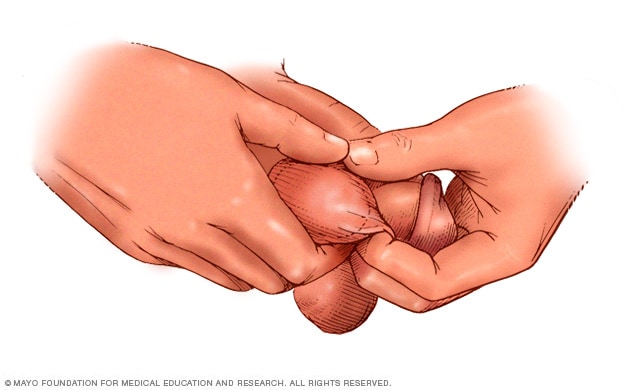
Testicular self-exam
To perform a testicular self-exam, grasp and roll the testicle between your thumbs and forefingers, feeling for lumps, swelling, hardness or other changes.
A testicular self-exam is an inspection of the appearance and feel of your testicles. You can do a testicular exam yourself, typically standing in front of a mirror.
Routine testicular self-exams can give you a greater awareness of the condition of your testicles and help you detect changes. Self-exams can also alert you to potential testicular problems.
If you detect lumps or other changes during a testicular self-exam, make an appointment with your doctor.
Products & Services
Why it's done
Testicular self-exams help you learn how your testicles normally look and feel. Then you're more likely to notice subtle changes.
Changes in your testicles could be a sign of a common benign condition, such as an infection or a cyst, or a less common condition, such as testicular cancer.
Who should consider regular testicular exams?
It's not clear who should consider regular testicular self-exams. Though often promoted as a way to detect testicular cancer, testicular self-exams aren't proved to reduce the risk of dying of the disease.
Testicular cancer is a relatively uncommon type of cancer. It's also highly treatable at all stages, so finding testicular cancer early doesn't make a cure more likely.
Doctors and medical organizations differ on their recommendations for testicular self-exams. If you're concerned about your risk of testicular cancer, discuss the issue with your doctor. Together, you can decide whether regular testicular self-exams are right for you.
Risks
Performing a testicular self-exam doesn't pose any direct risks. However, if you notice something unusual that concerns you, the follow-up exams might lead to unnecessary worry and medical tests.
For example, if you discover a suspicious lump, you might have tests to determine its cause. This could involve blood tests, ultrasound exams or a procedure to remove testicle tissue for examination (biopsy). If the lump is noncancerous (benign), you might feel that you've undergone an unnecessary invasive procedure.
How you prepare
No special preparation is necessary to do a testicular self-exam.
You might find a testicular self-exam is easier during or after a warm bath or shower. Heat relaxes the scrotum, making it easier for you to check for anything unusual.
What you can expect
To do a testicular self-exam, stand unclothed in front of a mirror. Then:
- Look for swelling. Hold your penis out of the way and examine the skin of the scrotum.
- Examine each testicle. Using both hands, place your index and middle fingers under the testicle and your thumbs on top.
- Gently roll the testicle between your thumbs and fingers. Look and feel for any changes to your testicle. These could include hard lumps, smooth rounded bumps, or new changes in the size, shape or consistency of the testicle.
While you're doing the testicular self-exam, you might notice a few things about your testicles, such as bumps on the skin of your scrotum, that seem unusual but aren't signs of cancer. Ingrown hairs, a rash or other skin problems can cause bumps on the skin.
You might also feel a soft, ropy cord, which is a normal part of the scrotum called the epididymis. It leads upward from the top of the back part of each testicle.
Results
Make an appointment with your doctor if you find a lump or other change during a testicular self-exam. Depending on the circumstances, your doctor might do a testicular exam followed by a blood test, ultrasound or biopsy.
Most changes in your testicles aren't caused by testicular cancer. A number of noncancerous conditions can cause changes in your testicles, such as a cyst, injury, infection, hernia and collection of fluid around the testicles (hydrocele).
Dec. 07, 2022