Overview
Female urinary system

Female urinary system
Your urinary system includes the kidneys, ureters, bladder and urethra. The urinary system removes waste from the body through urine. The kidneys are located toward the back of the upper abdomen. They filter waste and fluid from the blood and produce urine. Urine moves from the kidneys through narrow tubes to the bladder. These tubes are called the ureters. The bladder stores urine until it's time to urinate. Urine leaves the body through another small tube called the urethra.
Male urinary system
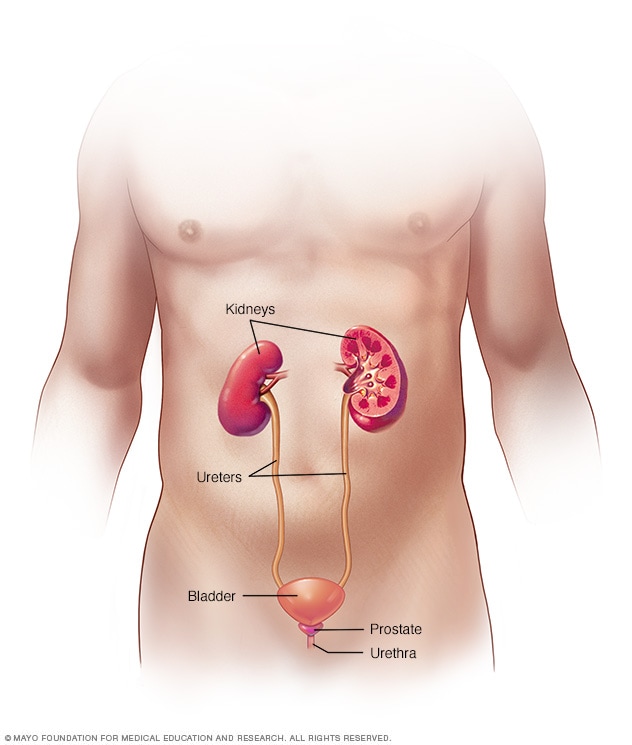
Male urinary system
Your urinary system includes the kidneys, ureters, bladder and urethra. The urinary system removes waste from the body through urine. The kidneys are located toward the back of the upper abdomen. They filter waste and fluid from the blood and produce urine. Urine moves from the kidneys through narrow tubes to the bladder. These tubes are called the ureters. The bladder stores urine until it's time to urinate. Urine leaves the body through another small tube called the urethra.
A urinary tract infection (UTI) is an infection in any part of the urinary system. The urinary system includes the kidneys, ureters, bladder and urethra. Most infections involve the lower urinary tract — the bladder and the urethra.
Women are at greater risk of developing a UTI than are men. If an infection is limited to the bladder, it can be painful and annoying. But serious health problems can result if a UTI spreads to the kidneys.
Health care providers often treat urinary tract infections with antibiotics. You can also take steps to lower the chance of getting a UTI in the first place.
Products & Services
Symptoms
UTIs don't always cause symptoms. When they do, they may include:
- A strong urge to urinate that doesn't go away
- A burning feeling when urinating
- Urinating often, and passing small amounts of urine
- Urine that looks cloudy
- Urine that appears red, bright pink or cola-colored — signs of blood in the urine
- Strong-smelling urine
- Pelvic pain, in women — especially in the center of the pelvis and around the area of the pubic bone
In older adults, UTIs may be overlooked or mistaken for other conditions.
Types of urinary tract infections
Each type of UTI may result in more-specific symptoms. The symptoms depend on which part of the urinary tract is affected.
| Part of urinary tract affected |
Signs and symptoms |
| Kidneys |
- Back or side pain
- High fever
- Shaking and chills
- Nausea
- Vomiting
|
| Bladder |
- Pelvic pressure
- Lower belly discomfort
- Frequent, painful urination
- Blood in urine
|
| Urethra |
- Burning with urination
- Discharge
|
When to see a doctor
Contact your health care provider if you have symptoms of a UTI.
Causes
UTIs typically occur when bacteria enter the urinary tract through the urethra and begin to spread in the bladder. The urinary system is designed to keep out bacteria. But the defenses sometimes fail. When that happens, bacteria may take hold and grow into a full-blown infection in the urinary tract.
The most common UTIs occur mainly in women and affect the bladder and urethra.
-
Infection of the bladder. This type of UTI is usually caused by Escherichia coli (E. coli). E. coli is a type of bacteria commonly found in the gastrointestinal (GI) tract. But sometimes other bacteria are the cause.
Having sex also may lead to a bladder infection, but you don't have to be sexually active to develop one. All women are at risk of bladder infections because of their anatomy. In women, the urethra is close to the anus. And the urethral opening is close to the bladder. This makes it easier for bacteria around the anus to enter the urethra and to travel to the bladder.
- Infection of the urethra. This type of UTI can happen when GI bacteria spread from the anus to the urethra. An infection of the urethra can also be caused by sexually transmitted infections. They include herpes, gonorrhea, chlamydia and mycoplasma. This can happen because women's urethras are close to the vagina.
Risk factors
UTIs are common in women. Many women experience more than one UTI during their lifetimes.
Risk factors for UTIs that are specific to women include:
- Female anatomy. Women have a shorter urethra than men do. As a result, there's less distance for bacteria to travel to reach the bladder.
- Sexual activity. Being sexually active tends to lead to more UTIs. Having a new sexual partner also increases risk.
- Certain types of birth control. Using diaphragms for birth control may increase the risk of UTIs. Using spermicidal agents also can increase risk.
- Menopause. After menopause, a decline in circulating estrogen causes changes in the urinary tract. The changes can increase the risk of UTIs.
Other risk factors for UTIs include:
- Urinary tract problems. Babies born with problems with their urinary tracts may have trouble urinating. Urine can back up in the urethra, which can cause UTIs.
- Blockages in the urinary tract. Kidney stones or an enlarged prostate can trap urine in the bladder. As a result, risk of UTIs is higher.
- A suppressed immune system. Diabetes and other diseases can impair the immune system — the body's defense against germs. This can increase the risk of UTIs.
- Catheter use. People who can't urinate on their own often must use a tube, called a catheter, to urinate. Using a catheter increases the risk of UTIs. Catheters may be used by people who are in the hospital. They may also be used by people who have neurological problems that make it difficult to control urination or who are paralyzed.
- A recent urinary procedure. Urinary surgery or an exam of your urinary tract that involves medical instruments can both increase the risk of developing a UTI.
Complications
When treated promptly and properly, lower urinary tract infections rarely lead to complications. But left untreated, UTIs can cause serious health problems.
Complications of a UTI may include:
- Repeated infections, which means you have two or more UTIs within six months or three or more within a year. Women are especially prone to having repeated infections.
- Permanent kidney damage from a kidney infection due to an untreated UTI.
- Delivering a low birth weight or premature infant when a UTI occurs during pregnancy.
- A narrowed urethra in men from having repeated infections of the urethra.
- Sepsis, a potentially life-threatening complication of an infection. This is a risk especially if the infection travels up the urinary tract to the kidneys.
Prevention
These steps may help lower the risk of UTIs:
- Drink plenty of liquids, especially water. Drinking water helps dilute the urine. That leads to urinating more often — allowing bacteria to be flushed from the urinary tract before an infection can begin.
- Try cranberry juice. Studies that look into whether cranberry juice prevents UTIs aren't final. However, drinking cranberry juice is likely not harmful.
- Wipe from front to back. Do this after urinating and after a bowel movement. It helps prevent the spread of bacteria from the anus to the vagina and urethra.
- Empty your bladder soon after having sex. Also drink a full glass of water to help flush bacteria.
- Avoid potentially irritating feminine products. Using them in the genital area can irritate the urethra. These products include deodorant sprays, douches and powders.
- Change your birth control method. Diaphragms, unlubricated condoms or condoms treated with spermicide can contribute to bacterial growth.
Sept. 14, 2022