Overview
Pancreas
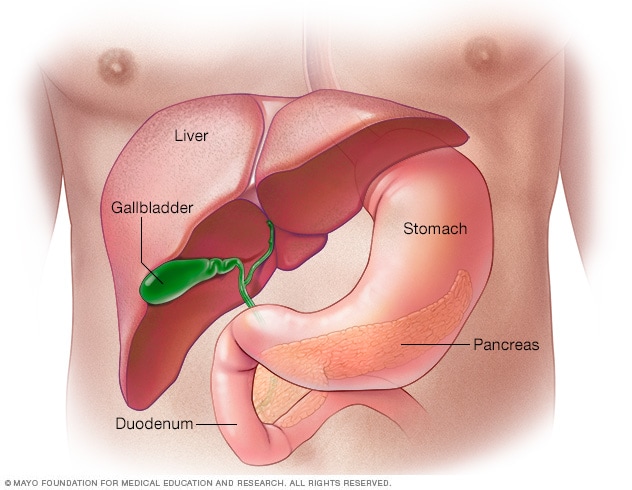
Pancreas
The pancreas is a large organ that lies across your upper abdomen behind your stomach.
Zollinger-Ellison syndrome is a rare condition in which one or more tumors grow in the pancreas or in the upper part of the small intestine. The tumors are called gastrinomas. These gastrinomas produce large amounts of the hormone gastrin. Gastrin causes the stomach to produce too much acid, which leads to peptic ulcers. High gastrin levels also can cause diarrhea, belly pain and other symptoms.
Zollinger-Ellison syndrome may occur at any time in life. However, people usually find out they have it sometime between ages 20 and 60. Medicines to cut down stomach acid and heal the ulcers are the usual treatment. Some people also may need surgery to remove tumors.
Products & Services
Symptoms
Symptoms of Zollinger-Ellison syndrome may include:
- Stomach pain.
- Diarrhea.
- Burning, aching or discomfort in your upper abdomen.
- Acid reflux and heartburn.
- Burping.
- Nausea and vomiting.
- Bleeding in your digestive tract.
- Losing weight without trying.
- Loss of appetite.
When to see a doctor
See your health care provider if you have a burning, aching pain in your upper belly that won't go away — especially if you also have nausea, vomiting and diarrhea.
Tell your provider if you've been using nonprescription medicines to reduce stomach acid. These include omeprazole (Prilosec, Zegerid), cimetidine (Tagamet HB) or famotidine (Pepcid AC). These medicines may mask your symptoms, which could delay your diagnosis.
Causes
The exact cause of Zollinger-Ellison syndrome isn't known. But the pattern of events that occurs in Zollinger-Ellison syndrome typically follows the same sequence. The syndrome begins when one or more tumors form in your pancreas or a part of your small intestine called the duodenum. The duodenum is the section connected to your stomach. Sometimes the tumors form at other sites, such as the lymph nodes next to your pancreas.
Your pancreas sits behind and below your stomach. It makes enzymes that are needed for digesting food. The pancreas also makes many hormones, including insulin. Insulin is the hormone that helps control your blood sugar, also called glucose.
Digestive juices from the pancreas, liver and gallbladder mix in the duodenum. This is where most of your digestion happens.
The tumors that occur with Zollinger-Ellison syndrome are made up of cells that secrete large amounts of the hormone gastrin. For this reason, they are sometimes referred to as gastrinomas. Increased gastrin causes the stomach to make far too much acid. The excess acid then leads to peptic ulcers and sometimes to diarrhea.
Besides causing excess acid production, the tumors are often cancerous. Although the tumors tend to grow slowly, the cancer can spread elsewhere — most commonly to nearby lymph nodes or your liver.
Association with MEN 1
Zollinger-Ellison syndrome may be caused by an inherited condition called multiple endocrine neoplasia, type 1 (MEN 1). People with MEN 1 also have tumors in the parathyroid glands. They may have tumors in their pituitary glands as well.
About 25% of people who have gastrinomas have them as part of MEN 1. They also may have tumors in the pancreas and other organs.
Risk factors
If you have a first-degree relative, such as a sibling or parent, with MEN 1, it's more likely that you'll have Zollinger-Ellison syndrome.
Nov. 04, 2022