MayoClinic.com reprints
This single copy is for your personal, noncommercial use only. For permission to reprint multiple copies or to order presentation-ready copies for distribution, use the reprints link below.
· Order reprints of this article now.
Graves' disease
By Mayo Clinic staffMayo Clinic Health Manager
Get free personalized health guidance for you and your family.
Get StartedDefinition
Graves' disease is the most common form of hyperthyroidism, occurring when your immune system mistakenly attacks your thyroid gland and causes it to overproduce the hormone thyroxine. This higher thyroxine level can greatly increase your body's metabolic rate, which may affect you in numerous ways, from your moods to your physical appearance.
Graves' disease is rarely life-threatening. Although it may develop at any age and in either men or women, Graves' disease is more common in women and usually begins after age 20.
There's no way to stop your immune system from attacking your thyroid gland, but treatments for Graves' disease can ease symptoms and decrease the production of thyroxine.
Symptoms
Graves' disease symptoms may include:
- Anxiety
- Irritability
- Difficulty sleeping
- Fatigue
- A rapid or irregular heartbeat
- A fine tremor of your hands or fingers
- An increase in perspiration
- Sensitivity to heat
- Weight loss, despite normal food intake
- Brittle hair
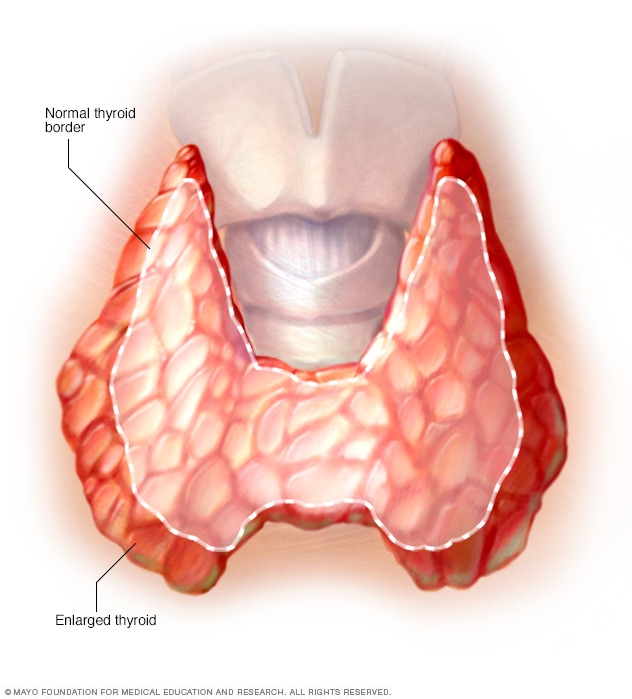
- Enlargement of your thyroid gland (goiter)
- Change in menstrual cycles
- Frequent bowel movements
Graves' ophthalmopathy
It's also fairly common for your eyes to exhibit mild signs of a condition known as Graves' ophthalmopathy. In Graves' ophthalmopathy, your eyeballs bulge out past their protective orbit (exophthalmos). This occurs as tissues and muscles behind your eyes swell and cause your eyeballs to move forward. Because your eyes may be pushed so far forward, the front surface of your eyes can become dry. Cigarette smokers with Graves' disease are five times more likely than nonsmokers to develop Graves' ophthalmopathy. This is possibly because smoking inhibits the absorption of anti-thyroid medication that is used to treat Graves' disease.
Graves' ophthalmopathy may cause these mild signs and symptoms:
- Excess tearing and sensation of grit or sand in either or both eyes
- Reddened or inflamed eyes
- Widening of the space between your eyelids
- Swelling of the lids and tissues around the eyes
- Light sensitivity
Less often, Graves' ophthalmopathy can produce these serious signs and symptoms:
- Ulcers on the cornea
- Double vision
- Limited eye movements
- Blurred or reduced vision
Graves' dermopathy
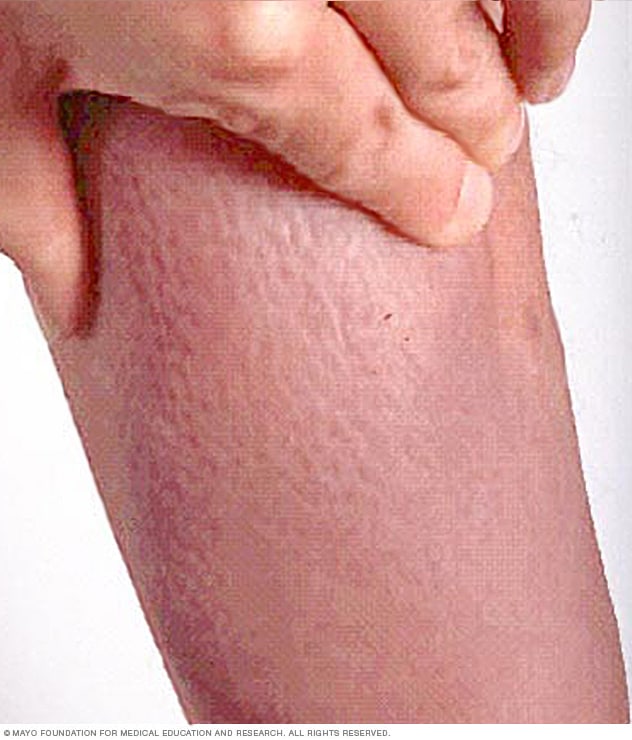
An uncommon sign of Graves' disease is reddening and swelling of the skin, often on your shins and on the top of your feet, called Graves' dermopathy.
When to see a doctor
See your doctor if you have signs and symptoms suggesting Graves' disease, particularly:
- An enlarged thyroid
- Protruding eyes
- Anxiety
- Intolerance to heat
- Tremor
- Weight loss
Seek emergency care if you are experiencing heart-related signs and symptoms, such as a rapid or irregular heartbeat.
Causes
Doctors don't know what causes Graves' disease. Normally, your immune system uses naturally occurring proteins (antibodies) and white blood cells (lymphocytes) to help eliminate viruses, bacteria and foreign substances (antigens) that invade your body.
In Graves' disease, your immune system mistakenly attacks your thyroid gland, but instead of destroying the gland, an antibody called thyrotropin receptor antibody (TRAb) stimulates the thyroid to make excessive amounts of thyroid hormone.
Your thyroid is part of your endocrine system, which includes a collection of glands and tissues that produce hormones. These chemical messengers coordinate many of your body's activities, from digestion to metabolism to reproduction. Thyroxine — a hormone produced by the thyroid — affects many body systems and is involved in controlling your metabolic rate.
Risk factors
Though the cause of Graves' disease is unknown, researchers believe a combination of factors may determine your likelihood of developing Graves' disease, such as:
- A family history of the disease
- Sex — Women are seven times more likely to develop Graves' disease than men.
- Age — Graves' disease usually develops after age 20.
- Stress
- Pregnancy
- Smoking
Complications
Any time your body produces too much thyroid hormone, because of Graves' disease or another cause, it can lead to a number of complications:
- Heart problems. Some of the most serious complications of hyperthyroidism involve the heart. These include a rapid heart rate, a heart rhythm disorder called atrial fibrillation and congestive heart failure — a condition in which your heart can't circulate enough blood to meet your body's needs. These complications are generally reversible with appropriate treatment.
- Brittle bones. Untreated hyperthyroidism can also lead to weak, brittle bones (osteoporosis). The strength of your bones depends, in part, on the amount of calcium and other minerals they contain. Too much thyroid hormone interferes with your body's ability to incorporate calcium into your bones.
- Thyrotoxic crisis. Hyperthyroidism also places you at risk of thyrotoxic crisis — a sudden intensification of your signs and symptoms, leading to a fever, a rapid pulse and even delirium. This complication is rare, but if it occurs, seek immediate medical care.
Preparing for your appointment
You're likely to start by first seeing your family doctor or a general practitioner. However, in some cases when you call to set up an appointment, you may be referred immediately to an endocrinologist.
Because appointments can be brief, and because there's often a lot of ground to cover, it's a good idea to be well-prepared for your appointment. Here's some information to help you get ready for your appointment, and what to expect from your doctor.
What you can do
- Be aware of any pre-appointment restrictions. At the time you make the appointment, be sure to ask if there's anything you need to do in advance, such as restrict your diet.
- Write down any symptoms you're experiencing, including any that may seem unrelated to the reason for which you scheduled the appointment.
- Write down key personal information, including any major stresses or recent life changes.
- Make a list of all medications, as well as any vitamins or supplements, that you're taking.
- Take a family member or friend along, if possible. Sometimes it can be difficult to soak up all the information provided to you during an appointment. Someone who accompanies you may remember something that you missed or forgot.
- Write down questions to ask your doctor.
Your time with your doctor is limited, so preparing a list of questions will help you make the most of your time together. List your questions from most important to least important in case time runs out. For Graves' disease, some basic questions to ask your doctor include:
- What is likely causing my symptoms or condition?
- Are there other possible causes for my symptoms or condition?
- What kinds of tests do I need?
- Is my condition likely temporary or chronic?
- What is the best course of action?
- What are the alternatives to the primary approach that you're suggesting?
- I have these other health conditions. How can I best manage them together?
- Are there any restrictions that I need to follow?
- Should I see a specialist? What will that cost, and will my insurance cover seeing a specialist?
- Is there a generic alternative to the medicine you're prescribing me?
- Are there any brochures or other printed material that I can take home with me? What Web sites do you recommend?
In addition to the questions that you've prepared to ask your doctor, don't hesitate to ask questions during your appointment at any time that you don't understand something.
What to expect from your doctor
Your doctor is likely to ask you a number of questions. Being ready to answer them may reserve time to go over any points you want to spend more time on. Your doctor may ask:
- When did you first begin experiencing symptoms?
- Have your symptoms been continuous, or occasional?
- How severe are your symptoms?
- What, if anything, seems to improve your symptoms?
- What, if anything, appears to worsen your symptoms?
- Is there a family history of thyroid problems?
Tests and diagnosis
To diagnose Graves' disease, your doctor typically uses these procedures:
- Physical exam. Your doctor examines your eyes to see if they're irritated or protruding and looks to see if your thyroid gland is enlarged. Because Graves' disease increases your metabolism, your doctor will check your pulse and blood pressure and look for signs of tremor. Your doctor will also ask you about your symptoms and your personal and family medical histories.
- Blood sample. Your doctor will likely order blood tests to determine your levels of thyroid-stimulating hormone (TSH) and thyroxine. TSH, produced by your pituitary gland, is the hormone that normally stimulates the thyroid gland. In Graves' disease, an abnormal antibody called TRAb mimics TSH, causing elevated thyroxine even while TSH levels remain low. If you have very low levels of TSH and high levels of thyroxine, your doctor may diagnose Graves' disease.
- Radioactive iodine uptake. Your body needs iodine to make thyroxine. By giving you a small amount of radioactive iodine and later measuring the amount of it in your thyroid gland, your doctor can determine the rate at which your thyroid gland takes up iodine. A high uptake of radioactive iodine indicates your thyroid gland is producing too much thyroxine, as is the case in Graves' disease. Low uptake occurs in some of the other causes of hyperthyroidism.
Treatments and drugs
There's no treatment to stop your immune system from producing the antibodies that cause Graves' disease. Treatments to control the signs and symptoms of Graves' disease are designed to decrease the production of thyroxine or to block its action. Graves' disease treatment includes:
- Beta blockers. These medications, which include propranolol (Inderal), atenolol (Tenormin), metoprolol (Lopressor) and nadolol (Corgard), often relieve hyperthyroid signs and symptoms, such as a rapid heart rate, nervousness and tremors. These medications aren't a cure for Graves' because your body will still produce too much thyroxine, but beta blockers block some of the action of the thyroid hormone. Beta blockers are often used in conjunction with other forms of treatment.
- Anti-thyroid medications. These prescription medications, including propylthiouracil and methimazole (Tapazole), prevent your thyroid from producing excessive amounts of hormones. Typically, treatment with anti-thyroid medications continues for at least a year. For some people with Graves' disease, treatment with anti-thyroid medications for one to two years causes a long-term remission of the disease. However, relapse is fairly common. These drugs are often used along with radioactive iodine treatment or surgery to help control signs and symptoms. Both drugs can cause serious liver damage, sometimes leading to death. But propylthiouracil has caused far more cases, so it generally should only be used when you can't tolerate methimazole.
-
Radioactive iodine treatment. To make thyroid hormone, your body needs iodine and uses whatever form of iodine is available in your blood. When you take radioactive iodine, the iodine collects in your thyroid gland, and over time the radioactivity destroys the overactive thyroid cells. This causes your thyroid gland to shrink, and problems lessen gradually, usually over several weeks to several months.
Because this treatment causes thyroid activity to decline, you'll likely later need thyroxine treatment to supply your body with normal amounts of thyroid hormones. Treatment doesn't require a hospital stay.
Radioactive iodine treatment may increase your risk of new or worsened symptoms of Graves' ophthalmopathy. This side effect is usually mild and temporary, but radioactive iodine therapy may not be recommended if you already have moderate to severe eye problems. After radioactive iodine treatment, any iodine not taken up into the thyroid gland is excreted in your urine and saliva.
-
Surgery. If you can't tolerate an anti-thyroid drug and don't want to have radioactive iodine therapy, surgery to remove your thyroid gland (thyroidectomy) is an option. After the surgery, you'll likely need thyroxine treatment to supply your body with normal amounts of thyroid hormones.
Risks of this surgery include potential damage to your vocal cords and your parathyroid glands, tiny glands located adjacent to your thyroid gland. Your parathyroid glands produce a hormone that controls the level of calcium in your blood. Complications are rare under the care of a surgeon experienced in thyroid surgery.
Treating Graves' ophthalmopathy
If Graves' disease affects your eyes (Graves' ophthalmopathy), you can manage mild symptoms by using artificial tears liberally during the day and lubricating gels at night. If your symptoms are more severe, your doctor may recommend:
- Medications. Treatment with prescription corticosteroids, such as prednisone, may diminish swelling behind your eyeballs.
- Orbital decompression surgery. In this surgery, your doctor removes the bone between your eye socket (orbit) and your sinuses — the air spaces next to the orbit. This gives your eyes room to move back to their original position. Possible complications include double vision and lip numbness.
- Eye muscle surgery. The inflammation caused by Graves' disease can affect your eye muscles, making them too short to allow the eyes to align properly. In eye muscle surgery, your doctor cuts the muscle where it attaches to your eyeball and then reattaches it farther back. Sometimes, more than one operation is necessary.
- Prisms. You may have double vision either because of Graves' disease or as a side effect of surgery for Graves' disease. Though they don't work for everyone, prisms in your glasses may correct your double vision.
- Orbital radiotherapy. Orbital radiotherapy was once a common treatment for Graves' ophthalmopathy. Orbital radiotherapy uses targeted X-rays over the course of several days to destroy some of the tissue behind your eyes. However, some studies have suggested that this treatment provides no benefit for people who have mild to moderately severe Graves' ophthalmopathy. Your doctor may recommend orbital radiotherapy if your eye problems are worsening and prescription corticosteroids alone aren't effective or well tolerated.
Lifestyle and home remedies
For Graves' ophthalmopathy
These steps may make your eyes feel better if you have Graves' ophthalmopathy:
- Apply cool compresses to your eyes. The added moisture may soothe your eyes.
- Wear sunglasses. When your eyes protrude, they're more vulnerable to ultraviolet rays and more sensitive to bright light. Wearing sunglasses that wrap around the sides of your head will lessen the irritation of your eyes from the wind.
- Use lubricating eyedrops. Eyedrops may relieve the dry, scratchy sensation on the surface of your eyes. At night, a paraffin-based gel such as Lacri-Lube can be applied.
- Elevate the head of your bed. Keeping your head higher than the rest of your body lessens fluid accumulation in the head and may relieve the pressure on your eyes.
For Graves' dermopathy
If the disease affects your skin (Graves' dermopathy), use over-the-counter creams or ointments containing hydrocortisone to relieve swelling and reddening. In addition, using compression wraps on your legs may help.
Coping and support
If you have Graves' disease, make your mental and physical well-being a priority. Eating well and exercising can enhance the improvement in some symptoms while being treated and help you feel better in general. For example, because your thyroid controls your metabolism, you may have a tendency to gain weight when the hyperthyroidism corrects. Brittle bones can also occur with Graves' disease and weight-bearing exercises can help maintain bone density.
Try to ease stress as much as you can, as stress possibly contributes to the development of Graves' disease. Listening to music, taking a warm bath or walking can help relax you and put you in a better frame of mind. Partner with your doctor to construct a plan that incorporates good nutrition, exercise and relaxation into your daily routine.
- Graves' disease. U.S. Department of Health and Human Services. http://www.endocrine.niddk.nih.gov/pubs/graves/Graves.pdf. Accessed April 23, 2009.
- Hyperthyroidism. American Association of Clinical Endocrinologists. http://www.aace.com/pub/thyroidbrochures/pdfs/Hyperthyroidism.pdf. Accessed April 23, 2009.
- Nyirenda MJ, et al. Thyroid-stimulating hormone-receptor antibody and thyroid hormone concentrations in smokers vs. nonsmokers with Graves' disease treated with carbimazole. Journal of the American Medical Association. 2009;301:162.
- Cawood TJ, et al. Smoking and thyroid-associated ophthalmopathy: A novel explanation of the biological link. The Journal of Clinical Endocrinology and Metabolism. 2007;92:59.
- Davies TF. Pathogenesis of Graves' disease. http://www.uptodate.com/home/index.html. Accessed April 27, 2009.
- Brent GA. Graves' disease. New England Journal of Medicine. 2008;358:2594.
- Rubin DI. Neurologic manifestations of hyperthyroidism and Graves' disease. http://www.uptodate.com/home/index.html. Accessed April 27, 2009.
- Davies TF. Treatment of Graves' ophthalmopathy (orbitopathy). http://www.uptodate.com/home/index.html. Accessed April 27, 2009.
- Nippoldt TB (expert opinion). Mayo Clinic, Rochester, Minn. May 13, 2009.
- Propylthiouracil-induced liver failure. U.S. Food and Drug Administration. Accessed June 17, 2009.